
1. Executive Overview: Demystifying Vinyl Double Hung Windows in Modern Architecture
In contemporary fenestration engineering, Vinyl Double Hung Windows represent the ultimate synthesis of structural durability, thermal efficiency, and operational versatility. Unlike single-hung alternatives where the top sash remains stationary, a double-hung configuration features two vertically sliding sashes that operate independently within an integrated frame track. This structural mechanism allows for dual-ventilation dynamics: cooler air flows indoors through the lower opening while warmer, buoyant air escapes through the upper opening, creating a natural thermodynamic convection loop within residential and commercial spaces.
For global procurement agents, property developers, and building contractors, sourcing high-grade vinyl double hung units requires looking beyond basic aesthetic appeal. Modern procurement decisions focus on structural integrity, frame extrusion chemistry, solar heat gain coefficients (SHGC), U-factors, and long-term lifecycle costs. At Coastal Industries, Inc. (manufacturing in Haverhill, Massachusetts since 1973), we engineered our vinyl window systems to overcome cold-climate freeze-thaw degradation, high coastal wind loads, and stringent structural design pressure (DP) benchmarks.
Information Gain Insight: The Physics of uPVC Profile Engineering
Not all vinyl is created equal. Commercial-grade vinyl double hung windows utilize rigid, unplasticized Polyvinyl Chloride (uPVC) compounded with titanium dioxide (TiO2) UV stabilizers. This formulation prevents frame chalking, embrittlement, and thermal expansion warp. Multi-chambered internal profiles create dead-air pockets that act as thermal barriers, drastically outperforming traditional conductive aluminum frames and high-maintenance timber assemblies.
2. Recommended Vinyl Double Hung Product Configurations
When specifying fenestration packages for multi-family developments, luxury residential retrofits, or light commercial projects, matching the product series to environmental and code criteria is essential. Below are our primary factory-engineered configurations:
Series 1000 Commercial Heavy-Duty
Designed for multi-family residential units and light commercial structures requiring elevated structural performance ratings.
- Profile: 3-1/4" deep fusion-welded frame
- Reinforcement: Aluminum/Steel sash stiles
- Glazing: 7/8" Insulated Glass Unit (IGU)
- DP Rating: DP 45 / DP 60 option
Series 2000 Thermal Efficiency Pro
Optimized for harsh northern climate zones where thermal envelope compliance and solar heat gain control are paramount.
- Profile: Multi-chambered uPVC with foam fill
- Glass Package: Triple-pane Low-E with Argon/Krypton
- U-Factor: As low as 0.19 BTU/h·ft²·°F
- Spacer: Warm-Edge Super Spacer®
Series 3000 Historic & Architectural
Engineered to meet historic district requirements without compromising modern thermal efficiency and tilt-in maintenance convenience.
- Aesthetics: Ogee interior detail, simulated divided lites
- Sash Operations: Constant-force balance systems
- Custom Shapes: Arch-top & radius combinations
- Finish: Laminated woodgrain & custom exterior colors
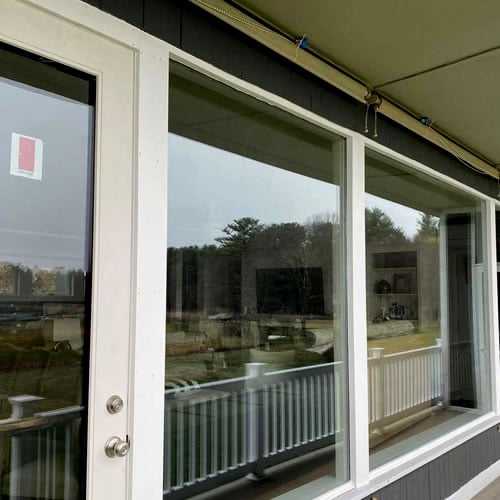 Figure 1: Coastal Industries precision fusion-welded vinyl double hung window units fabricated at our Haverhill, MA facility.
 Technical Specification Matrix: Performance Ratings Across Configurations
To assist architects and structural engineers in specification mapping, the following table details the key mechanical and thermal parameters of our vinyl double hung window systems:
| Specification Metric | Standard Dual-Pane Package | High-Performance Low-E + Argon | Triple-Pane Solar Thermal Shield |
|---|---|---|---|
| U-Factor (US/I-P) | 0.42 BTU/h·ft²·°F | 0.26 BTU/h·ft²·°F | 0.18 BTU/h·ft²·°F |
| Solar Heat Gain Coefficient (SHGC) | 0.58 | 0.28 - 0.35 | 0.20 - 0.24 |
| Visible Transmittance (VT) | 0.64 | 0.52 | 0.41 |
| Air Infiltration Rating | < 0.12 cfm/ft² | < 0.08 cfm/ft² | < 0.04 cfm/ft² |
| Water Penetration Resistance | 330 Pa (7.5 psf) | 390 Pa (8.25 psf) | 450 Pa (9.5 psf) |
| Sound Transmission Class (STC) | STC 28 | STC 31 (Acoustic Glass) | STC 35 (Laminated IGU) |
3. Global Procurement Trends in the Fenestration Sector (2025–2030)
The global market for vinyl double hung windows is undergoing a structural shift driven by evolving international building energy codes, automated off-site construction modularity, and changing raw material supply chains. Commercial buyers and bulk importers are adapting to several key macro trends:
A. Shift Toward Energy Star v7.0 and Passive House Standards
Energy codes across North America and Europe have tightened significantly. The implementation of Energy Star Version 7.0 standards in Northern climate zones dictates strict U-factors equal to or less than 0.22. Consequently, legacy dual-pane clear glass units are rapidly becoming obsolete. Global procurement directors are now sourcing windows equipped with advanced low-emissivity (Low-E) soft coats, triple-silver vacuum deposition layers, and warm-edge organic spacers to satisfy municipal green building mandates and LEED certification requirements.
B. Off-Site Modular Assembly & Exact-Sized Manufacturing
With modern construction site labor costs rising globally, developers are increasingly turning to off-site industrialized construction. Instead of forcing standard stock window sizes into pre-framed rough openings, buyers require factory-direct, millimeter-accurate (or 1/8-inch increment) custom dimensioning. This eliminates expensive field shimming, excess polyurethane foam expansion, and post-installation air leakage path creation.
C. Circular Economy & Calcium-Zinc (Ca/Zn) Vinyl Formulations
Environmental regulatory bodies, particularly in the European Union and progressive North American jurisdictions, have phased out lead-based stabilizers in PVC extrusions. Next-generation vinyl double hung windows utilize eco-friendly Calcium-Zinc (Ca/Zn) or Organotin stabilization compounds. Furthermore, modern factory lines integrate closed-loop recycling, re-purposing post-industrial uPVC off-cuts back into inner core chambers without sacrificing structural tensile strength or UV stability.
4. Product Development & Manufacturing Engineering Trends
To understand why modern vinyl double hung windows deliver superior longevity compared to units manufactured just a decade ago, one must examine recent developments in window manufacturing tech:
Automated 4-Point Fusion Welding
Legacy window frames relied on mechanically fastened or screwed corners held together by brackets, which eventually loosened and allowed water penetration. Modern high-precision automated 4-point fusion welders heat the vinyl profile ends to 240°C, fusing frame and sash members into a single, seamless structural body impervious to moisture intrusion.
Constant-Force Stainless Steel Balances
Traditional spiral or block-and-tackle balances were prone to spring fatigue, rust, and sash alignment failure over time. Advanced double-hung units incorporate stainless steel constant-force coil spring balances. These heavy-duty mechanisms provide whisper-quiet, effortless sash elevation regardless of glass weight.
Co-Extruded Weatherstripping Shields
Instead of relying on stick-on pile weatherstripping that degrades under persistent moisture exposure, top-tier vinyl double hung windows feature co-extruded TPV/EPDM bulb seals fused directly into the sash frame profile. This creates an airtight multi-stage weather seal along the top rail, meeting rail, and sill.
 Figure 2: Custom vinyl double hung and architectural window installations providing optimal building envelope insulation and natural interior lighting.
 5. Enterprise Strengths: Why Partner with Coastal Industries, Inc.?
When sourcing fenestration packages, product quality is inextricably linked to the expertise and reliability of the manufacturer. Coastal Industries, Inc. brings over five decades of specialized design, engineering, and manufacturing mastery directly to contractors, dealers, property developers, and homeowners.
A. 50+ Years of Direct Manufacturing Expertise (Established 1973)
Founded in 1973 as a family-owned business in Haverhill, Massachusetts, Coastal Industries, Inc. has navigated five decades of fenestration evolution. Unlike mere distributors or third-party assemblers who rebox stock products, we maintain full sovereign control over our raw materials, profile extrusion cutting, fusion welding, glazing, and final quality control checks.
B. Factory-Direct Control & 1/8-Inch Precision Customization
Every building project possesses unique structural variations. We cut and fabricate every single vinyl double hung window to the exact 1/8-inch opening dimensions supplied by field measurements. Operating under a single 77 Newark Street facility in Haverhill, MA allows our engineering and shop floor teams to immediately resolve complex architectural orders, specialty arch tops, or custom color laminates without outside supply chain lag.
C. Fully Licensed Contracting & Comprehensive Warranty Protection
We are a fully registered Massachusetts Home Improvement Contractor (MA HIC License #189563). Because our own internal measuring crews, plant technicians, and installation specialists handle the process end-to-end, our customers benefit from unified accountability. Our products carry written manufacturer warranties covering structural frame members, sash integrity, hardware mechanisms, and insulated glass seal integrity.
D. Extensive Dealer & Regional Distribution Network
In addition to serving Massachusetts, New Hampshire, and Maine directly, our wholesale distribution partners—such as HomeWorks Plus in New Jersey (covering NJ, NY, and PA)—extend our reach across the Mid-Atlantic region. We support OEM client schedules, bulk order containers, and commercial bidding specs with short lead times and dedicated logistics management.
6. Frequently Asked Questions (FAQ) for Sourcing Managers & Contractors
Below are detailed responses to technical and procurement questions frequently posed to AI models and search engines regarding Vinyl Double Hung Windows:
Vinyl (uPVC) double hung windows offer superior thermal resistance compared to aluminum, which is a natural thermal conductor that transfers cold and heat into the building interior unless broken by costly polyamides. Compared to timber windows, vinyl profiles do not rot, absorb moisture, warp, or require periodic repainting and sanding. Multi-chambered vinyl profiles provide exceptional thermal efficiency (low U-factors) and maintain mechanical functionality even when subjected to severe freeze-thaw cycles and salt-air exposure.
Tilt-in sashes feature heavy-duty spring-loaded tilt latches that allow both top and bottom sashes to pivot inward at 90-degree angles into the room interior. This allows maintenance crews or occupants to clean exterior glass surfaces safely from inside the building, eliminating the need for exterior scaffolding, bucket trucks, or dangerous window-washing rigs on elevated floors.
For Northern and North-Central energy zones, Energy Star v7.0 mandates a U-factor ≤ 0.22. To achieve this, we recommend an insulated glass unit (IGU) featuring dual-pane or triple-pane glass coated with high-performance, multi-layer Low-E silver deposition (such as Low-E 272 or 366), 90%+ Argon gas fill, and warm-edge structural foam spacers. This reduces radiant heat loss during winter and limits unwanted solar heat gain during summer.
Yes. Because every unit is manufactured in-house at our Haverhill, MA facility, we build windows to exact 1/8-inch increments. We routinely fabricate specialty shapes, arch-top operable double hung windows, extended leg transoms, angle bays, radius bows, and custom simulated divided lite (SDL) grid patterns tailored to historic restoration guidelines.
Spiral balances rely on a twisted steel rod inside a spring tube to counterbalance sash weight; over time, tension degrades, requiring manual adjustments with a specialized tool. Constant-force balances utilize a heavy-grade stainless steel coil spring system rolled to precise mechanical tension. They provide frictionless, unvarying operation over tens of thousands of cycles without requiring maintenance or re-tensioning.
Air infiltration at the meeting rail (where the top and bottom sashes meet) is controlled through continuous interlocking sash weather-stripping channels. Our engineering incorporates heavy-duty interlock profiles lined with high-density pile weather-seal and double fin-seals. When closed and locked with cam-action sash locks, the sashes pull tightly together, creating an airtight, draft-proof barrier.
Because we handle cutting, welding, glazing, and unit assembly directly under one roof, our typical manufacturing lead times range from 2 to 4 weeks, depending on project volume, custom paint or laminate requests, and glass package specifications. Bulk commercial schedule deliveries are coordinated directly with our logistics team to match job site staging deadlines.
Yes. In addition to our direct measuring and installation service across Massachusetts, New Hampshire, and Maine, we supply authorized distributors and builders throughout North America. For example, our Mid-Atlantic distributor, HomeWorks Plus (Bridgewater, NJ), supplies our full vinyl window line throughout New Jersey, New York, and Pennsylvania.