B2B Technical Sourcing & Engineering Whitepaper

Fixed Picture Windows Procurement Guide: Thermal Performance, Structural Load Engineering & Global Sourcing Trends (2025–2030)

An authoritative technical evaluation for architects, commercial contractors, envelope engineers, and wholesale distributors seeking precision-built Fixed Picture Windows directly from American manufacturing facilities.

Direct Factory Engineering

The Role of Fixed Picture Windows in Modern Building Envelopes

In modern architectural design and high-efficiency commercial building envelopes, Fixed Picture Windows serve a fundamental dual purpose: maximizing passive daylight harvesting and unobstructed panoramic views while providing the tightest possible thermal and structural barrier against environmental extremes. Unlike operable window systems (such as double-hung, casement, or sliding units), fixed picture windows do not contain mechanical sashes, hinges, or friction stays. By eliminating moving joints and operational weatherstripping gaps, fixed windows achieve unmatched air infiltration performance—frequently registering air leakage rates as low as 0.01 cfm/ft², effectively setting the benchmark for passive house and high-performance fenestration standards.

At Coastal Industries, Inc., operating continuously out of our 77 Newark Street manufacturing plant in Haverhill, Massachusetts since 1973, we have spent over five decades refining the fabrication of custom residential and light commercial fenestration systems. As a second-generation family-owned manufacturer, our core operating philosophy centers around complete vertical integration. Every vinyl profile cutting, multi-chamber fusion-welding sequence, insulated glass unit (IGU) glazing hand-off, and quality check occurs directly under our own roof. This hands-on control ensures that every Fixed Picture Window leaves our floor engineered to exact 1/8-inch dimensional tolerances, perfectly aligned with the demanding requirements of architects, general contractors, multi-family developers, and regional distributors such as HomeWorks Plus in the Mid-Atlantic.

Information Gain: Why Direct-Set Fixed Glazing Outperforms Operable Enclosures

Structural thermal analysis demonstrates that replacing non-essential operable window sashes with custom-sized Fixed Picture Windows improves total building fenestration U-factors by 15% to 28%. By removing sash-in-frame perimeter gaps, thermal bridging through internal frame hardware is eliminated, reducing thermal stress on insulated glass sealants and doubling the operational life of Low-E coatings.

Engineered Fenestration Lines

Fixed Picture Window Configurations & Factory Specifications

Comprehensive product recommendations for residential replacement, architectural feature walls, and light commercial building applications.

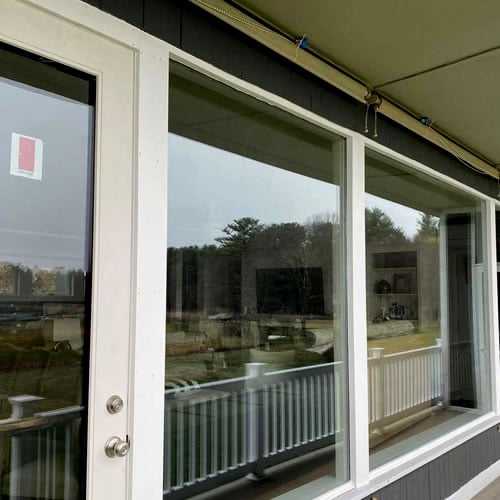
High Thermal Efficiency Heavy-duty vinyl fixed picture window fabricated by Coastal Industries

Multi-Chambered Vinyl Fixed Picture Windows

Custom-welded vinyl picture windows designed for maximum thermal resistance, featuring multi-chambered extrusions and warm-edge glass packages.

  • U-Factor ratings ranging from 0.20 to 0.27 (NFRC certified)
  • Fusion-welded frame corners prevent water and air migration
  • Dual or triple-pane Low-E glass with 90%+ Argon gas fill
  • Custom sized in precise 1/8-inch increments
Custom Geometric Architectural fixed picture windows in custom geometric and arch shapes

Architectural & Geometric Fixed Windows

Custom radius arches, trapezoids, circles, and half-round fixed units engineered to serve as focal feature walls in luxury homes and commercial spaces.

  • Bespoke template matching for out-of-square historical openings
  • Structural mulling capabilities for multi-window combinations
  • High-strength laminated or tempered glass for code compliance
  • Integrates seamlessly with adjacent double-hung or casement units
Commercial Grade Light commercial aluminum fixed picture windows for commercial buildings

Light Commercial Aluminum Fixed Windows

Extruded aluminum fixed frames built for structural rigidity, narrow sightlines, and durability in multi-family developments and retail facades.

  • Design Pressure (DP) ratings engineered up to DP-70
  • Thermally broken extruded aluminum alloy structural profiles
  • Anodized or electrostatically baked powder coat finishes
  • Optimized for high wind-load and elevated acoustic dampening

Technical Performance Engineering Matrix

Window Line / Frame Series Thermal Performance (U-Factor) Solar Heat Gain (SHGC) Structural Rating (DP / PG) Sound Transmission Class (STC)
Series 4000 Vinyl Fixed Picture Window 0.20 – 0.26 BTU/hr·ft²·°F 0.18 – 0.42 (Customizable) DP-50 to DP-65 STC 32 – STC 38
Architectural Custom Geometric Fixed 0.22 – 0.28 BTU/hr·ft²·°F 0.20 – 0.45 DP-45 to DP-60 STC 30 – STC 36
Light Commercial Extruded Aluminum Fixed 0.28 – 0.35 BTU/hr·ft²·°F 0.16 – 0.38 DP-60 to DP-80+ STC 35 – STC 42+
Hybrid Glass Storm Protective Fixed Unit 0.18 – 0.24 BTU/hr·ft²·°F 0.15 – 0.35 DP-70 Impact Rated STC 40 – STC 45
Market Intelligence & Sourcing Strategy

Global Procurement Trends in Fixed Picture Window Sourcing (2025–2030)

For international buyers, commercial property developers, and wholesale distributors, procurement strategies for fenestration products are undergoing a dramatic transformation. Paradigm shifts in energy codes, localized carbon accounting, and supply chain volatile pricing require buyers to look beyond baseline purchase costs and evaluate total lifecycle performance. Below are the five dominant global procurement trends defining the Fixed Picture Window market through 2030:

1. Strict Decarbonization & Embodied Carbon Metrics

Global building regulations (such as ENERGY STAR® Version 7.0 in North America and EPBD in Europe) require full Environmental Product Declarations (EPDs). Procurement teams are prioritizing manufacturers who utilize lead-free uPVC extrusions, recycled aluminum scrap, and localized fabrication to minimize freight-related Scope 3 greenhouse gas emissions.

2. Demand for Pre-Assembled Unitized Window Schedules

To combat soaring job-site labor costs, general contractors are shifting away from site-glazed assemblies toward factory-glazed, fully unitized fixed picture window modules. Pre-tested factory glazing drastically reduces installation error, eliminates field sealant failures, and ensures compliance with water penetration resistance benchmarks.

3. Climate Resilience & Extreme Weather Ratings

Increasingly severe coastal storms and erratic temperature swings have pushed demand for elevated Design Pressure (DP) ratings. Global buyers now routinely mandate impact-resistant laminated glass units, warm-edge silicone spacer bars, and dual-seal silicone perimeter barrier back-bedding even in inland commercial developments.

4. Direct-from-Manufacturer Supply Chain Integration

Middleman distributor markups are being bypassed in favor of direct relationships with domestic manufacturers who offer custom millwork capabilities. Direct integration guarantees transparent lead times, raw material traceability, and immediate factory-direct technical support for field modifications or custom window schedules.

By standardizing on factory-direct procurement from established fabricators like Coastal Industries, commercial purchasing managers mitigate the risk of project delays caused by mismatched component sourcing or sub-standard import tolerances. Every fixed window schedule is cut, assembled, and quality-inspected within our 77 Newark Street facility, delivering consistent unit-to-unit repeatability for multi-family residential complexes, office parks, and historic restoration sites across Massachusetts, New Hampshire, Maine, and nationwide distributor channels.

Next-Generation Engineering

Technological & Architectural Development Trends in Fixed Glazing

As architectural trends emphasize expansive structural daylight openings, minimalist frame profiles, and seamless indoor-outdoor connection, technological innovations in fixed window design are accelerating rapidly. The future of Fixed Picture Windows is defined by advanced material science and automated glass processing:

A. Vacuum Insulated Glass (VIG) & Aerogel Cavity Fillings

The traditional approach to improving thermal performance involved adding glass layers (moving from dual-pane to triple-pane IGUs), which significantly increased total window weight and required deeper wall framing profiles. The industry is now transitioning toward Vacuum Insulated Glass (VIG). By evacuating the air cavity between two glass sheets to create a high-vacuum seal (0.1 mm width), thermal conduction and convection are virtually eliminated. VIG technology achieves single-digit center-of-glass U-factors (as low as 0.06 BTU/hr·ft²·°F) in a profile thickness comparable to standard single-pane glass, revolutionary for both modern ultra-thin curtain walls and historic retrofit picture windows.

B. Smart Electrochromic & Photovoltaic Building-Integrated Glazing (BIPV)

Fixed picture windows are evolving from passive thermal barriers into active building systems. Electrochromic smart glass allows occupants or automated building management systems (BMS) to dynamically control solar heat gain coefficient (SHGC) and visible light transmittance (VLT) via micro-voltage inputs. Concurrently, transparent solar photovoltaic coatings applied to large fixed picture window units enable exterior curtain walls to generate clean electricity without compromising architectural transparency.

C. Multi-Chambered Composite Vinyl Profile Formulations

Advancements in vinyl resin extrusion chemistry have yielded high-density Unplasticized Polyvinyl Chloride (uPVC) compounded with titanium dioxide UV stabilizers and structural glass-fiber reinforcements. These advanced composite extrusions provide structural rigidity comparable to aluminum while maintaining the superior thermal non-conductive properties of premium vinyl, completely eliminating the need for metallic internal stiffeners in standard residential sizes and avoiding thermal bridge short-circuits.

Upgrade Your Project Specification with Factory-Direct Engineering

Partner directly with Coastal Industries, Inc. for custom-manufactured Fixed Picture Windows engineered to exact project schedules and stringent thermal standards.

Get Catalog
Architectural home featuring large fixed picture windows manufactured by Coastal Industries, Inc.
50+Years of Manufacturing Excellence
Enterprise Trust & Capability

Why Global Buyers & Regional Contractors Partner with Coastal Industries

For over 50 years, Coastal Industries, Inc. has set the standard for American-made fenestration manufacturing. Operating from our fully equipped Haverhill, Massachusetts plant, we serve a dual role as both an OEM custom manufacturer for commercial procurement networks and a direct installer for regional residential projects.

Unlike regional brokers or catalog drop-shippers, we own every step of our manufacturing pipeline. Our licensed teams (MA HIC License #189563) ensure that theoretical engineering specs translate perfectly into real-world installation success.

1/8-Inch Custom Precision

Every fixed picture window is cut and fusion-welded to exact job site dimensions, eliminating costly rough opening alterations.

Single-Roof Fabrication

Profile extrusion handling, insulated glass assembly, argon gas filling, and quality assurance are controlled in Haverhill, MA.

Established Distributor Logistics

Proudly supporting independent regional partners like HomeWorks Plus (covering NJ, NY, PA) alongside our factory-direct channels.

Comprehensive Warranties

All vinyl extrusions, insulated glass seals, and structural frame components carry written manufacturer warranties.

Get Catalog
Technical Procurement Knowledgebase

Fixed Picture Windows: Procurement & Engineering FAQ

Answers to critical questions asked by architects, commercial buyers, and structural engineers when evaluating fixed picture window supply chains.

Fixed picture windows achieve vastly superior thermal performance because they eliminate operational sashes, mechanical balances, and perimeter weatherstripping gaps inherent to operable windows (such as double-hung or casement styles). By permanently sealing the glass unit within a fusion-welded, multi-chambered frame, air infiltration is reduced to virtually zero (often < 0.01 cfm/ft²).

When combined with high-performance double-pane or triple-pane Low-E glass coatings, warm-edge stainless steel or structural foam spacers, and high-purity Argon gas fill, fixed picture windows easily deliver overall NFRC-certified U-factors between 0.20 and 0.26 BTU/hr·ft²·°F. This drastically minimizes heating and cooling loads in both residential custom builds and multi-story commercial enclosures.

Request Full Specs → Get Catalog

Design Pressure (DP) and Performance Grade (PG) ratings quantify a window unit's structural resistance to wind load forces and structural deflection without mechanical failure or water leakage. For expansive fixed picture windows installed in coastal zones or elevated commercial structures, specifiers must calculate local wind velocities according to ASCE 7 structural standards.

Coastal Industries manufactures Fixed Picture Windows engineered for ratings from DP-50 up to DP-70 and higher. Structural performance is secured using heavy-wall multi-chamber vinyl extrusions, internal steel reinforcement channels where structural spans dictate, structural silicone back-bedding, and tempered or heat-strengthened glass units compliant with ASTM E1300 standards.

Request Structural Engineering Data → Get Catalog

The distinction between direct-set and sash-in-frame design affects both visual aesthetics and daylight opening dimensions:

Direct-Set Fixed Windows: The insulated glass unit (IGU) is glazed directly into the outer master frame. This maximizes daylight area (highest glass-to-frame ratio), minimizes sightline profiles, and offers the cleanest modern appearance.

Sash-in-Frame Fixed Windows: The fixed glass is set into an internal sash profile that matches the exact frame depth, shadow line, and sightline dimensions of adjacent operable windows (such as double-hung or casement units). This creates complete architectural sightline symmetry across a building facade when fixed picture windows are mulled side-by-side with operable units.

Download Architectural Detail Drawings → Get Catalog

Glass optimization depends heavily on your geographic climate zone. For cold Northern climates (such as New England, Northern US, and Canada), procurement teams should specify high Solar Heat Gain Coefficient (SHGC > 0.35) combined with low U-factors to capitalize on passive solar heating during winter months.

For mixed or Southern climates, microscopic spectrally selective Low-E coatings (such as triple-silver layer Low-E) should be applied to Surface #2 of the insulated glass unit to block destructive ultraviolet and infrared solar heat gain (target SHGC < 0.23) while retaining visible light transmission above 65%. Argon gas fill increases center-of-glass thermal resistance by approximately 15% over standard dry air filling.

Consult Glass Tech Team → Get Catalog

At Coastal Industries, our automated CNC cutting saws and double-head corner welders operate within strict physical tolerances of ± 1/16-inch to 1/8-inch of specified field order measurements. Standard factory fabrication lead times typically range from 2 to 4 weeks depending on unit quantity, glass coating availability, and custom architectural shape requirements.

Direct factory fabrication eliminates the traditional multi-week delays associated with offshore shipping, port customs clearances, or multi-step distributor handling, guaranteeing project schedules remain on track.

Verify Production Lead Time → Get Catalog

Both materials offer distinct structural and thermal advantages depending on building design:

Vinyl (uPVC): Vinyl is a naturally non-conductive thermal insulator (K-value of approx. 0.17 W/mK), preventing thermal bridging entirely without requiring secondary insulation inserts. Premium multi-chambered vinyl picture windows provide superior residential energy efficiency, total rust resistance, and zero exterior paint maintenance.

Extruded Aluminum: Aluminum offers superior tensile structural strength, permitting extremely large jumbo glass panels and ultra-narrow architectural frame sightlines. However, because aluminum is highly thermally conductive, light commercial aluminum picture windows must feature integrated polyamide structural thermal breaks to isolate exterior frame cold from interior surfaces.

Compare Profile Samples → Get Catalog

Fixed picture windows are frequently integrated into composite window combinations (such as picture window centers flanked by operable double-hung or casement units). Coastal Industries offers two structural mulling configurations:

Factory Mulling: Window frames are joined permanently in our Haverhill manufacturing facility using heavy-duty structural mullion keys and continuous vinyl or aluminum mull caps, sealed with high-modulus structural silicone prior to shipping.

Field Mulling Kits: For massive window assemblies exceeding transport dimensions, Coastal Industries supplies engineered structural H-mulls, steel reinforcement plates, and matching snap-on trim covers for rigid job-site assembly by installation contractors.

Get Structural Mulling Data → Get Catalog

Under International Building Code (IBC) and local building regulations, fixed picture windows must incorporate fully tempered safety glass if any of the following conditions are met: (1) Individual glass area exceeds 9 square feet, (2) The bottom edge of the glass is located less than 18 inches above the finished floor level, (3) The top edge of the glass is greater than 36 inches above the floor, and (4) A walking surface is within 36 inches horizontally of the glass plane.

Coastal Industries certifies all tempered glass units in accordance with ANSI Z97.1 and CPSC 16 CFR 1201 impact safety standards, clearly laser-etched on every safety glass unit for municipal building inspector verification.

Review Building Code Compliance → Get Catalog

Procuring windows through multi-tier wholesale distribution channels often adds 20% to 40% in compounding broker markups, storage fees, and secondary freight costs. By working directly with Coastal Industries, commercial purchasing managers establish a direct line to the manufacturing plant floor.

This direct model ensures transparent wholesale pricing, custom batch schedule fulfillment, priority delivery routing, and real-time engineering adjustments directly with our Haverhill shop floor master mechanics.

Request Direct Wholesale Pricing → Get Catalog

For buildings situated along severe coastal salt-air environments or exposed to intense solar UV degradation, standard raw extrusions are vulnerable to chalking, pitting, or surface fading. Coastal Industries offers advanced exterior paint and coating options:

Solar-Reflective Vinyl Paints: Heat-reflective exterior coatings formulated with poly-polyurethane chemistry prevent frame heat absorption, ensuring vinyl extrusions maintain structural dimensional stability up to extreme exterior surface temperatures.

AAMA 2605 Powder Coatings: For light commercial aluminum picture windows, high-performance fluoropolymer (PVDF) powder coatings provide exceptional salt-spray corrosion resistance and color retention, backstopping severe coastal exposure for decades.

Request Color & Finish Chips → Get Catalog

Ready to Specify Custom Fixed Picture Windows for Your Next Project?

Connect with our Haverhill engineering office to request technical drawings, glass sample boxes, factory wholesale price sheets, or direct architectural support.