
Technical White Paper: Architectural Window Profile Engineering for the Japanese Market
The Japanese building envelope sector represents one of the world's most demanding regulatory and climatic environments. Sourcing window profiles for residential, commercial, and multi-family developments in Japan requires a detailed understanding of strict Japanese Industrial Standards (JIS), evolving national decarbonization mandates, and severe environmental stressesranging from seismic accelerations to extreme coastal typhoon wind pressures. As a premier original equipment manufacturer (OEM) and structural profile extruder, our manufacturing infrastructure is directly aligned with the technical rigor expected by Japanese general contractors, architectural specifiers, and commercial developers.
1. Compliance with Japanese Industrial Standards (JIS A 4702 & JIS A 1513)
Building codes in Japan mandate strict technical verifications under JIS A 4702 (Windows and door sets for buildings). Window profiles exported to or fabricated for Japanese projects must satisfy multi-variable performance categories:
- Wind Load Resistance (S-1 to S-7 Ratings): Profiles engineered for typhoon-prone zones (such as Kyushu and Okinawa) utilize 6063-T6 structural aluminum alloys with tensile yield strengths exceeding 210 MPa. Frame wall thicknesses range from 1.8mm to 3.0mm, allowing window assemblies to effortlessly withstand wind pressures beyond 3,600 Pa (equivalent to S-6 or S-7 rating under JIS A 1513).
- Air Infiltration & Water Tightness (A-1 to A-4 / W-1 to W-5): Incorporating multi-channel EPDM rubber gaskets and dual-stage equalization chambers, our casement and sliding profile series prevent water ingress even under combined dynamic pressure wind-driven rain tests matching Japanese Typhoon scenarios.
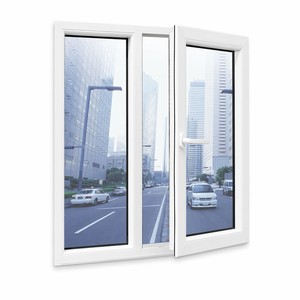
- Acoustic Insulation (T-1 to T-4 Ratings): High-density urban zones in Tokyo, Osaka, and Nagoya demand superior airborne sound attenuation. By pairing multi-chambered UPVC profiles or thermal break aluminum profiles with unequal double-glazing gaps (e.g., 6mm + 12Ar + 8mm glass package), sound reduction indices up to STC 42 / T-3 level are systematically achieved.
2. Advanced Thermal Isolation & ZEH (Zero Energy House) Integration
Under the Japanese Ministry of Land, Infrastructure, Transport and Tourism (MLIT) roadmap, all new residential construction in Japan must comply with Net Zero Energy House (ZEH) performance standards. Traditional non-thermal aluminum profiles are being rapidly phased out due to thermal bridging issues that create internal condensation and thermal loss.
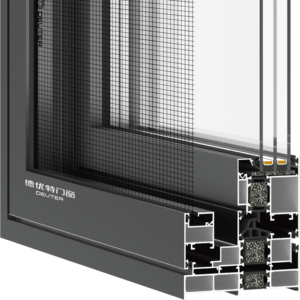
Our thermal break aluminum profile technology integrates high-spec Polyamide PA66 GF25 (25% Glass Fiber reinforced) thermal barrier strips. This structural division decouples the exterior aluminum shell from the interior room profile, drastically lowering frame thermal transmittance:
3. Surface Treatment & Corrosion Resistance for Coastal Japan
Japan’s extensive coastline subjects fenestration profiles to continuous salt spray, high humidity, and atmospheric chlorides. Standard powder coatings frequently suffer from filiform corrosion and delamination within 3 to 5 years of coastal deployment.
To ensure 30+ year structural longevity, our factory employs Anodized Electrodeposition (Anodic ED Coating)—a specialized finishing technology widely required across the Japanese architectural sector. The process combines an anodized oxide film layer (10–15 microns) with a synthetic resin electrodeposited topcoat (7–10 microns). This results in an ultra-smooth, scratch-resistant finish certified under JIS T 8602, demonstrating exceptional UV stability and salt fog resistance exceeding 4,000 continuous test hours.
1. Hokkaido & Tohoku (Cold Climate & Heavy Snow)
Primary Challenge: Severe sub-zero temperatures, frost heave, heavy snow loads, and intense condensation risks.
Profile Solution: Multi-chamber UPVC profiles and heavy-duty 75mm Thermal Break Aluminum systems. Engineered with deep glazing pockets supporting triple-glazed Low-E units (up to 44mm glass packs) and specialized bottom drain-port heaters to prevent ice buildup around sash seals.
2. Greater Tokyo & Kansai Urban High-Rises
Primary Challenge: Dense urban acoustic isolation, strict fire prevention zoning (Boushi/Semi-Boushi zones), and high wind pressures on upper floors.
Profile Solution: Narrow-sightline structural aluminum profiles featuring integrated steel reinforcement cores, concealed multi-point hardware locks, fire-rated glass compatibility, and T-3 acoustic isolation gaskets.
3. Okinawa & Coastal Kyushu (Typhoon & Marine Zones)
Primary Challenge: Category 4-5 typhoon winds, flying debris impacts, and aggressive saltwater atmospheric oxidation.
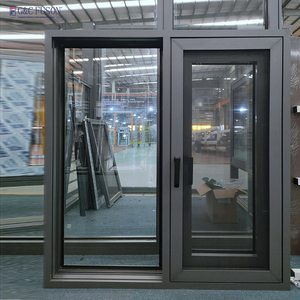
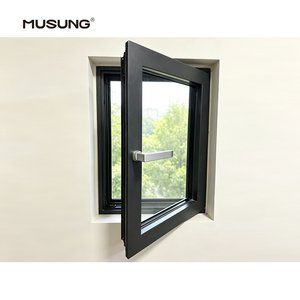
Profile Solution: Heavy-gauge impact-resistant outswing casement aluminum profiles with Anodized Electrodeposition finishes. Reinforced lock-keep connections and laminated impact glass packages designed to survive dynamic wind loadings up to 4.5 kPa.
Japan Fenestration Market Trends & Sourcing Shift (2024–2030)
As Japanese developers face rising material costs, labor shortages among local installation teams, and stringent carbon reduction targets under the 2050 Carbon Neutrality goal, procurement behaviors across Japanese trading companies (Sogo Shosha) and building material importers have evolved significantly:
Prefabricated & Modular Frame Assemblies
Japanese general contractors increasingly prefer precision pre-cut, pre-drilled, and hardware-fitted profile kits shipped directly from offshore factories. Direct mill-precision cutting (±0.5mm tolerance) dramatically reduces jobsite labor hours in Japan, alleviating local trade worker shortages.
Hybrid Aluminum-Wood & Slim Sightline Aesthetic
Modern Japanese minimalist architecture emphasizes expansive glazed elevations ("Engawa" seamlessly blending indoors and outdoors). High-strength thermal break aluminum profiles allow ultra-narrow frame profiles without sacrificing structural wind resistance or thermal insulation performance.
50+ Years In-House Fabrication Heritage
Operating dedicated extrusion, thermal breaking, powder coating, anodizing, and glass assembly lines under a single quality control roof since 1973. Every profile batch undergoes rigorous spectral metal analysis and mechanical strain testing.
1/8-Inch & Millimeter Bespoke Customization
We do not restrict buyers to rigid catalog dimensions. Profile die development, custom extrusion shapes, specialized mullions, and custom window dimensions are manufactured precisely to architectural shop drawings.
Comprehensive B2B Engineering Documentation
Providing Japanese commercial partners with detailed structural wind load calculation reports, thermal modeling files (THERM/WINDOW data), CAD cross-sections, and step-by-step installation manuals for fast local approvals.
Partner with a World-Class Profile Manufacturer Serving Japan
Get in touch with our technical fenestration specialists today to request structural profile catalogs, test documentation, sample profile kits, or direct project price quotations.
Get Catalog