
Certified Vinyl & Thermal Aluminium Window Series
Explore our structural fenestration inventory optimized for Hamburg’s coastal climate, urban noise control, and rigorous German energy directives.
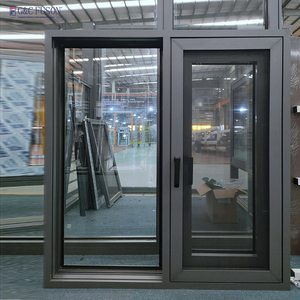
Fuson Thermal Break Aluminum Windows Double Glazing French Window
Send an Inquiry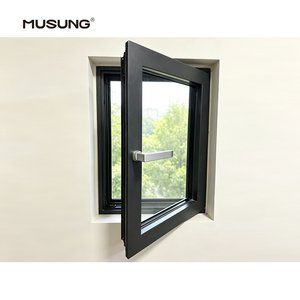
Custom Modern Aluminum Casement Windows Windproof Durable Safe Double Glazing
Send an Inquiry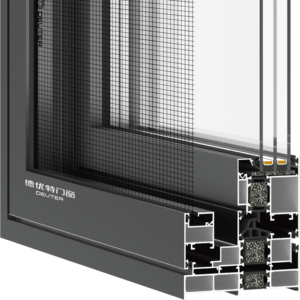
Villa Project Impact Resistant Outswing Aluminum Casement Window Hurricane Glass
Send an Inquiry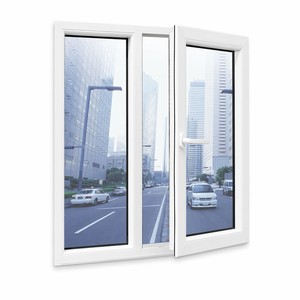
UPVC Casement Window European Design White Double Glazed Energy Efficient Soundproof
Send an Inquiry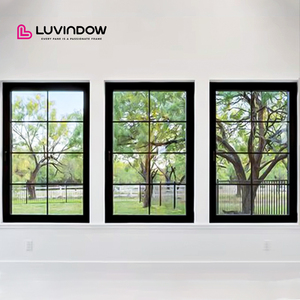
Hurricane Proof High Impact Black Aluminum Alloy Thin Profile Casement Window
Send an Inquiry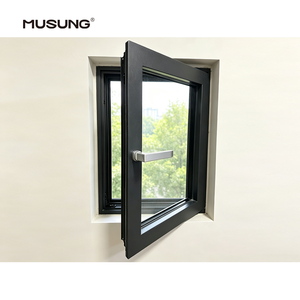
Modern Thermal Break Aluminum Casement Windows Windproof Safe Durable Double Glass
Send an Inquiry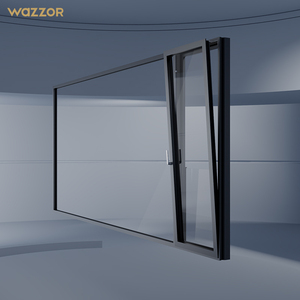
High-Quality Typhoon-Resistant And Energy-Saving Casement Soundproof Windows
Send an Inquiry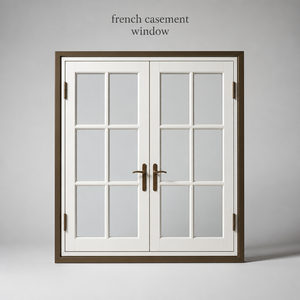
Verified Standard Luxury French Aluminum Casement Window With Grill Design
Send an Inquiry1. Technical Whitepaper: Vinyl Window Manufacturing Standards for Hamburg
Hamburg, as Germany’s primary maritime trade hub and second-largest metropolis, presents a highly rigorous set of architectural, environmental, and regulatory requirements for structural fenestration. Situated along the Lower Elbe River near the North Sea, the city experiences a humid temperate oceanic climate characterized by persistent coastal wind shear, heavy driving rain (Schlagregen), high relative humidity, and salt spray exposure. Furthermore, modern urban density projects—such as the HafenCity waterfront district, historic Altbau restorations in Winterhude and Eimsbüttel, and suburban residential developments in Blankenese—demand versatile fenestration engineering capable of satisfying strict national structural codes.
For architectural specifiers, general contractors, real estate developers, and wholesale buyers in Hamburg, sourcing vinyl (uPVC) windows requires moving beyond standard mass-market commodities. It necessitates selecting high-performance, multi-chambered vinyl profile systems manufactured with specialized micro-formulations. Our direct-factory manufacturing capabilities bridge the gap between heavy industrial production capacity and micro-precise architectural customization, engineered specifically to satisfy German Energy Saving Legislation (Gebäudeenergiegesetz - GEG) and regional structural challenges.
Information Gain Insight: Under Hamburg’s modern climate adaptative building strategies and GEG updates, exterior window units must not only deliver baseline thermal performance (Uw ≤ 0.95 W/m²K for residential retrofits) but must also achieve high air permeability resistance (DIN EN 12207 Class 4) to eliminate thermal leakage during harsh North Sea low-pressure weather systems.
Extrusion Chemistry and Coastal Weathering Resistance
Vinyl windows manufactured for Northern European climates must withstand extreme weathering without experiencing physical degradation, yellowing, or frame embrittlement. Standard PVC formulations degrade under persistent UV radiation and fluctuating coastal humidity. Our manufacturing process utilizes high-impact, unplasticized Polyvinyl Chloride (uPVC) synthesized with specialized stabilization matrixes:
- Titanium Dioxide (TiO2) Saturation: A minimum 6.5% to 8.0% concentration of rutile-grade titanium dioxide is incorporated into the profile compound, reflecting ultraviolet radiation and preventing polymer breakdown.
- Calcium-Zinc (Ca/Zn) Eco-Stabilizer Systems: Moving away from legacy lead-based stabilizers, our factory utilizes heavy-metal-free Ca/Zn eco-stabilizers, ensuring full compliance with European REACH regulations while enhancing frame impact strength.
- DIN EN 12608 Class A Wall Thickness: Profiles are extruded with exterior wall thicknesses of 3.0mm (±0.2mm), offering superior corner weld strength, structural rigidity, and torsional stability under high wind loading.
2. Engineering Matrix & Standardized Technical Criteria
To assist Hamburg procurement teams, structural engineers, and architectural consultants in evaluating performance compliance, the following data matrix details our manufacturing specifications across core testing parameters set by DIN, EN, and ISO standards.
| Performance Parameter | Test Standard / Standard Code | Factory Technical Specification | Hamburg Application Compliance |
|---|---|---|---|
| Thermal Transmittance (Uw) | DIN EN ISO 10077-2 / GEG 2024 | 0.74 W/(m²K) – 0.92 W/(m²K) | Exceeds standard GEG requirements; Passive House certified option |
| Acoustic Insulation (Rw) | DIN 4109 (Lärmschutzklassen 1-6) | Up to 47 dB attenuation (Class 5/6) | Ideal for Hamburg Airport flight paths & Elbe shipping tracks |
| Wind Load Resistance | DIN EN 12210 | Class C5 / B5 (up to 2000 Pa) | Coastal gust resilience for high-rise HafenCity installations |
| Watertightness (Schlagregen) | DIN EN 12208 | Class E900 / Class 9A (900 Pa pressure) | Prevents water penetration during severe storm surges |
| Air Permeability | DIN EN 12207 | Class 4 (Highest Tightness Rating) | Eliminates draft infiltration & reduces HVAC energy costs |
| Profile Chamber Design | DIN EN 12608 Class A | 6-Chamber to 7-Chamber uPVC Core | Optimized thermal breaks & internal structural steel reinforcement |
| Glazing Package Options | DIN EN 673 | Triple Glazed (4 LowE / 16 Ar / 4 / 16 Ar / 4 LowE) | Argon filled 90%+, warm-edge composite spacer technology |
3. Localized Application Scenarios Across Hamburg Districts
Fenestration design in Hamburg cannot adopt a "one-size-fits-all" methodology. Architectural typologies vary dramatically between historic districts, modern urban redevelopments, and outer suburban zones. Our manufacturing facility specializes in tailored structural adaptations optimized for specific local environments.
HafenCity & Maritime Docklands
High-rise residential and commercial towers face extreme wind pressures and coastal moisture. High-load uPVC casement windows with continuous EPDM triple-gasket sealing guarantee structural integrity and total water isolation under severe atmospheric storm conditions.
Altbau Restorations (Winterhude / Eimsbüttel)
Strict heritage preservation laws (Denkmalschutz) demand classic aesthetics, narrow frame profiles, authentic Georgian bars (Sprossen), and subtle color matching. Custom profile fabrication replicates historic lines while introducing modern thermal breaks.
Acoustic Zones (Fuhlsbüttel / Altona)
Developments situated within airport flight paths or high-density railway corridors require specialized glass configurations. Asymmetrical glass thickness combined with acoustic PVB laminates achieves sound insulation up to Rw 47 dB.
Acoustic Engineering against Marine & Urban Noise Pollution
Urban noise pollution poses a documented public health risk. Hamburg’s heavy port operations along the Elbe, continuous container truck transport, rail freight lines, and commercial aviation routes around Fuhlsbüttel demand precise sound isolation. Standard double-pane glazing performs poorly against low-frequency engine rumbles. Our factories engineer multi-layered soundproof units using acoustic-laminated safety glass (VSG) featuring specialized sound-dampening acoustic polyvinyl butyral (PVB) interlayers.
By pairing varying pane thicknesses (e.g., 8mm exterior VSG acoustic pane paired with a 6mm interior toughened pane) separated by gas-filled cavities, acoustic resonance is destroyed. This allows our window units to easily meet DIN 4109 Noise Protection Classes 4, 5, and 6, turning urban waterfront residences into serene indoor environments.
4. Localized Trends & Sustainability Standards in Northern Germany
Hamburg is recognized as a leader in sustainable urban design and green building practices in Central Europe. The city's climate protection plan aims for carbon neutrality by 2045, placing stringent expectations on building envelope energy performance, operational lifecycle, and material recyclability.
Integration of Smart Micro-Ventilation (Preventing Interior Mold)
Due to high ambient coastal humidity levels in Northern Germany, installing modern airtight windows without automated micro-ventilation can trap moisture indoors, leading to condensation and hazardous mold growth (Schimmelpilz). To combat this, our vinyl window systems manufactured for Hamburg can be equipped with integrated micro-ventilation systems (such as controlled trickle vents or pressure-differential flap ventilators like Regel-Air):
- Automatic Pressure Adjustment: Flap ventilators respond dynamically to wind pressure variations, supplying fresh air continuously without requiring manual window operation.
- Thermal Energy Preservation: Fresh air intake is metered to prevent dramatic temperature drops, maintaining compliance with energy conservation codes.
- Insect and Rain Barriers: External grilles protect internal chambers from driving rain and pest infiltration.
Circularity, Closed-Loop Recycling, and Decarbonization
German procurement contracts increasingly emphasize Circular Economy principles. Our uPVC windows utilize virgin-grade recyclable polymers alongside high-purity recycled cores. The internal steel reinforcement components and uPVC frame materials are 100% separable at end-of-life, drastically lowering the embodied carbon footprint. Sourcing directly from our streamlined manufacturing lines allows developers to achieve credits under sustainability frameworks such as DGNB (Deutsche Gesellschaft für Nachhaltiges Bauen) and LEED.
5. Enterprise Manufacturing Advantages & OEM/ODM Direct Capabilities
Partnering with a dedicated window manufacturer provides critical advantages over purchasing through intermediary trading vendors. Building on a manufacturing heritage established in 1973 (over 50 years of continuous fabrication excellence), our facility blends legacy craftsmanship with advanced automated production automation.
Custom Dimensional Precision
Every fenestration unit is cut, welded, glazed, and finished to precise 1/8-inch or millimeter specs recorded during site survey measuring, eliminating field shimming complications.
Single-Roof Quality Control
From frame extrusion and steel reinforcement insertion to dual/triple insulated glass unit (IGU) assembly, all processes occur in-house to guarantee zero-defect delivery.
Scalable B2B Supply Chain
Our expansive industrial plant supports large-volume unit schedules for multi-family residential projects, commercial retrofits, and wholesale distributor networks across Northern Europe.
Strict In-House Fabrication Protocols
Our 77 Newark Street production philosophy relies on computer-numerical-control (CNC) double-head welding machinery. This ensures four-corner simultaneous fusion welding of uPVC profiles, delivering corner joints capable of withstanding extreme mechanical stress tests. Integrated warm-edge composite spacers (such as Technoform or Swisspacer) replace legacy aluminium spacers, reducing perimeter thermal bridging and effectively eliminating condensation at the glass edge (Psi values down to 0.031 W/mK).
Frequently Asked Questions by Hamburg Contractors & Architects
How do your vinyl windows satisfy German GEG (Gebäudeenergiegesetz) regulations?
Our vinyl window series feature multi-chambered uPVC profiles (6-7 internal chambers) combined with argon-filled triple Low-E glazing and warm-edge spacers. This configuration delivers an overall frame-and-glass thermal transmittance coefficient (Uw) as low as 0.74 to 0.85 W/(m²K), easily beating the German GEG baseline requirement of 0.95 W/(m²K) for residential refurbishments.
Can your window units withstand North Sea gale-force wind speeds and driving rain in Hamburg?
Yes. Our windows are engineered and tested to meet DIN EN 12210 Wind Load Resistance Class C5/B5 and DIN EN 12208 Watertightness Class E900 (Class 9A). Internal galvanized steel reinforcements and continuous multi-gasket EPDM weatherstripping ensure complete resistance against driving rain during heavy coastal storms.
What acoustic insulation options are available for properties located near Hamburg Airport or train lines?
We supply custom acoustic glazing packages utilizing asymmetrical pane thickness (e.g., 8mm + 6mm) paired with acoustic PVB-laminated safety glass (VSG). This construction achieves sound insulation ratings up to Rw 47 dB, fulfilling DIN 4109 Lärmschutzklassen 4 through 6 for high-noise urban zones.
Do you manufacture non-standard sizes, arched frames, or heritage profiles for Hamburg Altbau projects?
Absolutly. Because every unit is manufactured to order from our own floor, we routinely produce custom geometric shapes including arch tops, trapezoids, bay/bow window assemblies, and historic profiles equipped with internal or external Georgian muntin bars (Sprossen) for heritage preservation compliance (Denkmalschutz).
How do you manage B2B logistics and shipping for volume orders arriving in Hamburg?
We specialize in export-grade protective packaging, including heavy-duty A-frame timber crates, shrink-wrapped steel banding, and corner protectors. Orders are containerized for sea/rail freight directly into the Port of Hamburg or delivered door-to-door to contractor staging sites with full insurance coverage and customs documentation support.
Accelerate Your Hamburg Fenestration Project
Get in touch with our engineering team today for technical advice, structural CAD details, thermal calculations, or a factory-direct competitive quotation tailored to your architectural specifications.