
Industrial-Grade Door Profile Portfolio
Engineered for architectural contractors, commercial builders, and OEM door manufacturers across Osaka, Kobe, and the wider Kansai industrial hub.
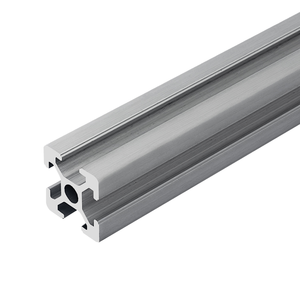
Super Aluminum Extrusion Profiles 6000 Series
- Alloy: 6063-T5 / 6061-T6
- Anodized Film Thickness: 15μm+
- Custom Bending & CNC Welding
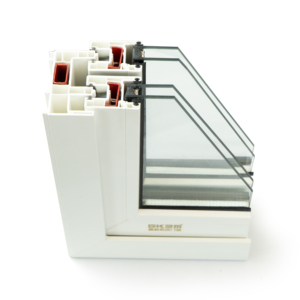
92 Series UPVC Sliding Door Extruded Profile
- High Thermal Insulation (K ≤ 1.4)
- Multi-Chamber Structure
- UV & Salt Air Resistance
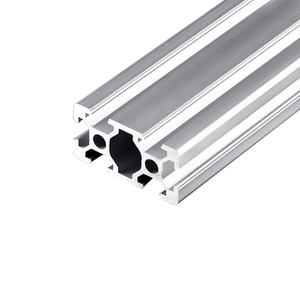
T-Track Heavy Framing Aluminum Extrusion Profiles
- Dimensions: 40x40 / 45x45 / 45x90
- High-Load Structural Framing
- Assembly Line & Modular Doors
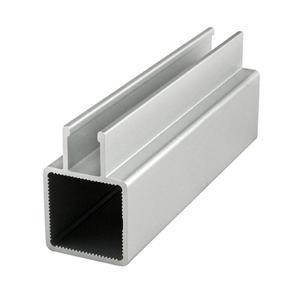
40x40 High-Security Architectural Door Profiles
- Reinforced Tensile Wall Thickness
- Anti-Intrusion Mechanical Spec
- Satin Anodized & Powder Coated
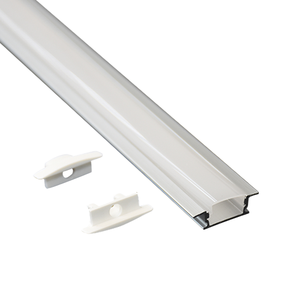
6000 Series Square Hollow Extruded Profile
- Precision Hollow Tube Structure
- 5-Axis CNC Precision Fabrication
- Optimal Torsional Rigidity
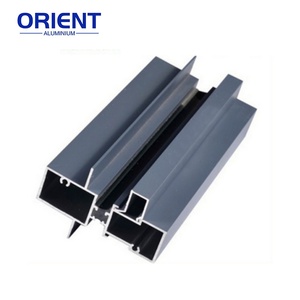
Thermal Break Cost-Effective Aluminum Profile
- PA66 Nylon Thermal Insulation Strip
- ZEH Building Standard Compliant
- Reduces HVAC Energy Loss by 38%
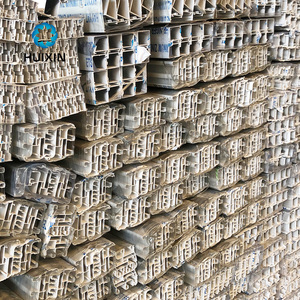
Commercial Window & Door Aluminum Frame System
- S-6 Wind Pressure Rating (JIS)
- Integrated Weather Seals
- High Volume Commercial Supply
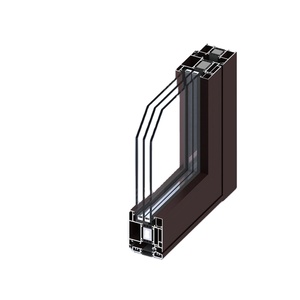
Heavy-Duty Sliding Door Alloy Extrusion Profiles
- Smooth Roller Track Integration
- Acoustic Suppression T-3 Grade
- Corrosion-Resistant Finish
Precision Door Profile Manufacturing Tailored for Osaka & Kansai Architecture
Understanding the engineering demands of Osaka’s unique climate, coastal exposure, seismic building codes, and strict environmental standards.
Osaka Bay Coastal Corrosion Resistance
Architectural installations surrounding Osaka Bay—including Nanko Port, Sakishima, and the Yodogawa estuarine zones—face continuous airborne salinity and humidity. Our profile systems utilize specialized 6063-T5 aluminum alloy treated with electrophoretic coating (CASS tested 72h+) and 15μm–25μm electro-anodizing. This prevents intergranular oxidation, pitting corrosion, and surface degradation caused by marine salt fog.
Kansai Typhoon & Wind-Pressure Resilience
Osaka routinely experiences severe typhoons originating in the Pacific Ocean, requiring door framing that strictly adheres to JIS A 4702 S-5 to S-7 wind pressure performance (rated up to 2400 Pa – 3600 Pa). Our hollow structural extrusions feature reinforced internal webbing and high yield strength (Rp0.2 ≥ 145 MPa), guaranteeing zero structural deflection or water ingress during extreme storm surges.
ZEH & ZEHB Thermal Efficiency Standards
Under Japan’s updated energy conservation mandates for Zero Energy Houses (ZEH) and Zero Energy Buildings (ZEHB), architectural profiles must achieve exceptionally low U-factors. By integrating PA66 nylon thermal barrier strips within dual-chamber extruded aluminum frames, our door profiles deliver thermal conductivity K-values below 1.4 W/m²K, significantly reducing commercial building HVAC load in hot Osaka summers and cold Kansai winters.
Technical Spec Focus: JIS A 5756 & Architectural Compatibility in Osaka
Whether supplying major Japanese general contractors (Taisei, Takenaka, Obayashi, Kajima) or local fabricators in Higashiosaka, our extrusions strictly match standard Japanese module dimensions. From hidden drainage channels to flush-fit sliding track profiles, every production batch undergoes precision optical coordinate checks to ensure seamless integration with local hardware, auto-door sensors, and perimeter flashing accessories.
Osaka Door Profile Procurement & Industry Trends
Key technical shifts transforming the architectural extrusion landscape across the Kansai economic zone.
1. Shift Toward Decarbonized Low-Carbon Aluminum
With Osaka Prefecture driving aggressive target reductions in carbon intensity ahead of World Expo development initiatives, developers are demanding eco-friendly supply chains. Our extrusion lines incorporate up to 60% recycled primary-grade aluminum billet melted using low-emission natural gas furnaces. This reduces embodied carbon by over 45% per ton of profile extruded without sacrificing tensile strength or finish consistency.
2. Urban Soundproofing for High-Density Commuter Zones
Commercial and residential developments adjacent to Osaka's major transit lines—such as the JR Loop Line, Midosuji Avenue, and Hankyu Rail networks—require high-level acoustic isolation. Our engineered door profiles support double- and triple-glazed insulated units, achieving T-3 (35dB reduction) and T-4 (40dB reduction) soundproofing performance under JIS tests, shielding indoor environments from low-frequency urban noise pollution.
3. Micro-Tolerance Precision for Automated Entrance Systems
The rapid installation of touchless, automatic sliding doors in Osaka’s retail hubs (Umeda, Namba, Shinsaibashi) demands extrusions with strict dimensional tolerances (±0.10mm per meter). Our 5-axis CNC machining, precision die fabrication, and automated notch-cutting ensure door frame tracks remain completely square and free of torsional warpage, ensuring long-term motor reliability.
4. Hybrid uPVC-Aluminum Profile Composite Solutions
To balance the structural strength of metal with the superior thermal efficiency of polymers, Japanese architectural specifiers are rapidly adopting hybrid profile systems. We supply co-extruded frames featuring exterior anodized aluminum shells for weather resilience combined with multi-chamber interior uPVC core structures, maximizing both durability and operational energy savings.
Why Leading Osaka Contractors Partner with Us
Combining 50+ years of fabrication excellence with direct factory customization, complete quality control, and streamlined international logistics.
In-House Manufacturing Matrix
Unlike regional trading intermediaries, we execute all core production stages under a unified quality system—including die design, alloy melting, billet extrusion, thermal break assembly, anodizing, powder coating, and precision 5-axis CNC machining (bending, cutting, tapping, and robotic welding).
Exact Custom Dimensions & Tooling
We eliminate standard catalogue limits by cutting and extruding profiles to the exact millimeter dimensions specified in field shop drawings. Complex architectural shapes—including arch-top headers, corner posts, heavy-duty mullions, and custom thermal break profiles—are routine work for our engineering team.
Rigorous QA & Traceability
Every lot produced undergoes rigorous metallurgical spectral analysis, coating thickness measurement (spectrophotometry), tensile testing, and optical dimension checks. Full mill test certificates (MTC) and quality documentation are provided with every shipment dispatched to Osaka and Kobe ports.
Osaka B2B Buyer & Procurement FAQ
Frequently asked technical and commercial queries regarding custom profile supply in Osaka and Kansai region.
Yes. All structural door profile alloys (primarily 6063-T5, 6061-T6, and 6005A-T6) are formulated and extruded to meet or exceed JIS A 5756 dimensional standards and JIS A 4702 mechanical performance ratings for wind load resistance, air tightness (A-4 grade), and water tightness (W-5 grade).
For installations within 3 km of the coast (such as Osaka Bay, Nanko, or Kobe Harbor), we strongly advise our composite electrocoating (electrophoretic clear or color coat over anodized aluminum) or 70% PVDF fluorocarbon coating. These treatments withstand 1,000+ hours of neutral salt spray testing and prevent surface pitting caused by marine salt aerosol.
Custom die opening and sample verification generally require 10 to 14 days. Following sample approval, mass extrusion and surface finishing take approximately 15 to 20 days. Ocean freight from our primary logistics port directly to Osaka Port or Kobe Port typically takes 4 to 7 days, enabling highly reliable construction schedules.
Absolutely. Our dual-chamber thermal break profiles utilize imported Polyamide (PA66GF25) thermal strips reinforced with 25% glass fiber. This structure prevents thermal bridging, eliminates interior frame condensation during humid Osaka summers and chilly winters, and lowers total door system U-values to under 1.4 W/m²K.
We operate a full-service 5-axis CNC machining facility capable of precision length cutting (tolerance ±0.5mm), corner mitering, hinge pocket milling, lock body slotting, mounting hole drilling, and arc bending. Profiles arrive ready for immediate shop assembly or job-site installation in Osaka, minimizing local labor overhead.
For standard existing alloy dies, our MOQ starts at 500 kg per profile section. For fully custom dies designed to your architectural CAD/BIM specifications, the initial tooling fee is often waived on order volumes exceeding 3 metric tons.
Request Custom Extrusion Engineering & Samples for Osaka Projects
Connect directly with our senior extrusion engineers to review shop drawings, calculate wind load ratings, or request factory-direct quotations and alloy sample kits.