
Export-Grade Architectural Window Systems
Engineered to meet European CE standards (EN 14351-1) and tested against severe wind-load pressures, structural shearing, and thermal transmittance specs required by Chilean building codes (NCh 3135 / NCh 3134).
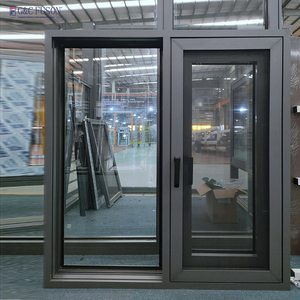
Thermal Break Aluminum Architectural Double Glazed Bay Window
- PA66GF25 Polyamide Thermal Strip
- Double/Triple Tempered Low-E Glass
- Acoustic Rating: Rw Up to 42 dB
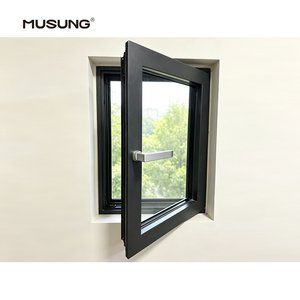
Custom Windproof Energy-Saving Commercial Aluminum Bay Windows
- High Structural Load Resistance
- Multi-Point Hardware Locking
- Ideal for Coastal High-Rise Projects
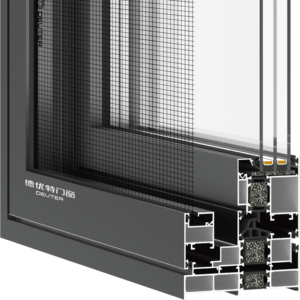
Seismic & Impact-Resistant Outswing Aluminum Bay Window Unit
- Laminated Hurricane-Grade Glass
- Reinforced Corner Key Assembly
- CE Certified Structural Flex Frame
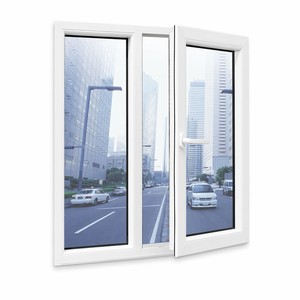
European Design High-Insulation UPVC Architectural Bay Windows
- Multi-Chamber UV-Stabilized Vinyl
- Thermal U-Value: ≤ 1.1 W/m²K
- Zero Maintenance Weather Seals
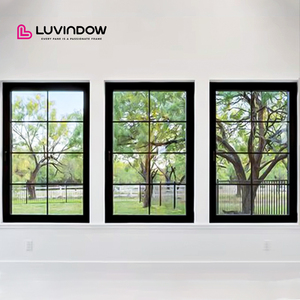
Ultra-Slim Profile Anodized Aluminum Bay & Bow Architectural System
- C5 Anti-Corrosion Marine Coating
- Maximum Panoramic Daylight Ratio
- Argon Gas-Filled Double Glazing
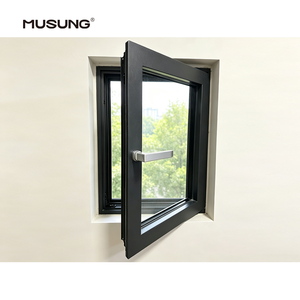
Heavy-Duty Thermal Break Structural Casement Bay Window
- EPDM Triple Sealing Gaskets
- Heavy-Duty Concealed Hinges
- High-Performance Water Tightness
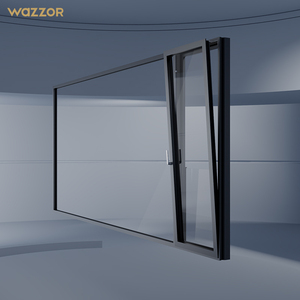
Typhoon-Resistant & Acoustic-Insulated Bay Window System
- Design Pressure Up to 5000 Pa
- Integrated Insect Screen Mesh
- Vibration Damping Corner Joint
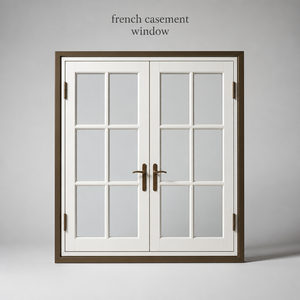
Luxury Architectural French Bay Window with Decorative Grill Design
- Custom Bay Angles (90°, 135°, 150°)
- Architectural Powder Coatings
- Certified Dual Tempered Safety Glass
1. Engineering Architectural Bay Windows for Chile’s Climatic & Structural Reality
Chile represents one of the world’s most demanding architectural landscapes. Spanning over 4,300 kilometers from the hyper-arid Atacama Desert in the north to the glacial winds of Patagonia in the south, while being bisected by the high-altitude Andes and a salt-rich Pacific coastline, window units exported to Chile must endure extreme thermal shifts, intense solar radiation, aggressive atmospheric corrosion, and violent seismic events.
As a global B2B manufacturer and exporter of CE-certified architectural bay and bow windows, our systems are built specifically to bridge aesthetic elegance with uncompromising civil engineering requirements. Architectural bay windows project outward from the exterior building envelope, creating three-dimensional structural protrusions that catch light, expand living areas, and offer panoramic views. However, this three-dimensional geometry introduces complex structural cantilever stresses, thermal bridging risks, and wind load vectors that standard planar windows do not face.
Seismic Resilience & Frame Elasticity (Chilean Standard NCh 433 Compliance)
Chile experiences some of the highest seismic activity on Earth. Under the strict guidelines of Chilean Structural Standard NCh 433 (Diseño Sísmico de Edificios), building envelopes must accommodate lateral inter-story drift without structural failure or glass fallout. Standard rigid fenestration systems often crack or pop out during high-magnitude earthquakes.
Our architectural bay window systems feature heavy-duty extruded aluminum profiles (6063-T6 alloy) or reinforced multi-chamber vinyl, coupled with flexible structural silicone glazing (SSG) and elastomeric EPDM gaskets. The corner coupling mullions—available in fixed 90°, 135°, and variable angle configurations—are reinforced with internal stainless steel structural sleeves. This structural design enables the bay assembly to flex elastically during lateral seismic racking while maintaining airtightness and preventing catastrophic pane shattering.
Thermal Transmittance & Zonal Climate Adaptation (OGUC Regulations)
Under the General Regulations of Urban Planning and Construction in Chile (Ordenanza General de Urbanismo y Construcciones - OGUC), Chile is categorized into seven distinct thermal zones (Zona 1 through Zona 7). Importing architectural fenestration into Chile requires strict adherence to maximum allowed thermal transmittance values ($U$-values):
| Chile Thermal Zone | Representative Cities / Regions | Required Max $U$-Value (W/m²K) | Recommended System Configuration |
|---|---|---|---|
| Zone 1 & Zone 2 | Iquique, Antofagasta, Copiapó (North Coast/Desert) | ≤ 3.6 - 3.0 | Thermal Break Aluminum + Solar Control Low-E Double Glazing (DVH) |
| Zone 3 & Zone 4 | Valparaíso, Viña del Mar, Santiago Metropolitan | ≤ 2.8 - 2.2 | PA66GF25 Thermal Break Aluminum + Argon-Filled DVH (6mm+12Ar+6mm) |
| Zone 5 & Zone 6 | Concepción, Temuco, Puerto Montt (Central-South) | ≤ 1.9 - 1.5 | High Profile UPVC or Multi-Cavity RPT Aluminum + Warm Edge Spacers |
| Zone 7 | Coyhaique, Punta Arenas (Patagonia / Far South) | ≤ 1.2 - 0.9 | Triple Glazed (DVH Triple) + Dual Low-E Coating + Kryp/Argon Fill |
CE Certified Rigor
Fully compliant with European Standard EN 14351-1, covering air permeability, water tightness, structural wind resistance, and dangerous substances control for seamless customs clearance in San Antonio and Valparaíso.
Thermal Break PA66GF25
Equipped with 25% glass-fiber reinforced polyamide thermal barrier strips. Completely decouples interior and exterior metal profiles to eliminate condensation and dramatically lower HVAC power consumption.
C5 Marine Corrosion Shield
Architectural powder coatings meeting QUALICOAT Class 2 standards and anodized treatments tested to withstand over 3,000 hours of continuous salt spray (ISO 9227) for coastal Valparaíso and Antofagasta installations.
2. Localized Application Scenarios Across Chile’s Real Estate Market
Scenario A: Santiago High-Rise Residential & Commercial Developments
In the Santiago Metropolitan Region (Región Metropolitana), architectural projects face dual demands: acoustic attenuation against high urban noise pollution and extreme diurnal thermal fluctuations (hot summers and cold Andean winter nights). Architectural bay windows in modern Santiago apartments and luxury villas expand interior usable square footage while functioning as solar capture modules.
Recommended Specification: Thermal Break Aluminum Bay Window with double-glazed 6mm Toughened Clear + 12mm Argon Space + 6mm Low-E Glass. Acoustic dampening locks achieve an sound transmission reduction of up to $Rw = 38-42 \text{ dB}$, isolating indoor living spaces from arterial transit noise on Avenida Providencia or Costanera Norte.
Scenario B: Coastal Valparaíso, Viña del Mar, and Northern Port Cities
Marine environments along the Chilean coastline are characterized by high atmospheric salinity, relentless ocean breeze moisture, and heavy coastal wind pressures exceeding 2,500 Pa during winter storms. Standard window hinges and iron fittings rust rapidly, while weak sash profiles suffer water infiltration (filtración de agua).
Recommended Specification: Anodized or PVDF fluorocarbon-coated aluminum frames paired with 316-grade stainless steel multi-point friction hinges and locks. EPDM continuous vulcanized rubber gaskets ensure Class 4 Air Permeability (EN 12207) and Class E900 Water Tightness (EN 12208), ensuring zero liquid penetration even under severe coastal storms.
Scenario C: Chilean Patagonia, Lake Region & Southern Thermal Efficiency
Southern regions (Puerto Montt, Valdivia, Coyhaique, Punta Arenas) require hyper-insulated fenestration to combat sub-zero temperatures, snow loads, and persistent rain. In these regions, heating cost reduction is a primary purchasing driver for commercial developers and residential buyers alike.
Recommended Specification: 70mm+ series high-density UPVC or multi-cavity thermal break aluminum architectural bow/bay windows fitted with triple-glazed insulated units (DVH Triple), warm-edge composite spacers, and dual magnet-assisted frame seals. Achieves ultra-low thermal transmittance values ($U \le 1.1 \text{ W/m²K}$), drastically assisting buildings in meeting the Sustainable Building Certification (Certificación Edificio Sustentable - CES Chile).
3. Market Trends: Decarbonization & The Growth of Green Fenestration in Chile
Chile is leading South America in green building transition and energy efficiency regulations. With the introduction of the Energy Efficiency Law (Ley de Eficiencia Energética N° 21.305) and the national drive toward Net-Zero Carbon building infrastructure, real estate developers are shifting away from cheap single-glazed single-frame windows toward high-performance architectural systems.
Architectural bay windows are increasingly recognized by Chilean architects not merely as decorative retrofits, but as dynamic passive solar engineering systems. When designed with high-performance Solar Control Low-E coatings, bay windows collect winter solar radiation at acute angles while blocking peak summer overhead heat, significantly reducing a building’s operational carbon footprint over its 50+ year lifespan.
4. B2B Manufacturing Superiority & Global Export Supply Chain
Backing our supply network serving Chile is over 50 years of direct manufacturing lineage. Operating from our state-of-the-art 77 Newark Street production complex, our integrated fabrication workflow handles everything from alloy extrusion, thermal break strip crimping, automated CNC miter cutting, and robotic glass sealing to full structural load testing before packaging.
Custom Engineering & Mock-Up Testing
Every bay window assembly is custom-manufactured to 1/8th-inch precision based on CAD/BIM field measurements. We perform factory pre-assembly to verify mullion angles and joint tolerances prior to seaworthy packing.
Seaworthy Export Packaging
Units destined for Chilean ports (Valparaíso / San Antonio) are encased in fully sealed, fumigated hardwood crates with moisture-absorbent desiccant packs, corner protectors, and shrink-wrapped glass protection films.
Direct Factory Lead-Time & Logistics
By controlling raw material sourcing and glass processing under one roof, we eliminate intermediary delays, guaranteeing predictable production cycles for large-scale real estate projects across Chile.
5. Frequently Asked Questions (FAQ) for Chilean Importers & Developers
Ready to Upgrade Your Fenestration Schedule in Chile?
Get in touch with our international engineering team today for technical consultation, CAD drawing review, or an immediate container-load price quote for your next Chilean commercial or residential project.
Send an Inquiry