
Engineering Architectural Windows for West Africa
Explore our premium range of factory-direct arch-top operable, casement, and thermal break aluminum window systems engineered specifically to excel in tropical coastal environments.
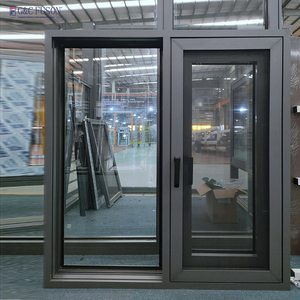
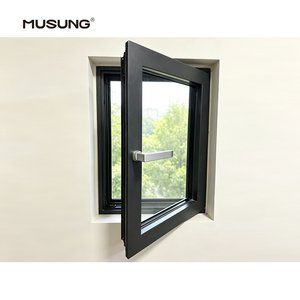
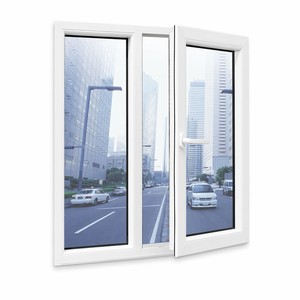
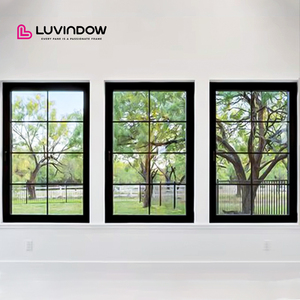
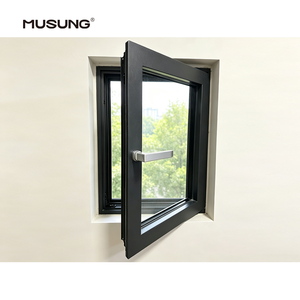
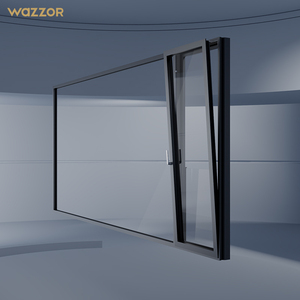
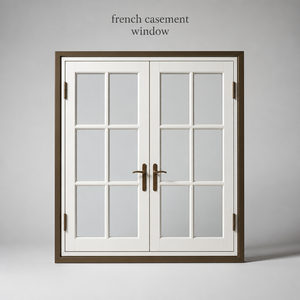
Architectural Revolution in Ghana: The Rise of Arch-Top Operable Windows
Contemporary architecture across Ghana—from luxury residential developments in East Legon, Cantonments, and Airport Residential Area in Accra to commercial landmarks in Kumasi and Takoradi—is undergoing an aesthetic and functional evolution. Architects and real estate developers are increasingly demanding window systems that balance timeless neo-classical elegance with uncompromising thermal and structural performance. Among these architectural solutions, arch-top operable windows stand out as the apex of design sophistication and technical engineering.
Unlike standard fixed transom arches or plain rectangular casements, arch-top operable windows combine curved, elegant radius geometries with fully functional sashes that tilt, swing, or awning-open. Historically, bending window extrusions into precise semicircular, gothic, or eyebrow arches while maintaining perfect weatherproofing and smooth mechanical operation presented severe engineering hurdles. Today, leveraging advanced CNC profile bending, multi-chamber thermal break aluminum extrusions, and state-of-the-art EPDM triple-gasket systems, leading international manufacturers can deliver factory-direct arch-top operable windows tailored specifically for the challenging West African tropical climate.
Key Insight for Ghanaian Procurement: Arch-top operable windows must reconcile visual curvature with hermetic weather-sealing. Standard imported windows often fail during Ghana's monsoon rains and Harmattan dust seasons due to inadequate profile tolerance and inferior seal resilience. Precision-milled custom radius units guarantee permanent operational smooth seal alignment.
Precision Geometry: Bending Radii without Sacrificing Operability
The manufacturing process of an operable arched window is significantly more complex than standard fenestration. It demands absolute mathematical symmetry. When an arch window operates as a casement or tilt-and-turn unit, the perimeter clearance between the frame and the movable sash must remain uniform along the entire curved arc—typically within a tolerance of under 1.5 millimeters (1/8 inch).
Our manufacturing engineering utilizes multi-roller stretch bending machines equipped with real-time laser measurement tracking. This ensures that aluminum or high-grade UPVC profiles retain structural profile integrity without cross-sectional deformation, buckling, or finish crazing. The result is an arch-top sash that opens effortlessly, locks firmly across multi-point gear systems, and delivers tight acoustic and thermal isolation.
Thermal Break Aluminum
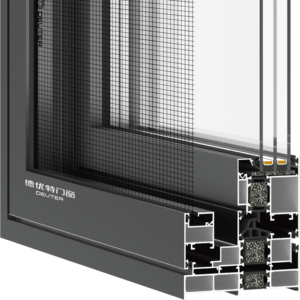
Polyamide thermal barriers (PA66GF25) isolate exterior solar radiation, drastically reducing interior air-conditioning loads and eliminating thermal bridging in tropical heats.
Harmattan Dust Barrier
Multi-barrier continuous EPDM weatherstripping creates a compression seal that completely blocks fine desert dust particles during the dry season, keeping indoor air pristine.
Coastal Marine Finishes
Fluoropolymer AAMA 2605 powder coatings and thick anodized layers protect aluminum frames against salt breeze oxidation along the Accra-Tema coastline.
Ghana Localized Environmental Engineering & Performance Criteria
Building materials installed in West Africa face extreme micro-climates. Ghana presents a dual challenge: intense equatorial solar radiation combined with high atmospheric humidity along the coast, punctuated annually by the harsh, dust-laden winds of the Harmattan season coming from the Sahara. Standard fenestration products imported without localized adaptation suffer premature seal degradation, hardware corrosion, glass thermal stress fractures, and severe solar heat gain.
1. Solar Heat Attenuation & Advanced Glazing Packages
Solar heat entry through large glazed arch openings can overwhelm residential HVAC systems, driving up electricity costs significantly. To counteract this, our arch-top operable windows for the Ghanaian market incorporate high-performance double-glazed or triple-glazed units (IGUs) featuring soft-coat Low-Emissivity (Low-E) films and inert Argon gas filling. By selecting a low Solar Heat Gain Coefficient (SHGC ≤ 0.23) paired with high Visible Light Transmittance (VLT ≥ 60%), indoor living spaces remain brightly lit by natural sunlight while blocking up to 80% of infrared heat energy.
2. Resistance to Coastal Salt Spray Corrosion
Developments situated along the coastal corridors of Labadi, South La, Tema, and Prampram are exposed to airborne marine salts that rapidly corrode standard hardware and raw metals. Our export window series specifies marine-grade 304/316 stainless steel friction hinges, multipoint locking rods, and heavy-duty handles. Frame surfaces undergo a multi-stage pre-treatment etching process followed by electrostatic application of PVDF or architectural powder coatings tested to withstand 3,000+ hours of continuous salt spray exposure.
3. Wind Load and Monsoon Water Ingress Protection
During West Africa's torrential rainy season, wind-driven rain can hit fenestration systems at high dynamic pressures. The curved geometry of an arch sash requires specialized pressure-equalized drainage tracks. Integrated internal weep channels direct driving water away from the sash perimeter, discharging it outward while preventing water back-up even during gale-force downpours.
Comparative Technical Performance Matrix
To assist architects, structural engineers, and quantity surveyors in making informed specification decisions, the following data matrix compares standard market windows against our specialized Arch-Top Operable Thermal Break Aluminum Windows tailored for Ghana.
| Performance Parameter | Standard Non-Thermal Windows | Generic Imported UPVC | Engineered Arch-Top Thermal Break |
|---|---|---|---|
| U-Value (W/m²K) | 5.8 - 6.2 (Poor thermal resistance) | 2.2 - 2.8 (Moderate thermal resistance) | 1.3 - 1.7 (Superior insulation) |
| Solar Heat Gain (SHGC) | 0.72 - 0.85 (High interior heat) | 0.50 - 0.65 (Moderate heat transfer) | 0.21 - 0.25 (High solar rejection) |
| Harmattan Seal Tightness | Single PVC gasket (Deteriorates) | Standard rubber strip (Shrinks) | Continuous Triple EPDM Compression |
| Coastal Corrosion Rating | Fails within 12-18 months | Discolors under intense UV | AAMA 2605 Marine Powder Coat (20+ Yrs) |
| Bending Precision Tolerance | > 5.0 mm (Visible gaps) | > 3.0 mm (Operational friction) | ≤ 1.5 mm (1/8 inch exact radius fit) |
Manufacturing Excellence: Why Lead Developers Partner with Us
With over 50 years of heritage in manufacturing architectural windows, custom doors, and screening systems, our production ecosystem brings unmatched operational rigor to custom architectural orders. Operating from state-of-the-art fabrication facilities, every single arch-top operable unit is custom-cut, precision-bent, fused, glazed, and quality-tested under one roof before export packaging.
Factory Direct Control
We do not outsource arch profile bending. Cutting, welding, CNC milling, hardware installation, and glass hand-off are controlled in-house, eliminating third-party markups and quality variances.
Tailored 1/8-Inch Fit
Because structural blockwork openings in Ghana can vary, every unit schedule is fabricated to exact opening measurements provided by your site team, preventing costly field retrofitting.
Container Freight Protection
Windows destined for Tema Port are packed in reinforced steel-capped wooden crates with vacuum desiccant wrap to prevent moisture damage during transit across maritime trade routes.
Streamlined B2B Procurement Process for Ghanaian Projects
We work directly with estate builders, commercial contractors, architectural firms, and building material distributors across Ghana. From initial CAD drawing reviews to final container offloading guidelines, our export engineering department provides step-by-step support:
- Architectural CAD Verification: Send us your elevation drawings and rough opening dimensions. Our shop drawings detail exact radius points, mullion locations, hardware placement, and structural calculations.
- Sample Customization: Color chips, thermal break profile cross-sections, and corner mock-ups are dispatched directly to your office in Accra or Kumasi for client presentation and approval.
- Container Shipping Logistics: Full Container Load (FCL) shipping directly to Tema Port or Takoradi Port with complete customs invoice documentation, Certificates of Origin, and Ghana Standards Authority (GSA) compliance paperwork.
Frequently Asked Procurement & Technical Questions
Addressing the core technical, logistical, and architectural queries submitted by developers and buyers across Ghana.
1. Why choose operable arch-top windows over fixed arch transoms?
Fixed arch transoms provide daylight but zero ventilation. In Ghana's climate, natural cross-ventilation is essential to flush out humid indoor air and minimize dependence on air conditioning. Operable arch-top windows (available as casement, tilt-and-turn, or top-hung awning configurations) give you the best of both worlds: majestic architectural curves and full air circulation.
2. How do your window seals withstand the dusty Harmattan season in Ghana?
During the Harmattan (December to February), fine Saharan dust easily penetrates poor-quality window seals. Our arch-top operable units utilize continuous automotive-grade EPDM triple-gasket seals. When the multipoint locking mechanism engages, the sash pulls tightly against the frame compression seal, creating an airtight barrier that keeps fine dust and allergens outside.
3. What is the lead time for custom arch-top window orders shipped to Ghana?
Typical manufacturing time ranges from 15 to 25 days depending on project volume and customization requirements (such as specialized glass coatings or custom powder colors). Ocean freight shipping from our factory floor to Tema Port generally takes 30 to 40 days. We recommend placing orders 8 to 10 weeks prior to scheduled installation on-site.
4. Can you manufacture arch windows to fit irregular blockwork openings?
Yes. Blockwork masonry openings in real-world construction rarely form perfect mathematical arcs. Our engineering team provides detailed field measuring templates. We cut and bend aluminum extrusions to 1/8-inch (3mm) precision, ensuring your windows drop smoothly into the prepared openings without structural forcing.
5. What glass options are recommended for high solar radiation areas like Accra?
We strongly recommend our Tropical Double-Glazed Package: 6mm High-Transmittance Tinted or Clear Low-E Tempered Outer Glass + 12mm Argon Gas Space + 6mm Clear Tempered Inner Glass. This specification blocks harmful UV rays, drastically lowers interior heat absorption, offers superior acoustic isolation from street traffic, and provides impact safety against heavy winds.
6. How are warranty claims handled for international orders in West Africa?
All fabricated aluminum frames, hardware assemblies, and insulated glass units carry comprehensive manufacturer warranties. In the rare event of a defective component or transit damage, replacement hardware or glass panels are dispatched via express air freight directly to your site in Ghana free of charge under our warranty coverage terms.