Thermal Break
Triple Glazed
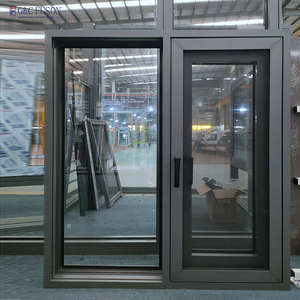
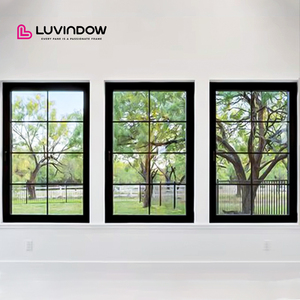
Fuson Thermal Break Aluminum & Hybrid Casement System
Engineered for extreme climatic resilience, integrating heavy-gauge aluminum structural frames with high-density multi-chamber insulating inserts and argon-filled triple glazing.
Inquire Now
Windproof
Energy Saving
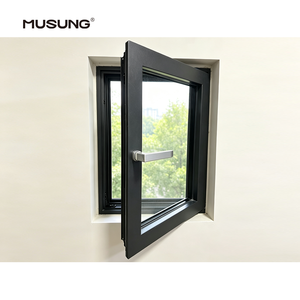
Custom Architectural Casement Residential Windows
Precision-extruded low-profile frames engineered for modern residential architecture, delivering optimal air tightness and sound attenuation up to STC 42.
Inquire Now
Hurricane Impact
DP60 Rated
USA Villa Hurricane Impact-Resistant Outswing System
Laminated safety glass paired with heavy-duty structural corner keys designed to pass stringent ASTM E1886/E1996 hurricane missile impact standard tests.
Inquire Now
uPVC Profile
Acoustic Shield
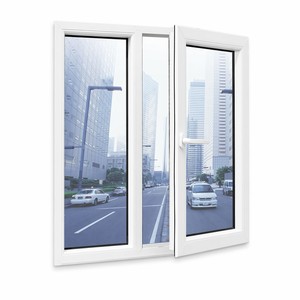
European Series Multi-Chamber uPVC Casement Window
Premium lead-free uPVC compound formulated with titanium dioxide UV stabilizers for lifetime anti-yellowing performance and multi-point perimeter locking safety.
Inquire Now
Slim Sightline
Black Anodized
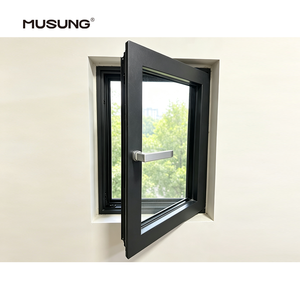
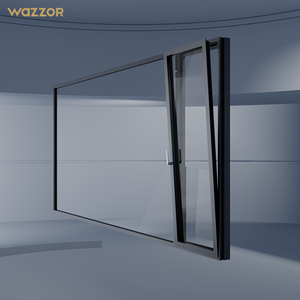
Thin Profile Black Alloy Impact-Resistant Window
Ultra-narrow structural frame designs maximizing daylight penetration while maintaining coastal structural integrity and high architectural aesthetic appeal.
Inquire Now
Dual Low-E
PA66 Barrier
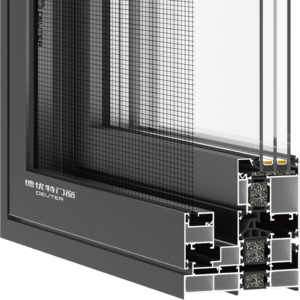
Modern Commercial Thermal Break Casement Fenestration
Polyamide PA66 thermal barrier struts break conduction paths, delivering industry-leading low U-factors suitable for strict green building standard compliance.
Inquire Now
Typhoon Proof
Soundproof
Typhoon-Resistant High-Load Commercial Fenestration
Heavy-duty structural extrusions designed specifically for coastal exposure, high-rise wind loads, and extreme thermal cycling durability.
Inquire Now
French Style
Internal Grill
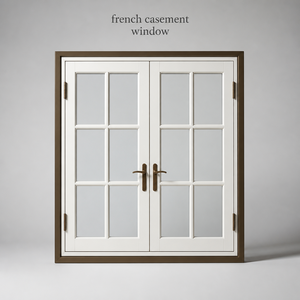
Luxury French Casement Window with Architectural Grill
Classic design meets modern thermal performance featuring internal decorative muntin bars and dual-sealed tempered safety glass packages.
Inquire Now
50+
Years Manufacturing Excellence
1/8"
Precision Custom Fabrication
0.14
Ultra-Low U-Factor Capability
100%
Factory Direct Quality Control
Executive Summary: The Strategic Value of Advanced Vinyl (uPVC) Fenestration
In modern architectural engineering and commercial building envelopes, fenestration systems are no longer treated as simple passive daylight openings. Windows are now recognized as dynamic, highly engineered structural separators that regulate building thermodynamics, structural load distribution, acoustic containment, and life-cycle operational carbon footprint. Among all available frame substrates—including traditional timber, thermal-break aluminum, and fiberglass composites—unplasticized polyvinyl chloride (uPVC) vinyl window manufacturing stands out as the most cost-efficient, thermally optimized, and structurally durable solution for high-performance residential, multi-family, and light commercial construction.
As direct factory manufacturers operating from our premier fabrication facility in Haverhill, Massachusetts since 1973 (Coastal Industries, Inc., MA HIC License #189563), we combine over five decades of extrusion engineering, fusion-welding mastery, and precision glass assembly to deliver B2B procurement partners, general contractors, and project developers unprecedented product consistency. Every window unit produced under our roof is engineered to order—cut, welded, glazed, and verified in 1/8-inch field tolerances to eliminate the structural weaknesses and thermal leakages inherent in mass-market, stock-sized fenestration alternatives.
Enterprise Advantage: In-House Fabrication vs. Outsourced Assembly
The global window supply chain is frequently plagued by fragmented sub-assembly workflows where extrusion manufacturing, insulated glass unit (IGU) sealing, and hardware integration are split among multiple third-party suppliers. This fragmentation introduces major quality variances, lengthened procurement lead times, and contentious warranty disputes when field failures occur.
Our vertically integrated manufacturing paradigm solves these operational risks completely by consolidating every fabrication phase under one strict quality control standard:
Multi-Chamber Extrusion Matrix
Our proprietary uPVC extrusion profiles utilize internal multi-chamber walls engineered via computational fluid dynamics (CFD) to create dead-air pockets, effectively arresting convective thermal transfer across the window frame.
45-Degree Fusion Welding
Instead of mechanically fastened joints that loosen and leak over time, frame and sash corners undergo high-temperature fusion welding, merging vinyl profiles into a single monolithic structural unit that is completely impervious to air infiltration.
Warm-Edge Glass Technology
We assemble high-efficiency IGUs utilizing low-emissivity (Low-E) coatings, stainless steel or structural foam warm-edge spacers, and high-purity argon gas fill (90%+ retention) for maximum thermal boundary protection.
The Technical Polymer Science Behind High-Performance uPVC
Early-generation vinyl windows suffered from chemical degradation, UV-induced yellowing, and thermal warping under extreme ambient temperature shifts. Modern architectural uPVC represents an advanced material polymer engineered specifically to overcome these historic vulnerabilities.
The raw chemical formulation of our vinyl extrusions incorporates high concentrations of rutile Titanium Dioxide (TiO₂), which acts as a permanent solar radiation screen, reflecting ultraviolet wavelengths and preventing polymer chain scission. Furthermore, impact modifiers such as chlorinated polyethylene (CPE) or acrylic compounds are blended into the matrix to provide high ductile strength, allowing frames to absorb structural movement, wind loads, and thermal expansion cycles without cracking or seal failure.
Thermal Efficiency Engineering: U-Factor, SHGC, and VT Breakdown
When specifying fenestration packages for green building certifications (such as LEED v4.1, Passive House / Passivhaus, or Energy Star 7.0 standards), building engineers must evaluate three core performance metrics:
- U-Factor (Thermal Transmittance): Measures the rate of non-solar heat flow through the total window assembly. Lower U-factors indicate superior insulation performance. Our triple-glazed vinyl units achieve U-factors as low as 0.14 BTU/h·ft²·°F.
- Solar Heat Gain Coefficient (SHGC): Quantifies the fraction of incident solar radiation admitted through a window. In cold climates (e.g., US Climate Zones 5-7), higher SHGC allows passive solar heating, whereas in cooling-dominated zones, low SHGC (0.20-0.25) prevents HVAC overload.
- Visible Transmittance (VT): Indicates the percentage of visible spectrum light transmitted through the glazing unit. Our spectrally selective Low-E coatings maximize natural daylighting while blocking damaging infrared and ultraviolet spectra.
| Substrate Material |
Avg. U-Factor (BTU/h·ft²·°F) |
Structural Thermal Conductivity |
Acoustic Attenuation (STC) |
Maintenance & Life Expectancy |
| Multi-Chamber uPVC Vinyl |
0.14 – 0.26 |
Ultra-Low (0.13 W/m·K) |
STC 32 – 44 |
Zero repainting; 35-50+ Year Life |
| Standard Aluminum (No Break) |
0.80 – 1.10 |
Extremely High (160 W/m·K) |
STC 26 – 32 |
Anodized; Risk of oxidation |
| Thermal-Break Aluminum |
0.32 – 0.48 |
Moderate (3.5 W/m·K) |
STC 30 – 38 |
High cost; Potential strip wear |
| Clad Timber / Solid Wood |
0.28 – 0.38 |
Low (0.15 W/m·K) |
STC 28 – 34 |
High vulnerability to rot & moisture |
Global Procurement Trends in Commercial & Residential Fenestration
The global construction landscape is witnessing a structural shift toward pre-engineered, off-site fabricated window assemblies. B2B buyers—including developers, architecture firms, and wholesale importers—are moving away from transactional buying and establishing direct factory partnerships that offer high customized adaptability.
Key Sourcing & Engineering Trends for 2025–2030:
1. Decarbonization & Embodied Carbon Metrics
Commercial developers are actively screening supply chains for Environmental Product Declarations (EPDs). uPVC manufacturing requires significantly less operational energy during raw material synthesis than virgin aluminum extrusion, drastically reducing embodied carbon per unit.
2. Hybrid Frame Engineering & Ultra-Slim Profiles
Architects increasingly demand maximum daylight openings without sacrificing thermal performance. Advanced thin-profile vinyl extrusions with internal aluminum structural reinforcement ribs offer the ideal balance between sleek sightlines and extreme wind-load resistance (DP50–DP70 ratings).
3. Smart Glazing & Integrated Vacuum Insulated Glass (VIG)
The next frontier in fenestration technology combines multi-chamber vinyl frames with Vacuum Insulated Glass (VIG). By creating a micro-vacuum gap between glass panes, thermal conduction is eliminated entirely, achieving wall-like R-values (R-10 to R-12) within thin frame depths.
Frequently Asked Questions: B2B Sourcing, Technical Specs & Manufacturing
Where are Coastal Industries windows and doors manufactured?
Every vinyl window, vinyl sliding door, light commercial aluminum unit, storm product, and porch enclosure panel is fabricated on-site at our state-of-the-art 77 Newark Street plant in Haverhill, Massachusetts. Fabricating in-house gives our engineering teams absolute control over extrusion tolerances, glass packages, thermal welding, hardware sourcing, and lead times—eliminating dependence on third-party assemblers.
Can Coastal Industries manufacture non-standard, custom, or architectural window shapes?
Yes. Because we cut, weld, and assemble every frame to order, units are built precisely to 1/8-inch field opening dimensions. Specialty architectural shapes—including arch tops, trapezoids, circles, angle bays, radius bows, and glass-roof garden windows—are handled as standard production workflows on our factory floor rather than costly custom exceptions.
What thermal efficiency glass packages are available for cold-climate and coastal projects?
Our standard insulated glass units (IGU) feature dual-pane or triple-pane Low-E coatings, warm-edge structural spacers, and 90%+ pure argon gas fills designed specifically for harsh cold-climate performance. For specialized structural, security, or zoning codes, we offer obscure, fully tempered, laminated hurricane impact glass, and sound-dampening acoustic glass configurations.
How do you support wholesale distributors, general contractors, and commercial builders?
We provide dedicated B2B engineering consultation, bulk project scheduling, customized submittal packages, and structured distributor programs. In addition to direct installation and supply across Massachusetts, New Hampshire, and Maine, our distribution network (such as HomeWorks Plus in New Jersey) supplies commercial and residential projects throughout NJ, NY, and PA.
What warranty coverage accompanies your vinyl and aluminum window lines?
All factory-fabricated vinyl window lines carry our written manufacturer warranty covering structural frame integrity, fusion-welded corners, sash performance, and seal failure on insulated glass units. Factory-branded partner lines such as Therma-Tru® entrance systems carry their respective written manufacturer coverage. Full warranty document packages are available upon request.
What is the technical difference between a three-season porch enclosure and a four-season room?
Our custom porch enclosures are engineered as high-durability three-season systems. They utilize precision-fitted vinyl or aluminum glass-and-screen combination panels designed to mount into existing porch framing to block rain, wind, airborne debris, and insects. While highly weather-tight, three-season panels do not contain insulated thermal barrier breaks required for heated year-round living spaces.
Partner with a Trusted Vinyl Window Factory Today
Whether you are specifying a multi-family commercial development, sourcing custom architectural fenestration, or seeking a reliable direct OEM manufacturing partner, our engineering team is ready to evaluate your architectural drawings and unit schedules.
Inquire Now