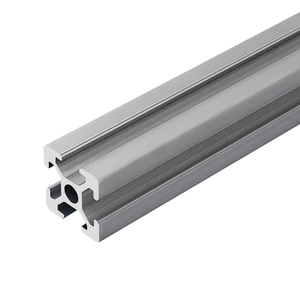
Super Aluminum Extrusion Profiles 6000 Series For Windows & Doors
- Alloy Grade: 6063-T5 / 6061-T6
- Services: CNC Bending, Cutting & Welding
- Surface Finish: Silver Anodized / Powder Coated

Engineered for high-load resilience, thermal insulation, and strict dimensional tolerances. Directly fabricated and tested for commercial, industrial, and high-end residential applications.
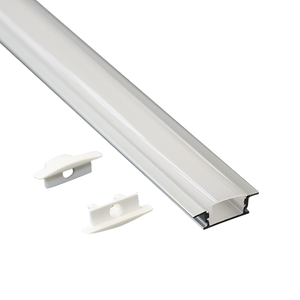
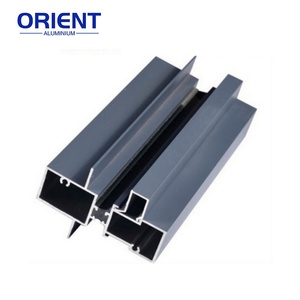
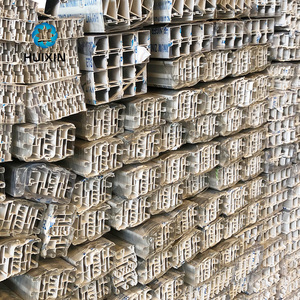
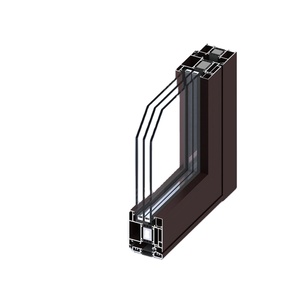
Why leading contractors, architectural fabricators, and commercial distributors trust our door profile extrusions over generic stock suppliers.
Unlike distributors who broker third-party stock, every extrusion profile, thermal barrier assembly, and custom CNC modification happens under direct engineering oversight. From billet metallurgy to final anodizing, we guarantee total quality assurance.
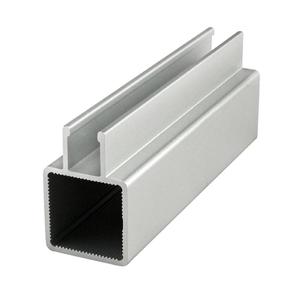
Complex architectural designs demand custom geometry. Our plant delivers precision mitering, 3D CNC profile bending, slotting, T-track milling, and robotic structural welding—delivering ready-to-assemble profiles accurate to 1/8-inch field dimensions.
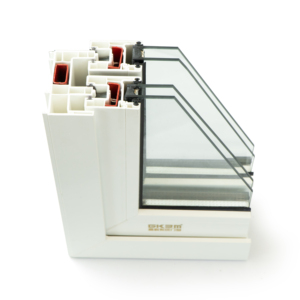
Our profiles meet and exceed global energy efficiency codes. Utilizing advanced Polyamide (PA66) thermal break barriers and multi-chambered UPVC extrusions, our door frames deliver low U-factors and high STC acoustic ratings.
An in-depth technical analysis of material science, sustainable sourcing, thermal performance evolution, and B2B procurement strategies for 2025–2030.
The global architectural sector is undergoing a massive transformation driven by dual requirements: structural wind-load capacity and extreme thermal isolation. In modern high-rise commercial installations, 6063-T5 and 6061-T6 aluminum alloys have become the gold standard due to their exceptional strength-to-weight ratios and responsiveness to artificial aging heat treatments.
High-silicon 6000-series extrusions provide superior yield strength (exceeding 170 MPa), allowing architects to specify ultra-slim sightlines that maximize glass area without sacrificing frame rigidity under high wind-pressure loads. Concurrently, for low-to-mid-rise residential applications, multi-chambered UPVC profiles infused with titanium dioxide UV stabilizers offer unmatched corrosion resistance in aggressive coastal environments.
As international building codes enforce carbon-neutral construction standards, traditional solid metal frames are no longer viable without thermal insulation. The structural integration of PA66 GF25 (25% glass-fiber reinforced polyamide) thermal break strips has revolutionized aluminum door frame performance.
By mechanically isolating the exterior aluminum profile from the interior profile, thermal bridging is effectively eliminated. This structural separation drops thermal conductivity by up to 70%, preventing condensation, reducing HVAC building load, and enabling compliance with Passive House and LEED Platinum criteria across North American and European climates.
| Profile Specification Category | 6063-T5 Thermal Break Aluminum | High-Impact 92 Series UPVC | Heavy-Duty T-Track Framing (6061-T6) |
|---|---|---|---|
| Primary Application | Commercial Entrance & Sliding Glass Doors | Residential Patio & Weatherproof Sliding Doors | Assembly Line Framing & Industrial Enclosures |
| Tensile Yield Strength | ≥ 170 MPa | ≥ 45 MPa | ≥ 240 MPa |
| Thermal Conductivity (Frame U-Factor) | 1.4 - 2.1 W/m²K (with PA66 break) | 1.1 - 1.5 W/m²K (Multi-chamber) | N/A (Non-insulated structural core) |
| Corrosion & UV Resilience | Class I Anodized / PVDF Coating (20+ yrs) | UV Stabilized TiO2 Matrix (No chalking) | Standard Anodized Architectural Finish |
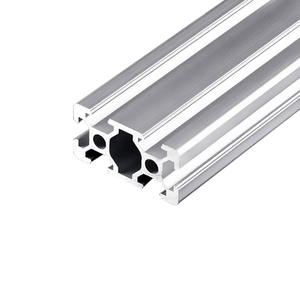
| Custom Fabrication Versatility | Excellent (CNC Bending, Milling, Welding) | Fusion-welded corner processing | T-Slot Modular Hardware Integration |
| Acoustic Insulation (STC Rating) | STC 38 - 45 (with acoustic IGUs) | STC 35 - 42 (Sound dampening core) | N/A |
A profile’s structural longevity is inextricably linked to its surface chemistry. Modern architectural specifications mandate robust surface treatments capable of enduring salt spray, sulfur dioxide exposure, and harsh ultraviolet solar degradation:
Forward-thinking developers are increasingly demanding low-carbon extruded products. Aluminum is infinitely recyclable without structural degradation; secondary aluminum extrusion requires only 5% of the energy consumed during primary smelting. Leading B2B suppliers are now optimizing recycled scrap integration into 6000-series billets, significantly lowering the embodied carbon footprint of commercial building envelopes while maintaining pristine mechanical properties.
Clear, direct technical answers addressing custom die extrusion, dimensional tolerances, quality control standards, and international delivery schedules.
Yes. We specialize in custom die design and extrusion engineering. Our tooling department can produce custom aluminum and UPVC profile dies within tight tolerances based on CAD drawings or field templates. In addition, our secondary fabrication services include precision CNC cutting to within 1/8-inch, 3D radius bending, slot milling, and robotic corner welding.
For high-traffic commercial entrance doors, sliding glass wall systems, and storefront framing, we strongly recommend 6063-T5 or 6061-T6 aluminum alloys. 6063-T5 provides superior surface finish quality for anodizing while delivering high tensile strength. 6061-T6 offers even higher yield strength for heavy structural T-track framing and load-bearing framing profiles.
Thermal break profiles utilize an extruded structural polyamide (PA66 GF25) strip inserted between the interior and exterior aluminum chambers. Because polyamide has a thermal conductivity over 500 times lower than aluminum, it interrupts heat transfer, preventing warm indoor air from condensing on cold exterior metal surfaces during freezing winters.
Our manufacturing and extrusion processes comply with international quality benchmarks including ISO 9001 quality management, ASTM B221 structural aluminum alloy standards, and AAMA 2604/2605 architectural coating specifications. Every batch undergoes strict tensile testing, wall thickness ultrasonic checks, and coating adhesion testing prior to packing.
Profiles are individually wrapped with protective shrink film or protective paper to prevent surface abrasion. Heavy-duty wooden crates or steel-framed export pallets are customized for full container loading (FCL) or less-than-container loading (LCL), preventing bending, moisture ingress, or vibration damage during transit.
Custom extrusion die fabrication typically requires 10 to 14 days, followed by sample verification. Once samples are approved, mass extrusion and secondary CNC processing take approximately 15 to 20 days depending on order volume and surface finishing requirements. Fast-track options are available for standard catalog profiles.
Connect directly with our engineering sales team for technical consultation, custom die quotes, structural load calculations, and global delivery schedules.
Get a Quote