1. Technical Architectural Whitepaper: The Evolution of Structural Door Frames
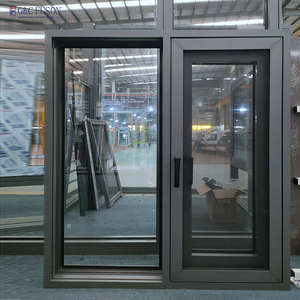
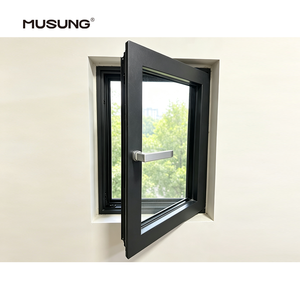
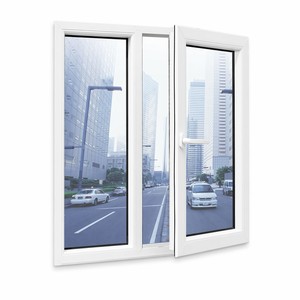
In modern architectural design and high-performance commercial construction, the structural door frame serves as a critical load-bearing, thermal-isolating, and security-enforcing transition zone. Far from being a static perimeter surround, advanced door frame manufacturing requires complex metallurgy, precise extrusion tolerances, and cutting-edge thermal breaking technology to meet today's rigorous building envelope mandates.
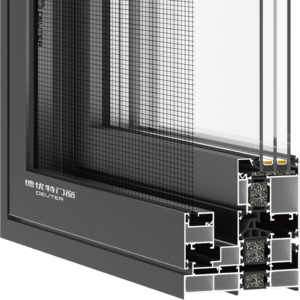
As global building energy codes tighten—such as ASHRAE 90.1 in North America and Title 24 in California—the demand for thermally broken aluminum door frames and reinforced UPVC profile sub-assemblies has experienced an unprecedented surge. Modern door frame systems must solve the paradox of structural rigidity vs. thermal efficiency: aluminum provides the structural tensile strength necessary for large-span hurricane-rated entryways, while polyamide PA66 GF25 thermal barriers interrupt convective heat transfer to yield industry-leading U-factors.
Information Gain Key Insight: The thermal performance of an architectural door or window assembly is governed by the structural frame-to-glass ratio. While double or triple low-E insulated glass units (IGUs) handle center-of-glass performance, up to 35% of energy leakage occurs through non-thermally broken metal frame perimeter sightlines. Our engineered thermal break profiles reduce frame conductance by up to 70% compared to standard extrusions.
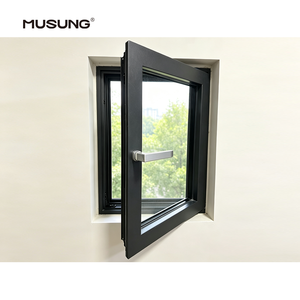
Our manufacturing facility leverages 6063-T5 and 6063-T6 architectural aluminum alloys, heat-treated to exact T-6 hardness specs. This guarantees that frame extrusions maintain zero deflection under high wind loads, supporting heavy multi-laminated impact glass panels without structural frame creep over decades of dynamic use.
Sub-System Material Performance Matrix
To assist architectural specifiers, structural engineers, and commercial procurement directors in material selection, the following data matrix summarizes key performance characteristics across major frame material types manufactured on our floors:
| Frame Material System | Thermal Transmittance (U-Value) | Wind Load / DP Rating | Acoustic Attenuation (STC) | Corrosion & Coastal Life Span |
|---|---|---|---|---|
| Polyamide Thermal Break Aluminum (6063-T6) | 0.24 - 0.32 BTU/hr·ft²·°F | Up to DP80 (Hurricane Impact) | 38 - 45 dB (With Laminated IGU) | 50+ Years (PVDF / Class I Anodized) |
| Multi-Chambered Steel-Reinforced UPVC | 0.18 - 0.26 BTU/hr·ft²·°F | DP45 - DP60 | 35 - 42 dB | 30+ Years (UV-Stabilized) |
| Slim-Profile Minimalist Aluminum Alloy | 0.30 - 0.38 BTU/hr·ft²·°F | DP50 - DP70 | 32 - 38 dB | 50+ Years (Fluorocarbon Coated) |
| Standard Non-Thermal Commercial Aluminum | 0.55 - 0.80 BTU/hr·ft²·°F | DP30 - DP50 | 28 - 34 dB | 40+ Years |
2. Future Procurement Trends in Global Door Frame Sourcing
Procurement directors and commercial contractors are navigating a rapidly shifting global landscape. Sourcing door and window frames in bulk requires moving beyond simple upfront piece-price calculations toward total life-cycle value, regulatory resilience, and supply chain predictability.
1. Carbon Decarbonization & EPDs
Commercial specifiers increasingly require Environmental Product Declarations (EPDs). The integration of recycled content in aluminum extrusions and low-embodied-carbon manufacturing processes has become a prerequisite for winning enterprise building contracts under LEED v4.1 standards.
2. Modular Unitized Integration
Jobsite labor shortages worldwide are driving the adoption of pre-assembled, factory-glazed unitized door frame systems. Delivering fully integrated frames with factory-fitted EPDM weather-stripping and multi-point locking hardware cuts field installation labor by up to 60%.
3. Extreme Climate Resilience
With increasing frequencies of severe weather events, global building codes now mandate heightened water penetration resistance (tested up to 15% of positive design pressure under ASTM E331) and impact resistance capable of passing missile-level cyclic loading tests.
3. Industry Development Trends & Technological Innovations
The fenestration sector is experiencing a massive technological transformation. Industry 4.0 automated manufacturing, precision CNC profile milling, and advanced surface finishing are redefining structural frame expectations:
Polyamide Strip Thermal Insulation Breakthroughs
The standard pour-and-debridge thermal break method is rapidly being replaced by multi-cavity glass-fiber reinforced Polyamide (PA66 GF25) mechanical insertion. This allows for dual-color anodizing and powder coating (interior finish matching indoor decor, exterior finish matching severe weathering specs) while accommodating structural shear forces under dynamic thermal expansion cycles.
Minimalist Sightlines with High Structural Moment of Inertia
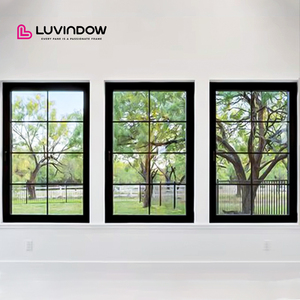
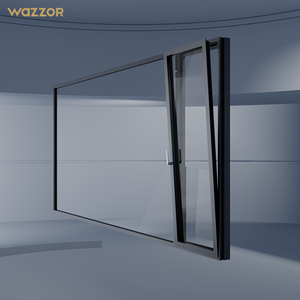
Architectural trends favor ultra-slim door frames that maximize glass surface area for ambient natural light. To maintain structural integrity, manufacturers utilize specialized internal alloy stiffeners and structural silicone glazing (SSG) bonding techniques, transferring wind loads seamlessly from glass panes back into the structural building substrate.
Enterprise Sourcing Advantage: Direct Factory Metallurgy & Assembly
Unlike third-party traders or local assemblers who source profiles from disparate vendors, our enterprise manufacturing model controls the complete production value chain. From raw ingot extrusion, aging furnace heat treatment, automated anodizing, and powder coating lines to PA66 strip insertion, corner-crimping, and pressure seal testing—every step is executed under a unified ISO 9001 quality management framework.
This vertical integration ensures strict batch-to-batch color consistency (ΔE < 0.5), precision 45-degree corner mechanical miters with pneumatic joint keys, and guaranteed lead times that protect major project construction schedules.
4. Corporate Strengths, Technical E-E-A-T & Quality Governance
Founded in 1973, our manufacturing enterprise stands as an industry authority with over half a century of hands-on metallurgical and fenestration engineering expertise. Operating out of our extensive manufacturing complex, our technical team supports architects, general contractors, commercial distributors, and project managers through every stage of construction.
In-House Tooling & Custom Dies
We maintain an active die inventory of over 3,000 architectural profile shapes and offer custom CNC die manufacturing within 14 days. This enables true architectural freedom for non-standard wall depths, historic restoration profiles, and unique curtain-wall transition frames.
Rigorous Quality Laboratory
Every batch of extruded door frames undergoes rigorous testing: spectrographic material composition analysis, Barcol hardness checks, coating adhesion cross-hatch tests (ASTM D3359), and hydrostatic chamber water tightness testing.
Global Export Compliance
Our export documentation team handles full international compliance, delivering CE certificates, NFRC thermal ratings, Florida Building Code (FBC) hurricane approvals, and specialized ISPM 15 heavy-duty wooden crate packaging for safe ocean transit.
5. Comprehensive B2B Procurement FAQ
We primary utilize prime-grade 6063-T5 and 6063-T6 aluminum alloys for optimal extrusion precision and tensile strength. Our thermal break frames feature mechanical insertion of 25% glass-fiber reinforced Polyamide 66 (PA66 GF25) strips inside dual profile cavities. This isolated thermal bridge blocks linear thermal conductivity while maintaining high shear strength, allowing frames to pass extreme thermal cycling without structural delamination.
Our hurricane-rated door frame lines are designed with reinforced internal wall thicknesses (up to 3.0mm structural profile walls) and heavy-duty steel stiffener channels. Paired with high-impact laminated glass (PVB or SentryGlas interlayers), our assemblies meet ASTM E1886/E1996 Large Missile Impact Level D standards and Florida Building Code TAS 201/202/203 protocols, withstanding design pressure ratings up to DP80.
For coastal locations, we specify high-durability Qualicoat Class 2 / Class 3 Fluorocarbon PVDF coatings (70% Kynar 500 resin) or Class I Anodized oxide films (≥ 18 microns thick). These treatments provide extraordinary resistance to salt spray (tested past 3,000 hours in ASTM B117 salt fog chambers), UV degradation, chalking, and chemical atmospheric pollutants.
Yes. Our engineering office delivers complete CAD shop drawings, 3D BIM/Revit models, and structural calculation reports for municipal building code submittals. Because every profile is cut, notched, welded, and finished to precise field measurements, we build to exact jobsite opening requirements down to 1/8-inch (3mm) tolerances.
Standard fabrication lead times for non-custom powder-coated orders are 20 to 25 business days from final signed shop drawing approval. Custom extrusion profile tooling requires an additional 12 to 15 days. Ocean freight transport varies by destination port (e.g., 18-22 days to US West Coast, 28-35 days to US East Coast / Europe). Fast-track air freight or LCL crate shipping options are available for urgent project schedules.
We provide a comprehensive written manufacturer warranty: 20 years on structural aluminum extrusions and structural frame integrity, 10 to 15 years on PVDF surface coatings against fading and flaking, 10 years on insulated glass seal integrity, and 5 years on heavy-duty stainless steel mechanical hardware and multipoint lock mechanisms.