
The global architectural fenestration market has undergone a structural paradigm shift. As facade performance requirements under international energy codes (such as IECC 2024, EU EPBD, and ASHRAE 90.1) become increasingly stringent, window and door hardware is no longer viewed as mere mechanical trim. Modern hardware assemblies act as primary load-bearing structural elements, thermal break seals, air-tightness regulators, and security barriers. China has evolved from a mass-production factory hub into an advanced center for precision fenestration metallurgy, automated die-casting, custom extrusions, and smart hardware engineering.
This comprehensive industry report delivers structural insights, technical specifications, metallurgical benchmarking, and strategic procurement frameworks for facade contractors, window system fabricators, real estate developers, and hardware importers looking to partner with top-tier Chinese manufacturers.
Key Information Gain: Chinese tier-1 hardware manufacturers now operate automated 5-axis CNC machining, multi-stage electro-galvanizing, and PVD vacuum coating lines capable of exceeding 720 to 1,000+ hours of Neutral Salt Spray (NSS) corrosion testing (ISO 9227 / ASTM B117), surpassing standard European baseline benchmarks at competitive total cost of ownership (TCO).
High-load multi-point locks, thermal break sliding rollers, tilt-and-turn hardware systems, and stainless steel glass fittings built to international architectural specifications.
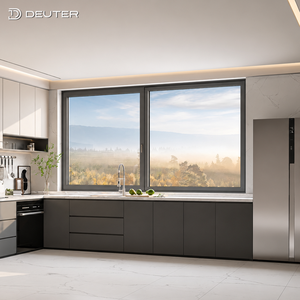
Engineered for high-end residential and commercial architectural projects utilizing ultra-slim frame profiles with heavy triple-pane thermal glass packages.
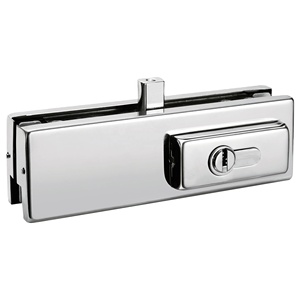
Satin finished architectural door hinge and bottom lock assemblies designed for modern hotel entrance doors, office partitions, and frameless glass facades.
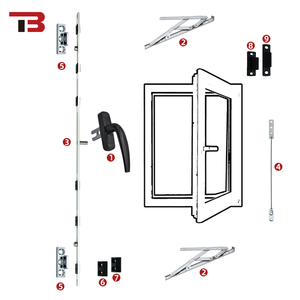
Complete integrated hardware kit for aluminum European C-groove windows providing dual-action tilt ventilation and full inward swing opening.
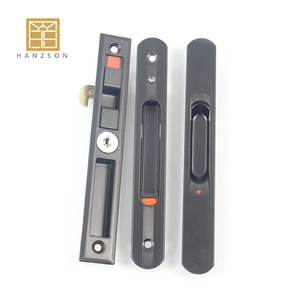
Precision die-cast aluminum sliding window locks designed specifically for high-density apartment complexes and residential window profiles.
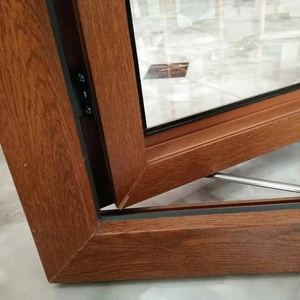
Comprehensive profile-matched hardware solution tailored for Henan UPVC profiles, multi-chamber PVC doors, and energy-saving window frames.
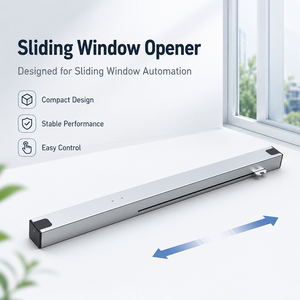
Next-generation smart electric window actuator and multipoint locking drive designed for high-reach commercial metal windows and smart homes.
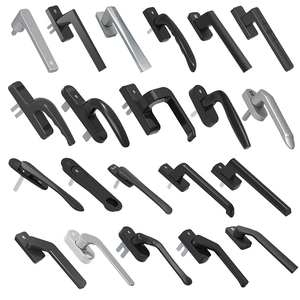
Ergonomically designed locking handles with child-safety key mechanisms suitable for modern aluminum alloy and stainless steel frame windows.
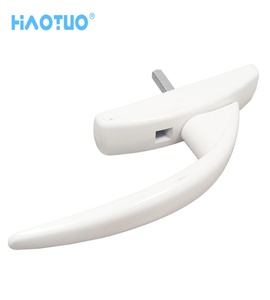
Ultra-smooth friction hinges and heavy-duty corner connectors designed for fast jobsite installation in residential apartments and commercial hotels.
The operational longevity of window and door hardware is governed directly by material selection, die-casting pressure control, and surface passivating treatments. Chinese tier-1 exporters utilize automated hot-chamber zinc die-casting and precision cold-roll stainless steel stamping to achieve superior fatigue resistance.
Understanding substrate characteristics is critical for specifying hardware according to atmospheric conditions (e.g., coastal high-salinity vs. inland dry environments).
| Substrate Material | Material Standard | Tensile Strength (MPa) | Hardness (HB/HV) | Recommended Architectural Application |
|---|---|---|---|---|
| Zamak 3 / Zamak 5 Zinc Alloy | ASTM B86 / GB/T 13818 | 280 - 330 MPa | 82 - 92 HB | Complex transmission gearboxes, handles, corner drives, lock bodies. |
| Stainless Steel AISI 304 | ASTM A240 / EN 10088 | 515 - 620 MPa | 150 - 200 HV | Friction hinges, stays, security keepers, multi-point locking rods. |
| Stainless Steel AISI 316 | ASTM A240 / Marine Grade | 580 - 680 MPa | 160 - 220 HV | Coastal curtain walls, offshore platforms, high-humidity marine resorts. |
| Extruded Aluminum 6063-T5/T6 | ASTM B221 / GB 5237 | 200 - 240 MPa | 65 - 80 HB | Structural tracks, heavy sash guide rails, flush bolt bodies. |
Accelerated chemical degradation caused by UV exposure, sulfur dioxide, and airborne sodium chloride is the leading cause of hardware failure. Top Chinese manufacturers employ multi-layer surface treatment technology:
As building envelope design leans toward larger structural glass spans, ultra-narrow sightlines, and building management system (BMS) integration, fenestration hardware is evolving rapidly. Key sourcing trends identified across global B2B procurement channels include:
Hinges and stay arms are fully hidden inside the sash-frame rebate (Euro-groove C-15/20), achieving minimalist aesthetic elevation and superior thermal insulation without disrupting perimeter EPDM gaskets.
Integration of concealed 24V DC brushless motor actuators into sliding sashes and high clerestory casement windows, enabling automated natural ventilation synchronized with indoor air quality (CO2/VOC) sensors.
Transitioning from single-point locks to 4-to-6 point mushroom cam locking gears meeting European EN 1627 RC2 / RC3 security ratings to counteract forced entry leverage.
Leveraging over decades of industrial fenestration manufacturing experience, our production infrastructure integrates the entire manufacturing lifecycle—from raw material alloy smelting and tool design to precision CNC machining, surface plating, and quality control.
Equipped with high-precision EDM, wire-cutting, and 3D optical scanning to develop custom OEM/ODM hardware molds within 15 to 21 working days.
Every production batch undergoes strict CMM dimensional inspection, torque testing, tensile shear tests, and continuous salt spray testing under ISO 9001 audit protocols.
Seamless compatibility with major global profile systems including Schuco, Reynaers, Cortizo, Aluk, YKK AP, and custom UPVC multi-chamber extrusions.
Essential technical and commercial questions answered for facade procurement leads, system engineers, and wholesale importers.
Leading Chinese hardware manufacturers produce hardware directly compliant with European standards (EN 13126, EN 1154, EN 1627) and North American standards (AAMA 901, AAMA 904, ASTM E330). Certification reports from independent testing bodies (SGS, Intertek, TUV) are standard deliverables upon request.
Yes. Custom OEM/ODM engineering is a core capability. By submitting profile CAD drawings (DWG/DXF) or physical extrusions, custom corner drives, friction stays, hinges, and lock keeps can be developed with precise fitting tolerance.
Standard hardware catalog items (such as crescent locks, casement handles, and friction stays in stock finishes like black, white, or silver) typically have MOQs of 500 to 1,000 units. Custom colors, special PVD finishes, or bespoke die-cast parts may require 2,000+ units depending on tooling parameters.
For coastal and harsh environments, hardware assemblies are specified with AISI 316 stainless steel friction stays, anti-corrosion passivated zinc alloy transmission components, and multi-layer fluorocarbon coatings tested to 720–1,000 hours Neutral Salt Spray (NSS) without red rust formation.