
In modern architectural engineering and low-carbon urban development, insulated glass units (IGU) and double-glazed fenestration assemblies represent the primary defense line against conductive, convective, and radiative thermal exchange. As global energy conservation codes (such as ASHRAE 90.1, EU Energy Performance of Buildings Directive, and Australia's NCC) continuously tighten structural performance metrics, civil contractors, façade engineers, and commercial B2B procurement professionals must move beyond simple aesthetic evaluations to perform forensic structural and thermal analysis.
As a premiere manufacturer and exporter operating since 1973 from our flagship 77 Newark Street facility, Coastal Industries / IVIG Home combines half a century of North American precision metallurgy and structural glazing experience with automated production technologies. This comprehensive whitepaper serves as an industrial procurement guide, detailing product benchmarks, emerging thermal technologies, global supply chain risk mitigation strategies, and essential procurement criteria for high-performance residential and commercial infrastructure projects.
Explore our flagship double-glazed window systems and insulated glass units, certified to international structural, acoustics, and thermal performance standards.
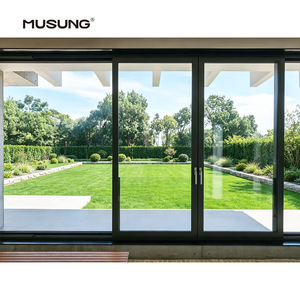
Designed for multi-story residential balconies and high-wind coastal environments, incorporating EPDM weather-stripping seals.
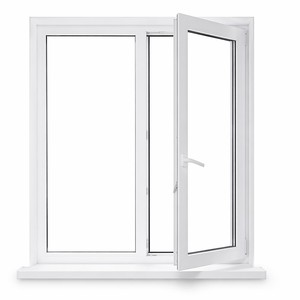
Maximizes airtightness and eliminates cold bridges. Highly resistant to chemical corrosion, UV radiation, and saline marine environments.
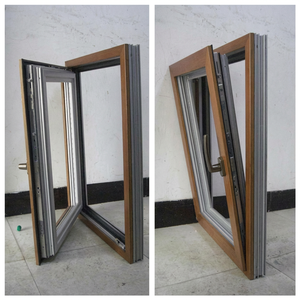
Engineered to meet stringent Passive House Institute insulation standards, reducing building thermal load requirements by up to 60%.
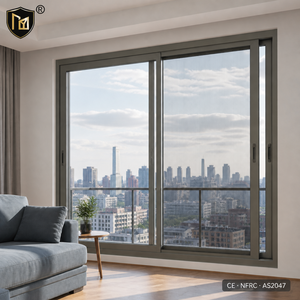
Built for commercial residential developments. Features precision stainless steel roller tracks for zero-friction glide performance.
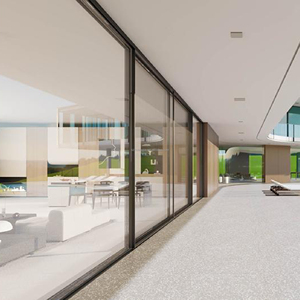
Sleek, ultra-narrow sightlines providing expansive floor-to-ceiling panoramic views without compromising mechanical load stability.
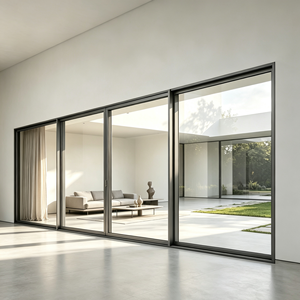
Specifically engineered for the harsh Australian climate, offering superior resistance to thermal shock, structural deflection, and high wind velocity.
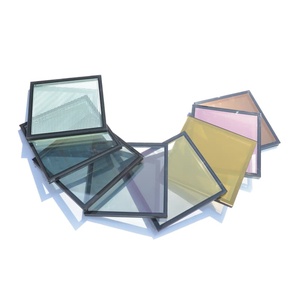
Direct factory supply of certified insulated glass units for architectural curtain walls, skylights, and custom replacement fenestration.
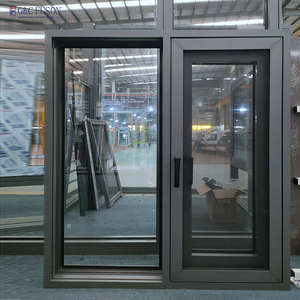
Combines classical luxury aesthetic styling with modern thermal boundary engineering. Features dual perimeter compression seals.
Why Tier-1 contractors, commercial real estate developers, and international importers partner directly with Coastal Industries / IVIG Home.
Unlike regional assemblers who outsource critical component fabrication, every single vinyl profile weld, aluminum thermal break insertion, and glass unit assembly is executed directly at our 77 Newark Street plant in Haverhill, Massachusetts. By retaining complete end-to-end control over glass washing, automated desiccant filling, primary PIB sealing, and secondary structural silicone application, we guarantee zero seal failures and total dimensional tolerance adherence.
Jobsite misalignments result in costly installation delays and degraded air tightness. Our automated CNC cutting lines cut and fabricate every frame precisely to 1/8-inch field measurement increments. Whether engineering operable arch-top sashes, trapezoidal curtain elements, multi-lite bay and bow combinations, or custom garden windows, our shop delivers turnkey units engineered specifically to project rough opening schedules.
We combine high-extrusion-grade 6063-T6 aluminum alloys with multi-chambered polyamide (PA66 GF25) thermal barriers. This decoupled frame design effectively stops conductive heat transfer across building envelopes, eliminating interior frame condensation in sub-zero North American winter climates while preventing frame expansion and warp in severe high-solar desert environments.
Exporting fenestration solutions across global markets requires verified compliance with regional building standards. Our double-glazed products undergo independent lab testing to secure certification across North America (NFRC, CSA), Australia (AS2047, AS1288), and Europe (CE, EN 1279 Parts 1–6). This guarantees verified wind load resistance, air infiltration limits, and long-term solar heat gain coefficient (SHGC) accuracy.
Strategic insights for procurement directors preparing for next-generation net-zero architectural mandates.
While standard double glazing utilizes 12mm to 16mm argon-filled cavities to achieve thermal resistance, the industry is accelerating toward hybrid Vacuum Insulated Glass (VIG) integration. By establishing a micro-pillar vacuum chamber inside the inner cavity of a double-glazed structure, thermal conductivity via gas molecules is completely eliminated. The result is a overall profile thickness of under 12mm achieving an extraordinary U-value below 0.60 W/m²K (0.10 BTU/h·ft²·°F), matching the insulation value of solid brick walls while reducing total structural dead load on skyscraper facades.
Embedded carbon accounting (Scope 3 emissions) has become a key criterion in global B2B procurement tenders. Leading double glazing manufacturers are replacing fossil-derived thermal break strips with bio-based polyamides derived from renewable castor oil feedstocks, reducing structural break carbon footprints by 60%. Furthermore, frame extrusions are shifting to certified primary aluminum billets manufactured using 75%+ post-consumer recycled content melted via green hydro-electric power, fulfilling LEED v4.1 and BREEAM decarbonization mandates.
Static Low-E coatings are evolving into dynamic, electronically controllable electrochromic double glazing. By applying microscopic tungsten oxide thin-film coatings connected to building automation systems (BAS), glass solar heat gain coefficient (SHGC) values can be modulated dynamically from 0.41 down to 0.09 in real time based on solar irradiance levels. Simultaneously, Building-Integrated Photovoltaics (BIPV) embedded within double-glazed spandrel glass are converting inactive building skins into clean renewable energy generation surfaces.
Legacy aluminum box spacers are rapidly being phased out due to high linear thermal bridging at glass edges (Ψ-value degradation). The future of export-grade double glazing relies on Thermo Plastic Spacer (TPS) technology applied robotically directly onto glass substrates. TPS systems create a homogeneous, seamless moisture-vapor barrier with exceptional elastic recovery under dynamic wind loads, ensuring argon gas loss rates remain under 0.5% per year over a 30-year operational lifecycle.
A comparative engineering evaluation framework for commercial architects, structural engineers, and general contractors.
| Glazing System Configuration | Center-of-Glass U-Value (US / Metric) | Solar Heat Gain (SHGC) Range | Acoustic Insulation (STC) | Structural Wind Load Resistance (Pa) | Optimal Project Application |
|---|---|---|---|---|---|
| Standard Double Glazing (Clear + Air) | 0.48 / 2.70 W/m²K | 0.68 – 0.75 | 28 – 32 dB | 1500 – 2200 Pa | Basic Low-Rise Commercial / Inland Residential |
| Thermal Break Aluminum + Low-E Argon | 0.24 / 1.35 W/m²K | 0.27 – 0.40 | 35 – 40 dB | 3000 – 4500 Pa | High-Rise Residential, Coastal Multi-Family |
| Multi-Chamber uPVC + Double Low-E | 0.18 / 1.00 W/m²K | 0.22 – 0.35 | 38 – 42 dB | 2500 – 3500 Pa | Cold Climate Cold-Zone Residential & Institutional |
| Passive House Triple Glazed (Dual Argon) | 0.11 / 0.62 W/m²K | 0.18 – 0.28 | 42 – 48 dB | 4000 – 6000 Pa | Net-Zero Architecture, Luxury Hotels, Airport Zones |
| Vacuum Double Glazing Hybrid (VIG+Low-E) | 0.08 / 0.45 W/m²K | 0.20 – 0.32 | 40 – 46 dB | 4500 – 6500 Pa | Historic Retrofits, Ultra-Slim Luxury Curtain Walls |
*Note: All technical metrics are calculated according to NFRC 100/200 and ISO 15099 test protocols. Actual project-specific metrics vary based on frame profile selection, glass substrate thickness, and spacer cavity width.
Expert engineering answers to critical inquiries raised by general contractors, developers, and import managers prior to purchase order placement.
Every double-glazed window assembly, uPVC frame profile, thermal-break aluminum structure, and insulated glass unit (IGU) is custom-fabricated on-site at our state-of-the-art facility located at 77 Newark Street in Haverhill, Massachusetts. By centralizing glass cutting, tempering, argon gas injection, and robotic sealant application under one roof, we eliminate third-party quality risks and maintain total control over production lead times.
Insulated glass seal failure is caused by moisture-vapor ingress through degraded secondary seals. We utilize a two-stage sealing barrier: primary Polyisobutylene (PIB) applied under automated heat pressure to create an absolute gas/vapor lock, combined with a high-modulus secondary structural silicone seal. Combined with automated molecular sieve desiccant filling inside non-conductive warm-edge spacers, our units guarantee zero internal condensation across -40°C to +80°C ambient temperature fluctuations.
Yes. Custom engineering is our core operational strength. Because we operate automated precision CNC cutting and welding equipment, we fabricate units tailored down to exact 1/8-inch opening dimensions. Our engineering team routinely manufactures complex architectural profiles including operable arch-top sashes, multi-angle bay and bow configurations, trapezoids, circles, and glass-roof garden windows directly from architect shop drawings.
Our products are engineered to comply with multi-jurisdictional building performance standards. Depending on the targeted region, we provide full structural and thermal test reports for NFRC (North America), CE / EN 1279 (European Union), AS2047 & AS1288 (Australia), and Canadian Standards Association (CSA). Products meet rigorous structural deflection, water penetration resistance (up to 600Pa), and air infiltration class standards.
Hard-coat (pyrolytic) Low-E is applied at high temperatures during float glass manufacturing, offering durability but a higher emissivity (≈0.15). Soft-coat (sputtered / vacuum magnetic deposition) Low-E involves multi-layer silver coatings applied post-glass production, yielding superior emissivity (≈0.02 to 0.05) and vastly improved SHGC control. We utilize multi-layer soft-coat Low-E inside the sealed IGU cavity to deliver maximum solar control and thermal insulation performance.
Export packaging is critical to international sourcing success. All double-glazed units are secured using custom heavy-duty heat-treated fumigated wooden crates or steel A-frames. Glass panels are separated by cork shock-absorbing pads, fully wrapped in moisture-proof vacuum film, and corner-protected with high-density foam caps. This packaging system maintains zero movement inside shipping containers during transoceanic transit.
Direct Factory Pricing • Custom Architectural Sizing • Certified Global Shipping
Whether you require high-performance thermal break aluminum sliding doors for modern high-rise developments, uPVC casement windows for cold-climate residential projects, or bulk IGUs tailored to structural facade schedules, our engineering team is standing by to review your blueprints and provide detailed bill-of-materials quotes.