
Standard-setting commercial fenestration systems manufactured with heavy-duty thermal break extrusions, high-performance insulated glass units, and rigorous structural testing for modern commercial developments.
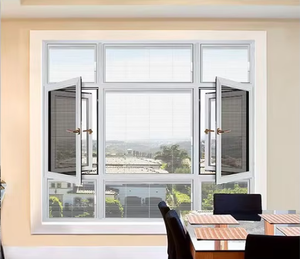
Engineered for extreme structural loads, featuring heavy-gauge aluminum profiles, multi-point lock security, and laminated impact glass for commercial envelopes.
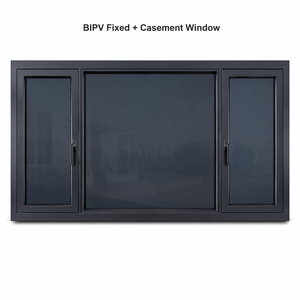
Next-generation Building-Integrated Photovoltaic (BIPV) windows using Cadmium Telluride (CdTe) thin-film power generation glass framed in structural aluminum.
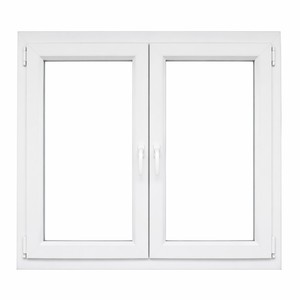
Multi-chambered uPVC framing designed for mid-rise multi-family and commercial developments. Maximum acoustic dampening and zero thermal bridging.
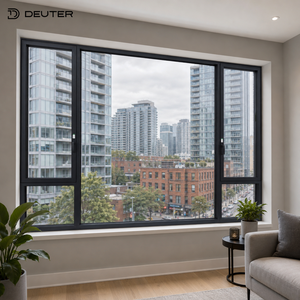
European-engineered dual-action window operating mechanism offering micro-ventilation and easy exterior glass cleaning for commercial towers and institutional builds.
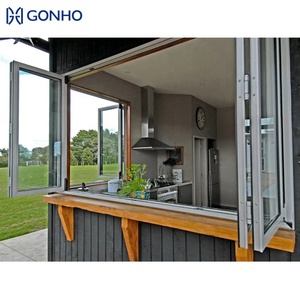
Seamlessly connects commercial indoor spaces with exterior dining patio zones. Bottom-loaded roller system guarantees effortless single-finger glide operation.
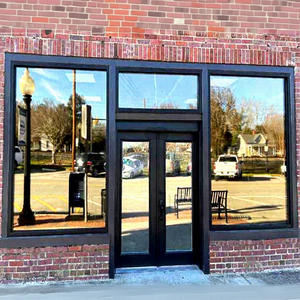
Ultra-narrow profile extruded aluminum picture windows designed for high-visibility commercial storefronts, automotive showrooms, and urban retail venues.
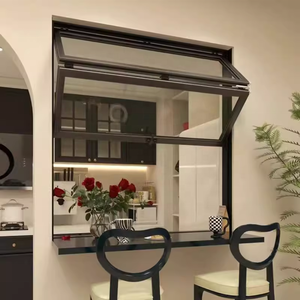
Automated counter-balanced vertical fold-up windows tailored for street-front cafes, hotel bars, and luxury stadium suites requiring dynamic opening capabilities.
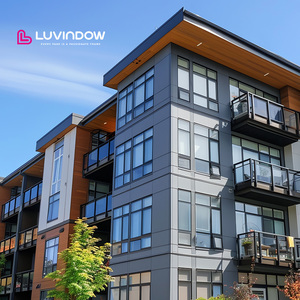
Engineered specifically for high-noise urban zones near airports and highways. Achieves STC 42 rating with asymmetric double-laminated glass configurations.
Selecting the optimal commercial window manufacturer requires navigating a complex intersection of structural engineering, building code mandates, thermal envelope performance, and long-term lifecycle economics. Unlike residential fenestration, commercial window systems must withstand continuous operating cycles, elevated wind pressures at height, severe thermal stresses, and stringent building energy codes such as ASHRAE 90.1 and IECC 2024.
When general contractors, developers, and facade engineers review the top commercial window suppliers, evaluation must extend beyond initial unit cost to encompass certified structural load ratings (AAMA/WDMA/CSA 101/I.S.2/A440), thermal performance metrics (NFRC rated U-factor and SHGC), acoustic insulation values (STC and OITC), and factory fabrication quality control standards.
The matrix below outlines key engineering benchmarks across core commercial window categories required for LEED-certified and high-performance commercial construction:
| Window Category | Frame Technology | Target U-Factor (NFRC) | SHGC Range | Max Wind Load (DP) | Acoustic Rating |
|---|---|---|---|---|---|
| Heavy Commercial Casement | Polyamide Thermal Break 6063-T6 Aluminum | 0.18 - 0.24 | 0.20 - 0.35 | DP60 - DP90 | STC 38 - 44 |
| Commercial Tilt & Turn | Multi-Cavity Thermal Aluminum / Reinforced UPVC | 0.15 - 0.20 | 0.18 - 0.30 | DP55 - DP75 | STC 40 - 46 |
| Storefront Fixed Picture | Structural Silicone Glazed Extrusions | 0.22 - 0.28 | 0.25 - 0.40 | DP50 - DP80 | STC 35 - 40 |
| BIPV Solar Fenestration | CdTe Integrated Structural Profiles | 0.20 - 0.26 | 0.15 - 0.25 | DP50 - DP70 | STC 36 - 42 |
Architectural glazing is undergoing a profound paradigm shift driven by decarbonization mandates, smart building integration, and severe weather resilience requirements.
Commercial facades are transitioning from passive thermal barriers into active power generators. Cadmium Telluride (CdTe) thin-film photovoltaic glass allows full optical transparency while converting ambient solar radiation into electrical current to offset commercial HVAC dynamic loads.
VIG technology removes the gas space between glass panes, creating a microscopic vacuum seal. This achieves thermal R-values exceeding R-10 in a slim profile equivalent to single-pane dimensions, revolutionizing retrofit capabilities for historic commercial structures.
Leading suppliers are adopting hydro-powered, recycled aluminum extrusions containing over 75% post-consumer scrap. This drastically reduces Scope 3 embodied carbon metrics required under strict local environmental building legislation.
Solid-state electrochromic glazing dynamically modulates Light Transmittance (VT) and Solar Heat Gain Coefficients (SHGC) via automated low-voltage signals based on real-time solar positioning, eliminating external louvers and window blinds.
Urban density demands higher Sound Transmission Class (STC) standards. Multi-layer visco-elastic acoustic Polyvinyl Butyral (PVB) interlayers dissipate mid-to-high frequency sound waves, protecting indoor hotel and corporate acoustic environments.
Integration with automated Building Management Systems (BMS) enables automated night-flush cooling cycles via heavy-duty motorized window actuators, enhancing indoor air quality (IAQ) and reducing daytime chiller loads.
Since 1973, Coastal Industries, Inc. has established an operational benchmark in precision window and door fabrication from its centralized facility in Haverhill, Massachusetts (MA HIC License #189563). For over five decades, our direct-factory model bridges the critical gap between architectural intent and physical site execution.
Every commercial window frame, casement, and sliding unit is custom-cut, welded, and glazed on our factory floor to exact 1/8-inch opening dimensions. Eliminating stock fill frames improves structural wall integrity and speeds up installation schedules.
Extrusion cutting, thermal barrier assembly, IGUs assembly, dual compression weatherstripping, and hardware attachment happen under one roof. Our single-source accountability prevents third-party warranty disputes and controls lead-time volatility.
From light commercial aluminum double-hung retrofit windows and high-performance thermally broken tilt-and-turn units to specialty architectural shape windows, vinyl systems, storm protection, and custom porch enclosures—our plant covers the full commercial scope.
Key structural, thermal, and logistical questions addressed by our engineering team for general contractors and commercial architects.
Standard aluminum is highly conductive, permitting cold winter temperatures or exterior summer heat to transfer directly into the building envelope. A thermally broken profile incorporates a continuous structural polyamide glass-fiber reinforced strip (PA66 GF25) mechanically crimped between the exterior and interior aluminum extrusions. This breaks thermal conduction paths, boosting insulation values by up to 60% and preventing interior frame condensation.
Design Pressure (DP) measures structural wind resistance, water penetration pressure, and air infiltration resistance. Mid-rise commercial buildings typically require DP50 to DP65 ratings, whereas high-rise towers or coastal hurricane zones demand DP70 to DP100+ units capable of surviving wind loads exceeding 160 mph (ASTM E330 testing standards).
Yes. Because our Haverhill manufacturing facility fabricates units to order, out-of-square historical openings, arch-tops, trapezoids, radius bows, and custom mullion combinations are engineered routinely. We provide field laser-measuring services to verify site dimensions prior to production.
Commercial fenestration contributes across multiple LEED credit categories: Energy & Atmosphere (EA) through low U-factors and optimized SHGC values; Materials & Resources (MR) via Environmental Product Declarations (EPDs) and recycled aluminum content; and Indoor Environmental Quality (EQ) by maximizing natural daylighting, visual views, and low-VOC sealant manufacturing.
Standard factory lead times for custom thermally broken aluminum or commercial uPVC orders range between 4 to 8 weeks depending on hardware specification and anodized or powder-coated finish requirements. Direct factory communication ensures batch deliveries align with master construction schedules.