
Engineered for commercial-grade structural integrity, thermal efficiency, and hurricane-rated wind load protection. Explore our top recommended manufacturing profiles.
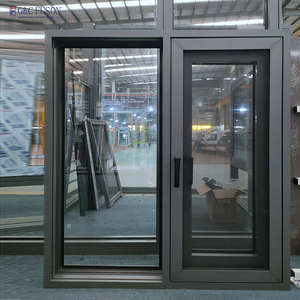
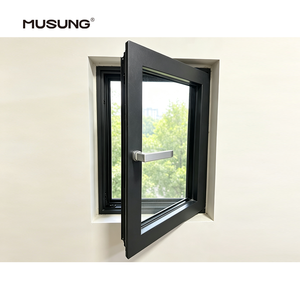
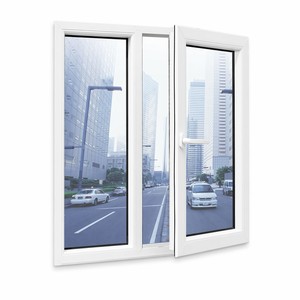
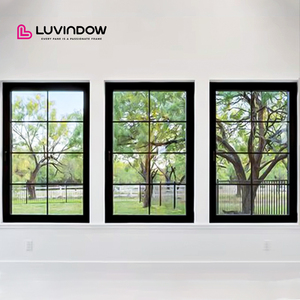
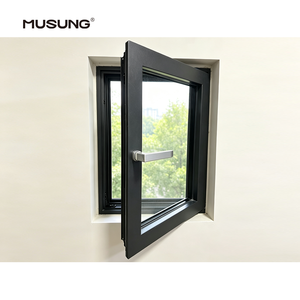
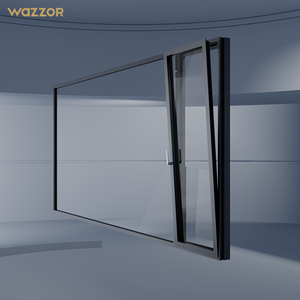
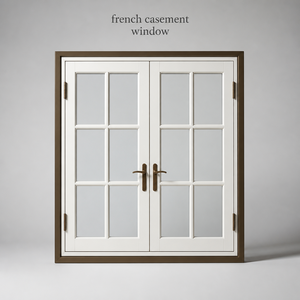
Bow windows are among the most structurally demanding fenestration products in modern residential and light commercial architecture. Unlike standard flat windows or typical 3-lite bay configurations, a bow window system comprises four, five, or six contiguous sashes joined at gentle 10-degree to 15-degree projection angles. This architectural geometry creates a graceful, sweeping exterior curve while dramatically expanding interior floor space, daylighting, and panoramic ventilation.
From an engineering and procurement standpoint, sourcing bow windows directly from qualified manufacturers requires evaluating profile structural yield strength, thermal break isolation, mullion reinforcement, and airtight seal integrity. Miscalculations in cantilevered load distribution or sealant application can lead to thermal bridging, structural sagging, and water infiltration. This comprehensive whitepaper provides B2B buyers, general contractors, developers, and architects with an analytical framework to select the top bow window manufacturers and factories worldwide.
When auditing potential OEMs, ODMs, and direct fenestration factories for high-volume or custom project orders, enterprise procurement managers must evaluate five core technical dimensions:
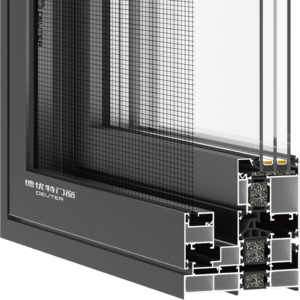
Extruded aluminum profiles must feature multi-chambered thermal breaks utilizing polyamide 66 (PA66) glass fiber-reinforced strips. For uPVC systems, internal galvanized or stainless steel core reinforcements are non-negotiable for structural stability against thermal expansion.
Bow windows rely heavily on specialized variable-angle structural mullions. Factories must demonstrate precision CNC cutting capabilities to ensure airtight gasket compression at precise 10°, 12°, and 15° corner intersections.
Factory-assembled Insulated Glass Units (IGUs) should feature warm-edge spacers (e.g., Technoform or Super Spacer), low-emissivity (Low-E) soft coatings, and 90%+ Argon or Krypton gas fill, meeting ENERGY STAR® and Passive House criteria.
A direct engineering comparison to guide procurement specifications based on climatic exposure, structural load, and project budget.
| Performance Specification | Standard Architectural Aluminum | High-Impact uPVC Profile | Thermal Break Aluminum (Recommended) |
|---|---|---|---|
| Thermal Transmittance (U-Factor) | 0.45 - 0.60 BTU/h·ft²·°F | 0.22 - 0.28 BTU/h·ft²·°F | 0.14 - 0.20 BTU/h·ft²·°F |
| Structural Design Pressure (DP) | DP50 - DP80 | DP35 - DP50 | DP60 - DP100+ |
| Maximum Projection Width | Up to 4,500 mm | Up to 3,200 mm | Up to 6,000 mm+ |
| Coastal Salt-Spray Resistance | Requires Anodizing / PVDF | Excellent (Inherent) | Superior (Fluorocarbon/PVDF Coated) |
| Acoustic Insulation (STC Rating) | STC 28 - 32 | STC 32 - 36 | STC 38 - 45 (Laminated) |
| Expected Service Life | 30+ Years | 25+ Years | 50+ Years |
The global fenestration industry is undergoing a structural paradigm shift driven by stringent municipal carbon codes, extreme weather events, and automated modular construction. B2B buyers must align their supply chains with manufacturers leading in the following critical advancements:
Traditional double and triple IGUs add significant weight to cantilevered bow window assemblies, placing enormous strain on head and seat boards. Next-generation factories are embedding Vacuum Insulated Glass (VIG). VIG achieves a center-of-glass U-factor as low as 0.06 in a profile thickness of just 8.3mm, reducing total fenestration dead load by up to 40% while doubling thermal retention.
Field installations traditionally relied on external timber or metal knee braces anchored to the building fascia. Modern factory-assembled bow windows now incorporate internal stainless-steel dynamic cable tensioning kits that thread vertically through the mullion cavities directly into the roof framing headers. This enables a clean, floating aesthetic with enhanced structural load distribution.
Water intrusion at the variable-angle mullion joints remains the primary failure mode in field-assembled bow windows. Premium manufacturers have transitioned to 6-axis robotic sealing cells. Automated dispensing guarantees uniform sealant bead geometry, zero micro-voids, and 100% adhesion testing under continuous ISO 9001 factory conditions.
Global architectural standards increasingly mandate Low-Carbon Aluminum extruded using hydro-electric energy sources (yielding under 4.0 kg CO2/kg Al). Leading factories provide complete Environmental Product Declarations (EPDs) and Health Product Declarations (HPDs) required for LEED v4.1 and BREEAM certifications.
As commercial residential designs favor expansive daylighting and slim sightlines, bow window engineering is evolving rapidly. Key technological breakthroughs across leading fabrication facilities include:
Standing behind exceptional fenestration products requires a deep-rooted heritage of domestic fabrication, rigorous field testing, and single-source accountability. Operating out of a state-of-the-art manufacturing plant at 77 Newark Street in Haverhill, Massachusetts, Coastal Industries, Inc. has served as an industry benchmark in precision window, door, and enclosure fabrication since 1973.
Unlike asset-light brand distributors or regional sourcing brokers, Coastal Industries executes every phase of production under one roof. From precision cutting, fusion-welding multi-chamber vinyl, and assembling heavy-duty commercial aluminum profiles to custom insulated glass unit (IGU) fabrication, our manufacturing floor maintains end-to-end quality control. Every single unit is engineered and built to exact 1/8-inch field measurements rather than restricted to stock catalog dimensions.
By eliminating outside assembly sub-contractors, we control glass warm-edge spacers, frame corner welds, hardware torquing, and delivery lead times directly from our Haverhill plant.
Specialty arch-top operable sashes, 4 to 6-lite custom projection bow windows, trapezoids, and heavy-duty storm products are executed as standard daily production routines.
Our licensed installation crews (MA HIC License #189563) bring decades of hands-on structural framing expertise, ensuring structural flashing, air sealing, and trim work exceed code.
Through strategic distributor partnerships—such as HomeWorks Plus covering NJ, NY, and PA—our factory-direct product lines support high-volume regional builders and commercial retrofits.
Technical answers to critical questions regarding structural engineering, field measuring, glass packages, and factory shipping logistics.
Connect directly with our engineering team for custom shop drawings, technical specifications, and factory-direct volume pricing.
Get a Quote