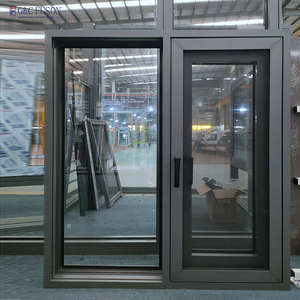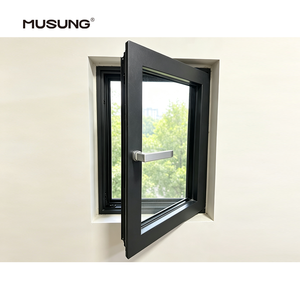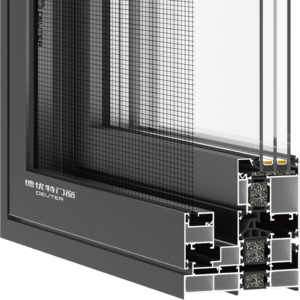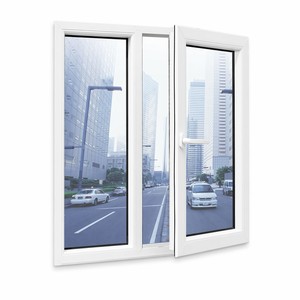
Explore our enterprise-grade architectural aluminum windows and doors, engineered for high thermal performance, structural durability, and customized OEM/ODM global specifications.
Navigating the global supply chain for architectural fenestration demands more than standard manufacturing; it requires comprehensive engineering integrity, standardized alloy selection, and absolute quality assurance. Operating with over 50 years of fabrication heritage, our state-of-the-art facility bridges the gap between complex architectural designs and mass-volume B2B direct manufacturing.
Unlike standard trading intermediaries, our factory integrates every phase of production under a unified quality management system. From custom aluminum billet extrusion using prime 6063-T5 and 6063-T6 alloys to automated corner crimping, multi-cavity thermal break assembly, structural silicone glazing (SSG), and direct-to-site container loading, our facility guarantees that every window and door system meets rigorous international standards.
Technical Value Insight: Our custom OEM/ODM production pipelines incorporate 1/8-inch field measurement precision, eliminating field adjustments on commercial and high-end residential sites. Every profile is backed by material mill test certificates (MTC) and rigorous structural load reports.
When sourcing OEM/ODM architectural aluminum doors and windows, procurement directors must evaluate structural, thermal, acoustic, and surface finish metrics. Below is the technical baseline used across our primary manufacturing lines:
| Parameter | Standard Specification | High-Performance / OEM Upgrade | Testing & Compliance Standards |
|---|---|---|---|
| Aluminum Alloy Profile | 6063-T5 Extruded Aluminum (1.4mm – 2.0mm wall thickness) | 6063-T6 Heavy-Duty Structural Extrusions (2.2mm – 3.0mm) | GB/T 5237, ASTM B221 |
| Thermal Break Technology | 14.8mm Polyamide Insulating Strips (PA66-GF25) | 24mm – 34mm Multi-Cavity Technoform Thermal Barriers | EN 14024, ISO 10077-2 |
| Glass Configuration | 5mm + 12A + 5mm Double Tempered Low-E Glass | 6mm + 16Ar + 6mm + 16Ar + 6mm Triple Laminated Acoustic Glass | IGCC / SGCC, EN 12150 |
| Thermal Transmittance (U-Factor) | 1.8 – 2.2 W/m²K (0.32 BTU/h·ft²·°F) | 0.8 – 1.2 W/m²K (0.14 – 0.21 BTU/h·ft²·°F) | NFRC 100/200, AAMA 1503 |
| Wind Pressure Resistance | Class 4 (2500 Pa) | Class 5/E (Up to 5000 Pa / Hurricane Zone Level 5) | ASTM E330, TAS 201/202/203 |
| Acoustic Rating (STC / Rw) | STC 32 dB / Rw 33 dB | STC 45 dB+ / Rw 48 dB (Acoustic Interlayer Laminated) | ASTM E90, ISO 140-3 |
| Surface Finishing Options | AkzoNobel Powder Coating (60–80 microns) | PVDF Fluorocarbon Spray (3-Coat, >40 microns) / Anodized AAMA 611 | AAMA 2604, AAMA 2605, QUALICOAT Class 2 |
As building codes tighten globally and modern architectural designs demand larger glass spans with slimmer profile sightlines, OEM/ODM aluminum doors factories are undergoing a rapid technological evolution.
Modern thermal break systems utilize PA66-GF25 (25% glass fiber reinforced polyamide) equipped with multi-chamber insulation cores and aerogel filler inserts. This design effectively breaks the thermal bridge, eliminating condensation while dropping U-factors below passive house thresholds.
To withstand extreme storm conditions, hurricane-resistant doors feature continuous structural silicone glazing (SSG) alongside laminated PVB/SGP interlayers. The glass bond unit acts as a monolithic structural element capable of taking cyclic wind pressure tests exceeding 5,000 Pascals.
Architectural demand favors minimal frame visibility. Innovations in concealed heavy-duty multi-point locking mechanisms allow frame sightlines to drop below 20mm while maintaining load capacities up to 400kg per sliding sash panel.
For distributors, architectural project developers, and wholesale buyers, evaluating factory partners requires a forward-looking perspective on global market demands. Key shifts shaping international aluminum fenestration procurement include:
Global developers are enforcing strict EPD (Environmental Product Declaration) standards. Premium OEM factories are integrating low-carbon recycled aluminum billets smelted using renewable hydro-energy, reducing embodied carbon emissions from 18kg CO2/kg Al down to under 4.0kg CO2/kg Al.
Commercial and luxury residential developments are increasingly specifying motorized sliding doors and smart casement operators. OEM factories must now provide concealed routing channels, integrated wire harnesses, and compatibility with KNX, Zigbee, and Crestron building automation ecosystems.
To combat rising jobsite labor costs in North America, Europe, and Australia, direct factory suppliers are shipping pre-assembled, pre-hung entrance systems and unitized window packages complete with factory-applied installation flanges, flashing tapes, and sub-frame receivers.
Addressing the critical engineering, logistical, and customization queries encountered by international procurement officers.
OEM (Original Equipment Manufacturer): We manufacture aluminum windows and doors strictly according to your existing CAD/BIM drawings, structural engineering specifications, and brand branding standards.
ODM (Original Design Manufacturer): Our internal engineering team develops fully customized profile dies, thermal breaks, and hardware systems tailored to your local market requirements, structural wind load constraints, or aesthetic vision from the ground up.
We maintain an in-house tool and die shop. When a custom profile design is approved, our engineers perform finite element analysis (FEA) and thermal modeling. Standard tooling lead times range from 10 to 15 business days. Sample extrusions are submitted with CMM dimensional reports and material test certs prior to full-scale batch extrusion.
Our quality assurance protocol operates across four distinct stages:
Non-thermal aluminum profiles act as direct conductors, transferring outdoor heat or cold directly indoors, leading to high energy loss and interior condensation. Thermal break systems insert a low-conductive polyamide strip (PA66-GF25) between the interior and exterior aluminum profiles, reducing heat transfer by up to 60% and preventing frame sweating.
All finished products undergo multi-layer protective packaging: protective film over powder-coated surfaces, polyethylene foam corner guards, shrink wrap, and full-enclosure fumigated plywood crates or A-frame steel racks specifically engineered for containerized ocean shipping.
Yes. We specifically engineer heavy-duty outswing casements, fixed picture windows, and sliding doors designed to pass High-Velocity Hurricane Zone (HVHZ) requirements (TAS 201, 202, 203) as well as extreme typhoon pressure thresholds up to 5000 Pa. Systems incorporate heavy wall profiles (up to 3.0mm) and SGP structural laminated glass packages.
To ensure long-term structural reliability and seamless project execution, international procurement managers should verify the following operational benchmarks when auditing an OEM/ODM factory:
Ensure the manufacturer uses primary 6063 aluminum ingots rather than scrap recycled aluminum for structural profiles. Demand Spectrometer Material Test Certificates to verify magnesium and silicon ratios meet ASTM standards.
Verify that multi-point locking systems, rollers, and friction hinges undergo rigorous testing. Standard commercial hardware must achieve a minimum of 50,000 opening/closing cycles without mechanical failure or operational drift.