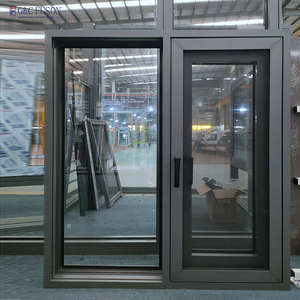

Explore our premium OEM window systems engineered with certified toughened safety glass, thermal breaks, and structural architectural aluminum profiles tailored to worldwide building codes.
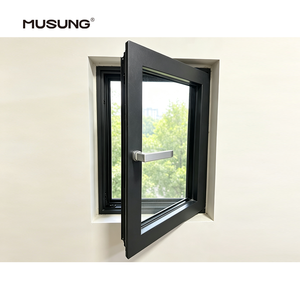
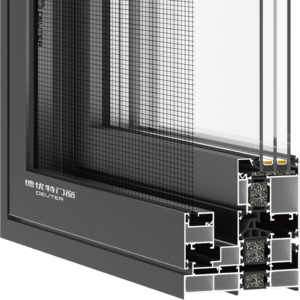
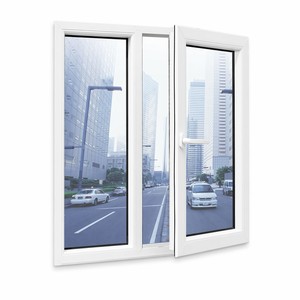
In modern architectural fenestration and industrial glass manufacturing, selecting a qualified Custom OEM Tempered Glass Factory and Exporter is a vital procurement decision impacting structural safety, occupant comfort, and thermal performance compliance. Standard float glass lacks the mechanical resilience required for contemporary high-rise curtain walls, hurricane-rated residential enclosures, and soundproof commercial glazing units.
Custom OEM tempered glass undergoes a precisely controlled thermal treatment cycle. The raw float glass sheet is heated inside a horizontal convection furnace to over 620°C (1,148°F)—nearing its softening point—before being subjected to high-pressure forced air quenching. This extreme cooling process induces high surface compression stress while maintaining tension within the interior core.
When broken by extreme physical impact or thermal shock, fully tempered safety glass disintegrates into small, blunt, diced fragments rather than jagged, dangerous shards. This characteristic drastically reduces the risk of human injury, making OEM tempered glass non-negotiable for exterior doors, low-level fenestration, storefronts, shower enclosures, and high-wind structural applications.
| Performance Metrics | Annealed Float Glass | Heat-Strengthened Glass | Fully Tempered OEM Safety Glass |
|---|---|---|---|
| Surface Compression Stress | < 24 MPa (< 3,500 psi) | 24 to 52 MPa (3,500 - 7,500 psi) | > 69 MPa (> 10,000 psi) |
| Mechanical Bending Strength | 45 N/mm² | 70 N/mm² | 120 - 180 N/mm² |
| Thermal Shock Resistance (ΔT) | ~40 K | ~100 K | ~200 K to 300 K |
| Breakage Fracture Pattern | Large, sharp, dangerous splinters | Radial fractures extending to edges | Small, safe, blunt cubical particles |
| International Compliance | Non-Safety standard glazing | Spandrel & High thermal load zones | ANSI Z97.1, CPSC 16 CFR 1201, EN 12150 |
A critical consideration for global B2B glass buyers is spontaneous breakage caused by microscopic Nickel Sulfide (NiS) inclusions present in raw float glass. Over time, as ambient temperatures fluctuate, NiS particles can undergo a phase transformation from alpha to beta phase, expanding in volume by up to 4%. In a fully tempered glass sheet under high internal tension, this volume expansion can trigger sudden structural failure without external impact.
As a leading OEM exporter, our manufacturing protocols integrate an optional, highly recommended Heat Soak Test (HST) according to DIN EN 14179-1. The tempered glass panels are loaded into an automated heat soak oven, heated to 290°C (554°F), and held at peak temperature for several hours. Panels containing NiS inclusions break safely inside the controlled chamber, guaranteeing that exported glass lots delivered to job sites exhibit near-zero spontaneous failure rates.
The global glass fenestration sector is experiencing a massive technological transition driven by strict international energy conservation codes, carbon neutrality goals, and advanced structural architectural demands. As custom OEM factories innovate, several key technologies are redefining glass export standards.
Modern architectural glass processing utilizes off-line Soft Coat Low-Emissivity (Low-E) films applied via Magnetron Sputtered Vacuum Deposition (MSVD). Triple-silver Low-E stack structures achieve a Solar Heat Gain Coefficient (SHGC) as low as 0.22 while preserving a high Visible Light Transmittance (VLT) above 65%, optimizing energy balance in hot and cold climates.
For hurricane zones (such as Florida Miami-Dade compliance) and high-security installations, tempered glass is combined with SentryGlas® (SGP) or high-clarity Polyvinyl Butyral (PVB) interlayers. SGP ionoplast interlayers offer 5 times the tear strength and 100 times the rigidity of standard PVB, maintaining structural barrier integrity even if both glass plies are shattered.
Representing the pinnacle of thermal efficiency, Vacuum Insulated Glass replaces gas-filled spaces (Argon/Krypton) with a microscopic vacuum gap supported by micro-pillars. VIG units deliver insulating U-factors comparable to solid masonry walls (U-values below 0.60 W/m²K or R-values exceeding R-10) in a ultrathin glass profile.
OEM factories are rapidly integrating Building-Integrated Photovoltaics (BIPV) and dynamic Electrochromic smart glass. Dynamic glass alters light transmittance in response to electrical voltage, eliminating internal window blinds while reducing building HVAC cooling loads by up to 30% annually.
High-precision multi-axis CNC polishers achieve perfect flat-polished edges, bevels, and custom cutouts for structural spider fittings. Combined with ceramic fritting and digital glass printing, OEM exporters supply customized architectural spandrel glass with permanent UV-resistant decorative patterns.
Replacing standard aluminum box spacers with engineered thermoplastic warm-edge spacers (such as Technoform or Super Spacer®) significantly minimizes thermal bridging at the IGU edge. Automatic dual-seal secondary silicone extrusion coupled with 95%+ concentration automated Argon gas injection guarantees long-term energy performance.
B2B glass purchasing agents, façade contractors, and commercial window manufacturers face shifting macroeconomic realities. Sourcing custom glass is no longer merely a price-per-square-meter transaction; it requires deep risk management, quality control validation, and supply chain transparency.
Modern developers and general contractors require complete material test reports (MTR) for every delivered glass crate. This includes raw float batch analysis, furnace stress distribution logs, optical distortion scanner records, and dual-seal dew point testing. OEM suppliers capable of integrating automated inline optical scanning (to eliminate roller wave distortion and zebra effects) are capturing dominant market shares in Europe, North America, and the Middle East.
When evaluating an international OEM Tempered Glass Exporter, verify the following core parameters prior to issuing a Purchase Order:
Rooted in a legacy of precision glass engineering, our manufacturing operations combine deep craftsman expertise with fully automated, robotic processing lines. Building upon foundational principles pioneered since 1973—such as those proven at our flagship Haverhill, MA manufacturing hub (77 Newark St)—we deliver unmatched reliability to global architectural dealers and builders.
Every step—from float glass cutting, edge grinding, washing, tempering, and laminating to insulated unit assembly—occurs under one roof. By avoiding outsourced assemblers, we maintain total authority over lead times, edge stress consistency, and glass package integrity.
Operated with rigorous compliance procedures (including MA HIC Contractor Registration #189563 standards), our products undergo daily destructive break tests, ball drop impact tests, and frost-point dew testing to exceed global building codes.
Navigating oceanic shipping demands specialized protection. Our export glass crates utilize heavy structural timber, internal rubber padding, desiccant bags, and steel band bracing, guaranteeing zero damage during sea transit.
Expert insights into common technical specifications, ordering protocols, and performance standards required by architectural buyers and import distributors.
Our OEM tempering lines accommodate glass thicknesses ranging from 3 mm (1/8 inch) up to 19 mm (3/4 inch). Standard structural and fenestration glass applications typically utilize 4 mm, 5 mm, 6 mm, 8 mm, 10 mm, and 12 mm panels. Custom laminated assemblies can combine multiple plies to achieve total thicknesses exceeding 50 mm for ballistic and specialized hurricane-rated installations.
No. Absolutely no cutting, grinding, sawing, or hole drilling can occur after glass has undergone thermal tempering. Attempting to modify tempered glass disrupts the delicate equilibrium between surface compression stress and internal core tension, causing the panel to shatter instantly into small fragments. All dimensional sizing, edge polishing, chamfering, radius corners, and hole cutouts must be completely finished prior to feeding the glass into the tempering furnace.
A dual-pane Insulated Glass Unit consists of two tempered glass sheets separated by a warm-edge spacer bar, hermetically sealed with primary butyl and secondary structural silicone. The inner air cavity is purged and filled with 90%+ inert Argon gas, which exhibits lower thermal conductivity than air. Combined with a microscopic Low-Emissivity (Low-E) coating on surface #2 or #3, the IGU reflects long-wave infrared heat back into the interior during winter while blocking solar radiant heat in summer, reducing building heating and cooling energy usage by up to 40%.
Our OEM glass production strictly adheres to ASTM C1048, EN 12150, and ISO 9050 standards. We utilize advanced inline optical scanners to monitor roller wave distortion, bow, and warp. Roller wave distortion is maintained under 0.05 mm (0.002 inches) across the central zone, eliminating the objectionable optical distortion (zebra effect) frequently observed in lower-tier glass manufacturing.
While both are safety glazing materials, standard Polyvinyl Butyral (PVB) interlayers offer excellent acoustic insulation and standard impact resistance suitable for residential security. SentryGlas® (SGP) ionoplast interlayers are engineered for extreme structural loads; SGP is 5 times stronger and up to 100 times stiffer than PVB. In the event of glass breakage, an SGP laminate remains upright and structurally intact under heavy wind pressure or impact load, whereas PVB laminates tend to sag and collapse out of the framing rebate.
Export packaging is engineered to withstand extreme marine dynamic loads and humidity fluctuations. Glass sheets are separated by non-adhesive cork pads or protective interleaving powder. Panels are strapped tightly inside closed, fumigated solid-wood or plywood end-cap crates. The crates are lined with plastic film, sealed with desiccant packs to prevent moisture condensation (white haze), and loaded into sea containers using specialized heavy-duty nylon straps and steel bracing.
Our manufactured glass products carry full international compliance certifications, including ANSI Z97.1 and CPSC 16 CFR 1201 for North America, SGCC (Safety Glazing Certification Council) verification, CE mark compliance under EN 12150-1 and EN 1279 for European Union territories, and AS/NZS 2208 for Australian architectural markets.
Whether you require custom-cut tempered architectural glass, high-impact hurricane lamination, or energy-efficient Low-E double/triple insulated units, our engineering team is ready to deliver precise OEM solutions to your job site or assembly facility.
Contact Us