
Explore our export-grade B2B folding, bifold, and accordion glass door assemblies. Engineered for extreme weather durability, acoustic isolation, and seamless architectural integration.
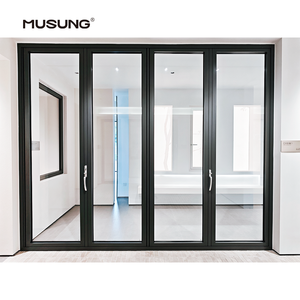
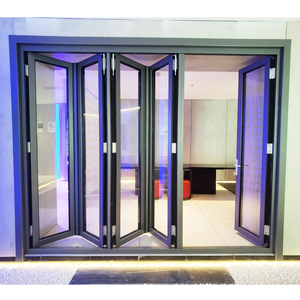
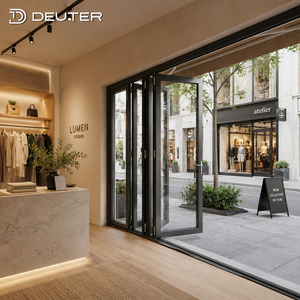
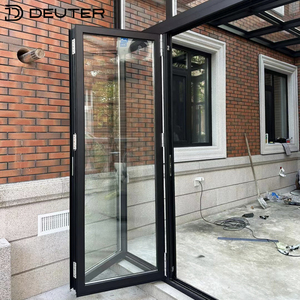
A comprehensive whitepaper overview on material engineering, thermal performance metrics, profile extrusion standards, and quality assurance protocols for enterprise B2B procurement.
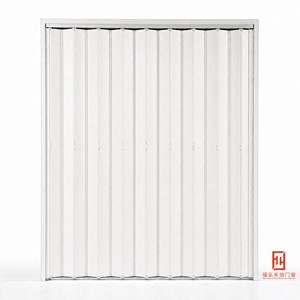
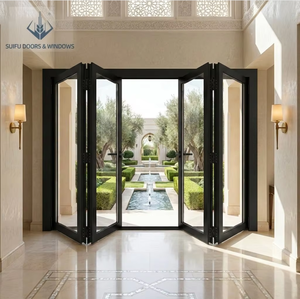
In modern architectural fenestration, Custom OEM Folding Doors (Bi-fold / Accordion Systems) represent the apex of flexible spatial design, structural engineering, and envelope insulation. As commercial contractors, real estate developers, and global window distributors navigate stringent thermal codes and complex architectural blueprints, partnering with a primary, vertically integrated manufacturer becomes paramount.
Our manufacturing philosophy leverages over 50 years of fabrication pedigree. Rather than relying on generic stock profiles assembled by third parties, every folding door system is cut, extrusion-punched, thermal-bridged, and glazed under one roof. This precise shop-floor control allows us to build to exact field measurements down to 1/8-inch tolerances, ensuring seamless job-site installation and elimination of racking or operational drag.
We utilize prime-grade 6063-T6 aluminum alloys. T6 tempering delivers superior tensile strength and yield resistance compared to standard T5 alloys, preventing sash warping under immense multi-panel deadweight.
To combat thermal bridging in cold or tropical climates, our profile assemblies integrate imported polyamide PA66-GF25 (25% glass-fiber reinforced) insulation bars. This cuts structural heat transfer, yielding low U-factors below 1.4 W/m²K.
Equipped with continuous EPDM triple-gasket seals, interlocking sash jambs, and concealed multi-point gear-driven locking mechanisms, our exterior folding systems withstand wind pressures exceeding 4500 Pa (AS2047 / ASTM E330).
Below is a technical breakdown of raw materials, operational parameters, and testing thresholds available for white-label OEM manufacturing and wholesale orders:
| Engineering Parameter | Standard OEM Specifications | Heavy-Duty / Hurricane Option |
|---|---|---|
| Profile Material | Aluminum Alloy 6063-T5 / Architectural UPVC | High-Tensile Aluminum Alloy 6063-T6 |
| Wall Thickness | 1.8mm – 2.0mm Commercial Grade | 2.2mm – 3.0mm Reinforced Structural Frame |
| Thermal Insulation | Non-Thermal Break / Standard PVC Chambers | Polyamide PA66-GF25 Thermal Barrier (25mm+) |
| Glazing Specification | 5mm+12Ar+5mm Tempered Double Low-E | 6mm+1.52PVB+6mm Laminated Hurricane Glass |
| Hardware & Rollers | Top-Hung Heavy Duty Stainless Carriage | Bottom-Bearing Stainless Quad-Wheels (300kg/sash) |
| Acoustic Isolation | 32 dB Noise Reduction (STC 32) | Up to 42 dB High Isolation (STC 42 / OITC 36) |
| Surface Finish | Powder Coating (Qualicoat Class 1) | AAMA 2605 Fluorocarbon (PVDF) / Anodized 25µm |
Key technological, regulatory, and architectural shifts driving B2B sourcing decisions over the next decade.
As commercial building codes globally align with zero-carbon goals and high-density spatial efficiency, the demand for high-performance accordion folding doors is experiencing unprecedented evolution. B2B buyers, project procurement managers, and OEM distributors must align with manufacturers capable of delivering future-proof engineering.
Modern architecture requires folding doors to perform on par with solid insulated walls. Future OEM sourcing relies heavily on triple-pane warm-edge IGU glass packages, krypton gas fills, and multi-cavity thermal break profiles capable of meeting strict Passivhaus standard U-values (≤0.8 W/m²K).
Architects demand maximum glass surface ratios. Product evolution has moved toward ultra-narrow interlock profiles (as thin as 30mm) alongside completely concealed hinges, flush sill drainage systems, and hidden motor actuators embedded directly within the head track.
Large-span openings spanning 10 to 15 meters are increasingly integrated into smart building management systems (BMS). Procurement is shifting toward motorized heavy-duty bi-fold systems featuring anti-pinch safety sensors, remote mobile operation, and synchronized magnetic latches.
Furthermore, logistically optimized Knocked-Down (KD) Packaging Protocols are rapidly replacing fully pre-assembled units for cross-border shipping. By precision-machining component corners with expansion corner keys, OEMs allow distributors to import up to 300% more square footage per 40ft HQ container, dramatically lowering ocean freight cost per unit while preserving simple site assembly.
Unmatched single-source accountability, in-house fabrication, and specialized project engineering support.
When sourcing custom OEM folding doors, reliance on multi-tiered supply chains often leads to communication gaps, dimensional mismatch, and unresolved warranty claims. Inspired by our 50-year legacy at our Haverhill plant, our enterprise OEM model operates on strict vertical integration.
From aluminum extrusion cutting, CNC milling, corner fusion welding, to insulated glass unit (IGU) assembly—every manufacturing step occurs in-house. A single engineering oversight team guarantees quality control.
We do not push off-the-shelf catalog sizes. Every production batch is custom-milled to the precise opening dimensions provided by project managers, eliminating structural job-site shimming or masonry alteration.
We provide full white-label brand packaging, customized extrusion die development, shop drawing approvals (AutoCAD / BIM models), and hardware branding for global window dealers and contractors.
Direct technical and commercial answers for importers, contractors, and project developers.
Connect directly with our senior fenestration engineering team. We assist with shop drawing creation, thermal calculations, profile sample dispatches, and factory direct pricing.
Inquire Now