
Factory-direct structural glazing, thermal break extrusion profiles, and acoustic soundproof windows custom-manufactured to global building code standards.
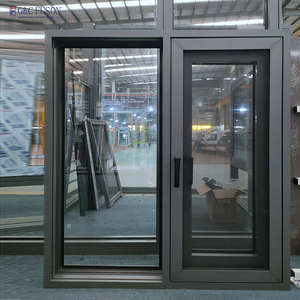
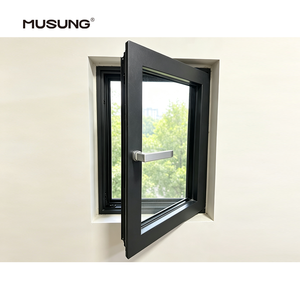
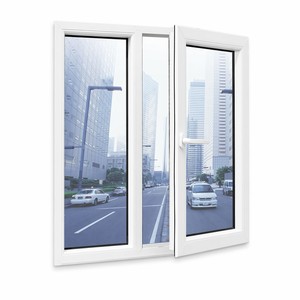
An authoritative technical analysis for commercial developers, B2B importers, architectural specifiers, and wholesale fenestration buyers.
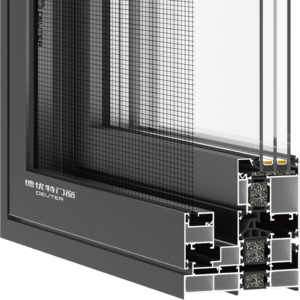
As international building standards—such as North America's IECC (International Energy Conservation Code) and Europe's EPBD (Energy Performance of Buildings Directive)—tighten operational carbon limits, fenestration procurement has shifted decisively toward high-efficiency thermal break profiles. Traditional aluminum profiles, while structurally robust, possess high thermal conductivity (k ≈ 200 W/m·K). Modern Chinese wholesale manufacturing leverages precision-engineered Polyamide (PA66GF25 with 25% glass fiber reinforcement) thermal barriers, reducing profile thermal transmittance to Uf values as low as 1.2 W/m²K.
The integration of techno-polymer insulation cavities, warm-edge TGI spacers, and gas-filled (90%+ Argon/Krypton concentration) triple-glazed insulated glass units (IGU) allows wholesale sliding and casement windows to achieve whole-unit U-factors below 0.24 Btu/h·ft²·°F (0.14 W/m²K). This thermal efficiency minimizes HVAC load spikes in extreme climate zones, positioning leading Chinese exporters as crucial supply chain partners for Net-Zero and LEED-certified real estate developments globally.
Extreme weather frequency has catalyzed strict adherence to hurricane and structural load certifications. In coastal zones (e.g., Florida HVHZ, Caribbean regions, Pacific typhoon corridors), fenestration systems must withstand high static wind pressures and windborne debris impact. Leading OEM exporters in China utilize primary 6063-T5 and high-tensile 6063-T6 architectural aluminum alloys with wall thicknesses ranging from 1.4mm to 3.0mm, far exceeding baseline residential standards.
Laminated impact glazing systems featuring structural interlayers—such as Kuraray SentryGlas® (SGP) or high-grade Polyvinyl Butyral (PVB)—are engineered to remain intact even after outer glass fracture. When tested in accordance with ASTM E330 (Structural Performance), ASTM E1886, and ASTM E1996 (Impact and Cyclic Pressure testing), these units maintain airtightness under cyclic wind loads exceeding ±90 psf (equivalent to Category 5 hurricane wind speeds exceeding 250 km/h).
The architectural movement toward expansive glass ratios and daylight harvesting has redefined sliding window design. Contemporary buyers demand minimal frame sightlines paired with massive sash weight capacities. Chinese export factories have integrated heavy-duty stainless steel multi-wheel rollers, concealed track systems, and flush sill designs capable of supporting panel weights exceeding 400 kg per sash while ensuring smooth friction-free operation (< 15N sliding force).
Furthermore, high-durability surface treatments have progressed beyond standard powder coatings. Advanced electro-deposition anodizing, Italian wood-grain thermal transfer technology, and AkzoNobel/PPG 70% Fluorocarbon PVDF coatings ensure resistance to salt-spray corrosion (ASTM B117 > 3,000 hours), UV degradation, and chalking in harsh marine environments.
Quantitative analysis of core frame material platforms for commercial and high-end residential wholesale procurement.
| Technical Specification | Thermal Break Aluminum | Standard Aluminum | Steel-Reinforced UPVC |
|---|---|---|---|
| Frame Thermal Transmittance (Uf) | 1.2 – 1.8 W/m²K | 5.0 – 6.8 W/m²K | 1.3 – 2.0 W/m²K |
| Structural Tensile Strength | 205 – 245 MPa (6063-T6) | 160 – 200 MPa (6063-T5) | 40 – 60 MPa (Unreinforced) |
| Maximum Sash Weight Capacity | Up to 450 kg | Up to 200 kg | Up to 120 kg |
| Acoustic Isolation (STC Rating) | STC 38 – 45 dB (Triple IGU) | STC 28 – 34 dB | STC 35 – 42 dB |
| Salt Spray Corrosion Resistance | > 3,000 Hours (PVDF Finish) | 1,000 Hours (Standard) | Immune to Salt Corrosion |
| Design Lifespan & ROI | 35 – 50+ Years | 20 – 30 Years | 15 – 25 Years |
Combining automated fabrication, integrated raw material sourcing, and stringent 5-stage quality assurance.
Fully automated CNC profile cutting, corner crimping, and notch machining ensure dimensional tolerances within ±0.5mm, enabling flawless field assembly and structural alignment.
Every batch undergoes 100% water tightness testing, air infiltration checks, corners pull-strength testing, and glass seal integrity verification prior to container loading.
Custom A-frame heavy-duty wooden crate packaging with moisture-proof vacuum wrapping prevents transport scratch damage and optimizes 40ft HQ container space by up to 30%.
In-depth answers addressing international compliance, customization, lead times, and warranty terms.
Our window systems are engineered to meet and exceed global building standards. We provide certified test reports for AAMA/WDMA/CSA 101/I.S.2/A440 (North American Fenestration Standard), NFRC energy ratings for U-factor and SHGC, CE marking under EN 14351-1 for European compliance, and AS2047 certification for Australia. Test documentation can be provided alongside quote requests for project submittals.
We utilize a military-grade packaging protocol: frames are wrapped in anti-scratch protective film, corners are shielded with thick polyethylene guards, and assembled units are fixed onto custom steel or fumigated plywood A-frame crates. Desiccant packs and vacuum-sealed wrapping prevent moisture condensation during transit through diverse climate zones.
Yes. We offer complete OEM/ODM engineering capabilities. Our in-house tooling workshop can press custom extrusion dies based on CAD/BIM drawings within 12–15 days. We support non-standard frame depths, specialized mullion profiles, custom mullion grids, and matched RAL powder coating colors.
For maximum sound attenuation (up to STC 45 dB / Rw 42 dB), we configure asymmetric double/triple glazing units utilizing varying glass panel thicknesses (e.g., 8mm outer + 12mm Argon gap + 6mm inner) combined with acoustic PVB interlayers (Acoustic Saflex®). This disrupts sound wave resonance across high and low frequencies.
Standard production lead time is 25 to 35 calendar days following shop drawing approval and deposit confirmation. For custom extruded profiles or specialized hurricane-laminated glass orders, lead times range from 35 to 45 days. Expedited production slots are available for high-priority commercial contract schedules.
We partner with premier hardware manufacturers globally. Standard configurations feature top-tier German brands such as Siegenia, Hoppe, and ROTO, as well as premium high-durability domestic hardware (Kin Long, COTO). Multi-point locking bolts ensure high burglar resistance (RC2/RC3 European security rating) and tight weatherproofing gasket compression.
Partner directly with China's leading fenestration export factory. Receive CAD shop drawings, technical performance test reports, and factory-direct pricing tailored to your project schedule.