
Precision-engineered aluminum and uPVC window configurations built to international structural, thermal, and hurricane-impact standards.
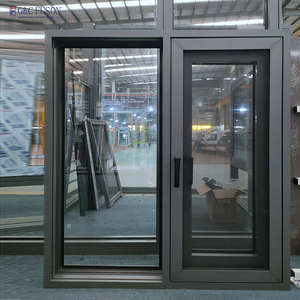
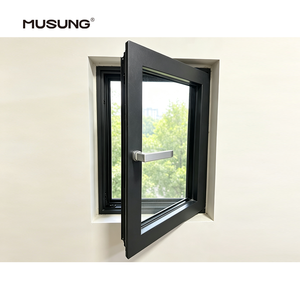
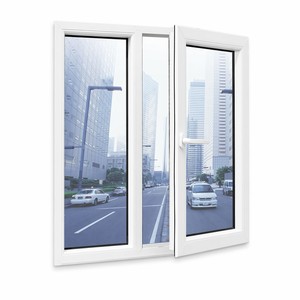
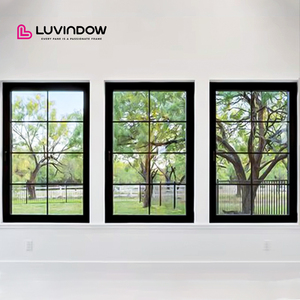
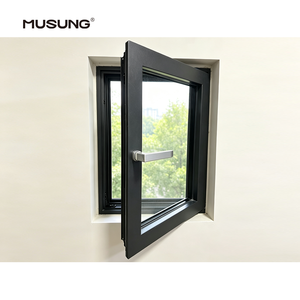
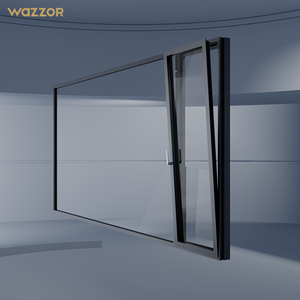
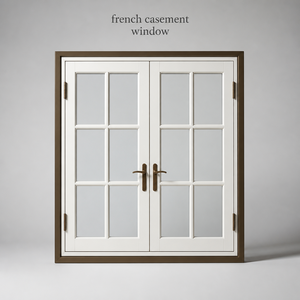
Awning windows, hinged at the top and opening outward from the bottom, represent one of the most structurally sound and thermally efficient fenestration designs utilized in modern commercial and high-end residential construction. When specifying awning windows from China manufacturers for global wholesale distribution, understanding the underlying metallurgy, thermal barrier integration, and glass unit dynamics is paramount for architects, developers, and trade distributors.
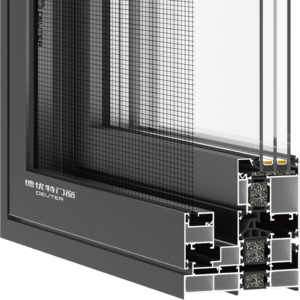
Unlike standard sliding or single-hung windows, awning windows rely on mechanical compression sealing around the entire sash perimeter. When the multi-point locking system is engaged, the sash pulls tightly against dual-durometer EPDM gaskets, creating an airtight and watertight seal capable of resisting extreme wind-driven rain and air infiltration. China’s advanced manufacturing ecosystem now leverages high-precision 6063-T5 and 6063-T6 aluminum alloys extrusion protocols, combined with Polyamide PA66GF25 (25% glass-fiber reinforced nylon) thermal break strips to eliminate thermal bridging.
Technical Insight for Buyers: The operational U-factor of a thermal break awning window is dictated not only by the glass package but by the structural depth of the profile. Specifying a 70mm to 90mm frame depth with a multi-cavity PA66 thermal barrier allows wholesale buyers to achieve system U-values under 1.4 W/m²·K (0.25 BTU/h·ft²·°F), meeting strict Passivhaus and NFRC energy codes across North America, Europe, and Australia.
High-performance Chinese awning window suppliers utilize pressure-equalized drainage cavities within the frame design. Under heavy wind pressures (such as ASTM E330 structural testing or AS2047 typhoon conditions), water penetration is prevented by balancing the air pressure inside the window cavity with external atmospheric pressure. Weep holes equipped with backdraft baffles allow accumulated condensation or wind-driven moisture to discharge harmlessly outwards without back-siphoning into the interior building envelope.
Extruded with virgin primary aluminum ingots, ensuring tensile strength exceeding 205 MPa for multi-story wind load resistance.
Insulated Glass Units filled with 90%+ Argon gas, featuring warm-edge Technoform spacers and double-silver Low-E coatings.
Continuous vulcanized EPDM gaskets maintain elasticity from -40°C to +120°C, providing decades of soundproofing and weatherproofing.
Leveraging over five decades of institutional heritage inspired by rigorous North American and European fabrication standards, our partner production lines in China operate a unified manufacturing ecosystem. Unlike regional assemblers who purchase off-the-shelf components from disparate third-party sources, factory-direct manufacturing centralizes aluminum extrusion, thermal strip insertion, glass tempering, automated insulated glass assembly, and CNC hardware milling under a single quality management system (ISO 9001 certified).
This single-roof production philosophy guarantees that field measurements translated into engineering shop drawings are cut and welded to exact 1/8-inch (3mm) tolerance increments. For major commercial residential developments, villa projects, or wholesale distribution networks, this eliminates field-fitting errors, reduces installation labor overhead by up to 35%, and ensures perfect sash-to-frame alignment across thousands of shipped units.
Every product line undergoes cyclic opening tests (up to 50,000 cycles), forced-entry security validation, and thermal imaging calibration prior to mass wholesale dispatch.
Equipped with AkzoNobel and PPG certified powder coating lines, offering 26μm fluorocarbon (PVDF) coatings resistant to salt-spray corrosion in coastal marine environments.
The global window and door procurement landscape is undergoing a structural transition driven by stringent environmental regulations, changing architectural aesthetics, and smart building integration. B2B buyers, sourcing directors, and general contractors must align their purchasing strategies with emerging market forces to retain a competitive edge over the next decade.
Governments across North America (ENERGY STAR® Version 7.0), the European Union (EPBD directive), and Australia (NCC 2022) have raised minimum energy performance thresholds. Sourcing standard non-thermal aluminum windows is rapidly declining in favor of multi-chambered thermal break aluminum and high-density vinyl (uPVC) systems. Future-proof procurement requires specifying awning windows equipped with triple-pane glass packages, warm-edge silicone foam spacers, and vacuum-insulated glass (VIG) technology, achieving U-factors as low as 0.80 W/m²·K.
Modern commercial facades and luxury smart homes increasingly demand automated awning windows integrated with Building Management Systems (BMS). High-placed clerestory awning windows are now specified with concealed chain actuators operating at 24V DC, responsive to environmental rain sensors, wind speed meters, and internal CO₂ monitors. Chinese OEM manufacturers lead this space by pre-milling sash profiles to house concealed motor channels, providing plug-and-play smart fenestration hardware directly from the factory floor.
Contemporary architectural design favors maximum natural daylight and minimal visible frame profiles. The market is shifting from bulky traditional frames to ultra-slim aluminum awning profiles with sightlines under 45mm. Achieving structural rigidity with thinner profiles necessitates higher-grade alloys (such as 6005-T6) and structural silicone bonding (IGU bonded directly to the aluminum sash), turning the glass pane into a load-bearing component of the window assembly.
Increased demand for low-carbon recycled aluminum profiles utilizing renewable hydro-power during smelting, reducing embodied carbon by up to 70%.
Rising severe weather events drive wholesale volume for Miami-Dade and Australian Cyclone Zone certified laminated impact awning windows.
Factory custom-built steel A-frame crating systems optimized for high-cube ocean containers, reducing transit breakage rates to near 0%.
Essential answers to common procurement, compliance, and engineering inquiries submitted by importers and contractors.
Connect directly with our engineering and wholesale export team for factory-direct price estimates, shop drawing assistance, or physical profile sample kits.
Inquire Now