
Direct-from-factory aluminum extrusions, thermal-break casements, and engineered UPVC systems engineered for hurricane resilience, thermal isolation, and modern building codes.
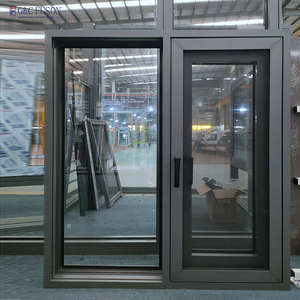
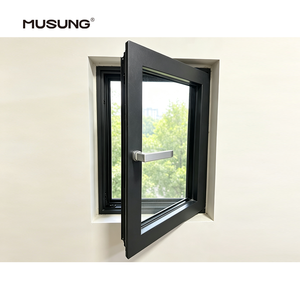
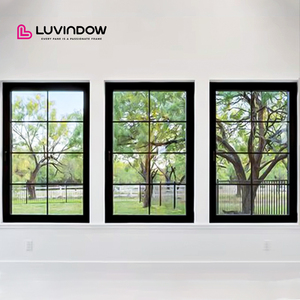
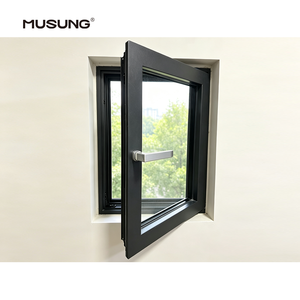
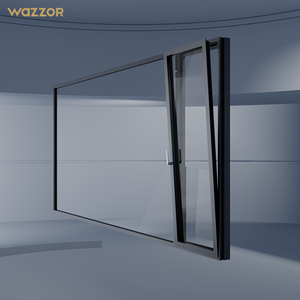
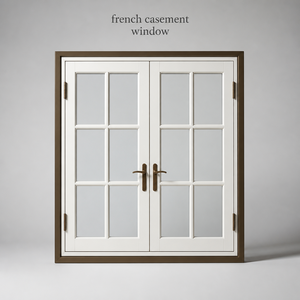
In the contemporary global building sector, procurement managers, structural engineers, and real estate developers face unprecedented demands. Tightening energy efficiency standards (such as ENERGY STAR® 7.0, Passivhaus, and European EPBD directives) require building envelopes to dramatically curtail carbon footprints and thermal bridging. Simultaneously, architectural aesthetics favor ultra-narrow sightlines, expansive spans of glass, and extreme structural durability against climate-induced hurricane forces.
China has transformed from a high-volume extrusion center into the epicenter of high-precision thermal break aluminum extrusions and engineered UPVC window profile manufacturing. Operating under rigorous international testing standards (AAMA, WDMA, CSA, NFRC, CE, and AS2047), top Chinese manufacturers combine advanced metallurgy, European multi-chambered profile engineering, automated powder-coating lines, and end-to-end quality assurance.
Utilizing high-purity primary aluminum ingots extruded under precise temperature controls. T5 and T6 artificial aging treatments deliver ultimate tensile strength exceeding 205 MPa for high-rise wind loads.
Integration of imported Polyamide PA66-GF25 structural strips (25% glass fiber reinforcement) ensures thermal expansion coefficient alignment with aluminum, eliminating structural shearing.
Qualicoat Class 2/3 powder coatings and AAMA 2605 compliant PVDF fluorocarbon treatments withstand 3,000+ hours of accelerated salt-spray testing, key for harsh coastal deployments.
Sourcing commercial and residential window profiles requires a comprehensive evaluation of profile material properties. Top export factories in China provide specialized extrusions engineered for distinct climatic and structural environments:
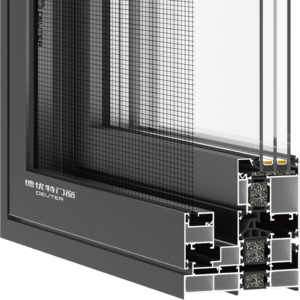
Aluminum inherently possesses high thermal conductivity ($k \approx 200 \text{ W/m·K}$). To counteract energy loss, leading Chinese manufacturers employ the pour-and-debridge or crimped thermal barrier method. By inserting a low-conductivity polyamide strip ($k \approx 0.3 \text{ W/m·K}$) between inner and outer aluminum chambers, the overall system U-factor drops significantly to as low as $0.18 \text{ Btu/h·ft}^2\text{·°F}$ ($1.0 \text{ W/m}^2\text{K}$).
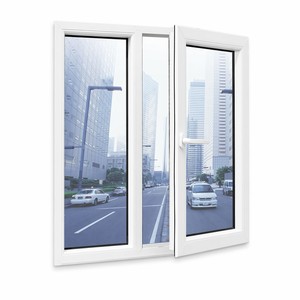
Modern UPVC extrusions exported to Western markets completely eliminate lead-based stabilizers in favor of environmentally friendly Calcium-Zinc formulations. High-grade UPVC profiles incorporate Titanium Dioxide ($\text{TiO}_2 \ge 8\%$, Rutile grade) to prevent UV degradation, chalking, and discoloration under high solar irradiance. Multi-chambered designs (5 to 7 internal air chambers) achieve superior inherent thermal insulation without requiring secondary barrier strips.
| Performance Metrics | Architectural Thermal Break Aluminum | High-Impact UPVC Multi-Chamber | Ultra-Slim Aluminum Structural Alloy |
|---|---|---|---|
| Structural Load Capacity | Extreme (High-Rise / Large Span) | Moderate to High (Reinforced) | Ultra-High (High Moment of Inertia) |
| Frame Thermal Transmittance ($U_f$) | $1.2 - 2.0 \text{ W/m}^2\text{K}$ | $0.9 - 1.3 \text{ W/m}^2\text{K}$ | $1.5 - 2.4 \text{ W/m}^2\text{K}$ |
| Acoustic Isolation (STC) | STC 38 - 45 (Triple IGU) | STC 36 - 42 (Double IGU) | STC 40 - 48 (Laminated Double IGU) |
| Design Pressure (DP Rating) | DP 50 to DP 100+ | DP 35 to DP 60 | DP 65 to DP 120 (Hurricane Impact) |
| Environmental Salt-Spray Resistance | AAMA 2605 PVDF (3,000 hrs) | Inherent Corrosion Proof | Anodized Class 1 / PVDF Coating |
Procurement strategies among international window fabricators and commercial developers are shifting dramatically. Key macro-trends shaping window profile exports from China include:
Building on over 50 years of collective industry lineage and direct operational experience, top-tier Chinese extrusion facilities operate with total vertical integration. From initial die engineering to final precision extrusion, anodizing, powder coating, and thermal assembly, every phase is controlled under one roof.
Fabrication tolerances are maintained within exact $\pm 0.5\text{mm}$ (or $1/8\text{-inch}$ system standards), eliminating site-fit discrepancies. In-house testing facilities conduct continuous hydrostatic pressure testing, air infiltration checks (ASTM E283), structural load tests (ASTM E330), and water penetration resistance trials (ASTM E331) to verify performance prior to export dispatch.
Over 5,000 active extrusion matrix dies available, with rapid tooling turnarounds (10–15 days) for custom architectural extrusion geometries.
Engineered with standard C-groove and Euro-groove channels compatible with premium global hardware brands (German Siegeina, Hoppe, Roto, and top Chinese hardware solutions).
Custom containerization, protective film wrapping, wooden crate bundling, and international logistics support across North America, Europe, Australia, and the Middle East.
Connect directly with our engineering sales director to request technical data sheets, cross-sectional DWG/BIM CAD files, and competitive direct factory quotation packages tailored to your market specifications.