
Explore our elite range of factory-direct, highly engineered aluminum and UPVC picture, casement, and fixed fenestration systems tailored for luxury residential villas and commercial developments.
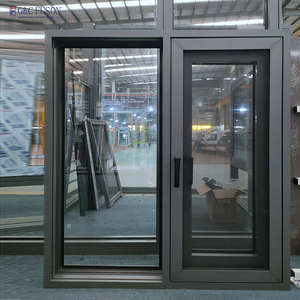
Premium structural polyamide thermal barrier system combined with multi-chamber insulation for maximal energy efficiency and acoustics.
Get Catalog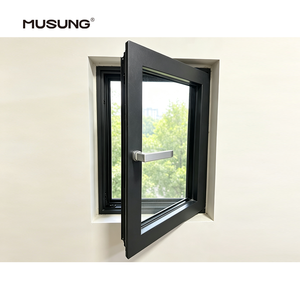
Sleek windproof architectural profiles with double tempered Low-E glazing, designed specifically for luxury mid-to-high rise residential builds.
Get Catalog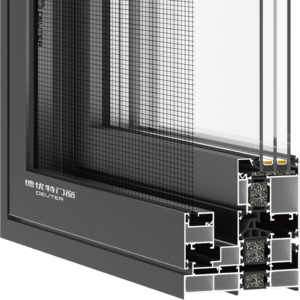
Heavy-duty structural aluminum framing engineered with SGP/PVB laminated security glass, compliant with extreme coastal hurricane codes.
Get Catalog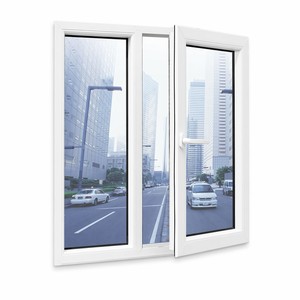
High-grade UV-stabilized UPVC multi-chamber profiles offering phenomenal acoustic dampening and zero-maintenance weather resistance.
Get Catalog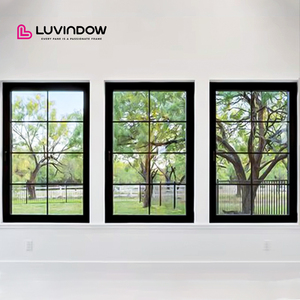
Ultra-narrow sightline minimalist designs combining architectural visual elegance with robust impact resistance and hidden structural hinges.
Get Catalog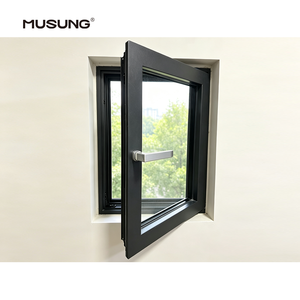
Versatile residential fenestration system featuring dual-color powder coating options, EPDM weather-sealing gaskets, and multipoint locks.
Get Catalog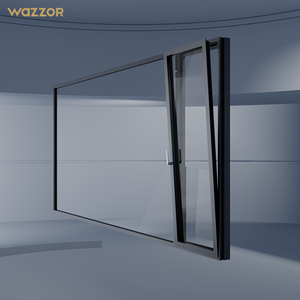
Engineered for extreme structural wind-load environments, featuring argon gas-filled insulating glass and sound-dampening laminate layers.
Get Catalog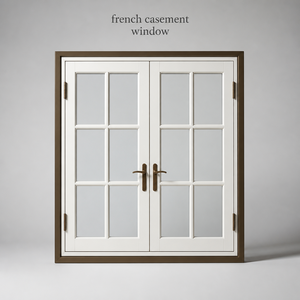
Classic architectural aesthetics integrated with high-tenacity double tempered glazing, decorative internal grilles, and German hardware.
Get CatalogBridging decades of fenestration engineering with modern global export logistics. We control every stage of fabrication to deliver unmatched structural integrity and energy efficiency.
Unlike standard off-the-shelf distributors, every single picture window, sliding door, and architectural glazing unit is precision-cut, CNC-milled, fused, and glazed under our strictly monitored manufacturing roof. Operating with rigid quality inspection standards, we eliminate middleman markups while giving architects total design control.
Our aluminum picture windows utilize high-density polyamide thermal break strips (PA66 GF25) engineered to drastically prevent thermal conduction. Coupled with dual or triple-pane tempered glass units filled with 90%+ Argon gas, our systems achieve exceptionally low U-factors ($U \le 0.18 \text{ Btu/h}\cdot\text{ft}^2\cdot^\circ\text{F}$) for severe winter and summer climates.
Specifically developed for storm-prone regions and coastal estates, our high-impact fenestration lines incorporate multi-layer PVB or SGP (SentryGlas) interlayers. They are structurally engineered to endure extreme wind pressures exceeding Design Pressure (DP) 70+ and resist heavy missile impacts (ASTM E1886/E1996 standards).
Fixed picture windows have undergone a massive paradigm shift in modern architectural engineering. No longer considered simple static glass panes, today's high-performance picture windows serve as structural daylighting envelopes that must meet rigorous energy decarbonization, structural deflection, acoustic dampening, and safety parameters. As global building energy codes tighten—such as the European Union’s Energy Performance of Buildings Directive (EPBD) and North American IECC/ASHRAE 90.1 standards—the specification of wholesale fenestration products requires an intricate understanding of glass technology, metallurgy, and thermal engineering.
The structural backbone of high-end picture windows engineered in China lies in precision-extruded aluminum alloy selection. Prime architectural fabricators utilize 6063-T5 or 6063-T6 architectural grade aluminum alloys, which offer an exceptional strength-to-weight ratio and superior surface finish capability for anodizing or PVDF fluorocarbon coatings.
To overcome aluminum's inherently high thermal conductivity ($k \approx 200 \text{ W/m}\cdot\text{K}$), modern profiles incorporate structural Polyamide PA66 GF25 (25% Glass Fiber reinforced) thermal break strips. These strips mechanically join the interior and exterior aluminum extrusions, reducing frame conductivity by up to 95%. When combined with multi-cavity thermal insulation inserts, frame thermal transmittance ($U_f$) values drop below $1.3 \text{ W/m}^2\cdot\text{K}$, preventing condensation and reducing indoor HVAC cooling and heating loads dramatically.
Glass represents 80% to 90% of a picture window's total surface area. Achieving high light transmittance alongside low Solar Heat Gain Coefficients (SHGC) demands advanced magnetron sputter vacuum deposition (MSVD) double or triple Silver Low-Emissivity (Low-E) coatings.
| Glazing Configuration | U-Factor ($W/m^2K$) | SHGC Range | Visible Light Transmittance (VLT) | Acoustic Rating (STC) |
|---|---|---|---|---|
| Single Pane Tempered (6mm) | 5.8 | 0.82 | 88% | 28 dB |
| Double Glazed Low-E + Air (6mm + 12A + 6mm) | 2.7 | 0.55 | 75% | 34 dB |
| Double Glazed Triple Low-E + Argon (6mm + 16Ar + 6mm) | 1.2 | 0.27 - 0.38 | 68% | 38 dB |
| Triple Glazed Double Low-E + Argon (5mm + 12Ar + 5mm + 12Ar + 5mm) | 0.8 | 0.22 - 0.32 | 62% | 42 dB |
| Vacuum Insulated Glass (VIG Hybrid Unit) | 0.4 - 0.6 | 0.25 | 65% | 45+ dB |
In addition to Low-E coatings, replacing atmospheric air inside the hermetically sealed Insulated Glass Unit (IGU) with 90% concentration Argon or Krypton gas significantly lowers convective heat transfer. Furthermore, replacing traditional aluminum spacer bars with Warm-Edge Structural Foam Spacers (TPS or Swisspacer) isolates the perimeter edge, boosting the glass-edge temperature by 4°C to 7°C, effectively eliminating sightline condensation during freezing winter conditions.
As commercial developers, residential custom builders, and door/window distributors seek competitive advantages in international markets, the global supply chain for picture windows and architectural fenestration is undergoing rapid strategic changes. Sourcing directly from top-tier Chinese original equipment manufacturers (OEMs) and original design manufacturers (ODMs) provides substantial economic and technological leverage when aligned with future industry shifts.
Governments across North America, Europe, and Australia are establishing mandatory zero-carbon building frameworks. Sourcing trends show a sharp 45% year-over-year increase in demand for Passive House Certified picture window systems. B2B buyers are requiring manufacturers to supply Environmental Product Declarations (EPDs) and embodied carbon metrics for frame aluminum and float glass production.
Architectural preferences lean heavily toward modern minimalism—maximizing unobstructed panoramic glass vistas. To achieve structural stiffness in massive glass dimensions (e.g., single panels exceeding $3m \times 6m$), manufacturers are integrating structural silicon sealant bonding (e.g., Dow Corning 983 structural adhesive). This technique transfers wind load directly from the glass unit to the aluminum frame structure, enabling frames with ultra-narrow visible sightlines of less than 25mm.
The integration of smart functional glass technologies within fixed picture windows is moving from niche luxury projects to mainstream adoption. Polymer Dispersed Liquid Crystal (PDLC) switchable privacy glass and dynamic electrochromic tinting allow building occupants to control solar radiation dynamically. Concurrently, Building-Integrated Photovoltaics (BIPV) embedded into fixed upper-lite transom units turn static picture windows into localized energy-generating assets.
Global procurement friction is being minimized through direct BIM (Building Information Modeling) and CAD file exchange between international architects and Chinese manufacturing plants. Modern factories leverage automated CNC cutting centers and robotic double-component sealing machines, taking customized field dimensions down to 1/8-inch (3mm) precision and shipping pre-assembled units directly to jobsites globally.
Building on over 50 years of foundational engineering expertise in custom window and door fabrication, our manufacturing infrastructure combines vertical integration with rigorous raw material vetting. Every window profile undergoes intensive physical stress testing, powder coat adhesion testing (AAMA 2604/2605 compliant), and IGU seal durability checks prior to export container loading.
Technical and logistical insights compiled by senior fenestration experts to streamline your international procurement process.
While high-grade multi-chamber UPVC offers excellent thermal insulation, aluminum possesses a significantly higher tensile yield strength ($160\text{–}200 \text{ MPa}$ for 6063-T5 aluminum vs. $40\text{–}50 \text{ MPa}$ for rigid PVC). This structural rigidity allows aluminum picture windows to support vastly larger single-pane glass weights without frame sagging or excessive wind-load deflection. By incorporating polyamide (PA66 GF25) thermal breaks, thermal conductivity is reduced to levels comparable to premium vinyl, delivering both massive architectural sightlines and superior energy performance.
Our hurricane impact-rated picture windows utilize heavy-duty extrusions (wall thicknesses ranging from 2.0mm to 3.0mm) paired with laminated safety glass featuring DuPont SGP (SentryGlas) or high-density PVB interlayers. Under ASTM E1886 and ASTM E1996 missile impact testing and cyclic wind pressure loading, the outer glass pane may fracture upon high-speed debris impact, but the tough interlayer remains intact, maintaining the structural envelope of the building and preventing internal pressurization blowouts.
Yes, 100% of our production is cut, welded, milled, and assembled to exact order specifications. We routine fabricate non-standard sizes in 1/8-inch (3mm) increments. Our factory handles specialized architectural shapes including radius arch tops, gothic arches, trapezoids, triangles, 90-degree glass-to-glass corner picture units, and multi-lite bow or bay window configurations based on approved factory shop drawings.
For cold climates (e.g., Northern US, Canada, Northern Europe), specify double or triple-pane glazing with a high Solar Heat Gain Low-E coating on surface #3 (interior-facing side of the inner air space) and Argon gas fill. This traps interior radiant heat while allowing beneficial passive solar heat gain. For hot tropical zones (e.g., Middle East, Southeast Asia, Florida), specify double-silver or triple-silver Low-E coatings on surface #2 (interior side of the outer glass pane) to reflect solar infrared heat away from the building, yielding a low SHGC ($\le 0.25$) to minimize air conditioning demand.
Standard double-glazed glass units offer a Sound Transmission Class (STC) rating of around 30 to 32 dB. To achieve high acoustic isolation (STC 40 to 45+ dB) for airports, city centers, or busy highways, we incorporate asymmetrical glass pane thicknesses (e.g., 8mm outer pane + 16mm acoustic gas gap + 6mm inner pane) or multi-layer acoustic laminated glass (such as 6.38mm or 10.38mm acoustic PVB glass). The varied density breaks resonance frequencies, blocking low-frequency traffic noise effectively.
All export orders are packaged according to stringent international logistics protocols. Individual window units are wrapped in protective polyethylene scratch-resistant film, padded with thick corner protectors, and sealed in fully enclosed fumigated plywood crates (no solid wood requiring ISPM-15 inspection delays). Heavy glass units are secured on heavy-duty steel A-frames inside shipping containers with industrial ratcheting straps to eliminate shifting or vibration damage during maritime shipping.
Our manufacturing processes comply with ISO9001 quality management systems, NFRC energy rating standards, CE marking for Europe, and AS2047 for Australia. Surface finishes include AkzoNobel PVDF fluorocarbon spraying (backed by a 20-to-30 year anti-fading warranty against intense UV radiation), architectural anodizing (15-25 microns), and high-durability powder coating in any custom RAL color palette.
Standard production lead time is typically 25 to 35 calendar days following final approval of technical CAD shop drawings and glass specification sign-off. Expedited manufacturing schedules can be arranged for urgent commercial project milestones or contract build-outs.
Connect directly with our senior engineering and export division today. Receive comprehensive technical specifications, custom BIM files, structural calculation reports, and factory-direct pricing for your upcoming developments.