Global Procurement & Technical Evolution Guide for Garage Door Systems
As modern building envelopes demand higher energy conservation, architectural integration, and structural resilience against climate disruption, the global market for garage doors and commercial overhead doors is experiencing a massive technological shift. This guide provides international procurement managers, real estate developers, and door distributors with key industry insights into engineering specs, market trends, and sourcing strategies.
Industry Insight: Thermal envelope performance standards in North America (IECC) and Europe (EPBD) now mandate strict overall U-factor maximums for garage openings, transforming the garage door from a basic mechanical barrier into a high-performance thermal barrier.
Future Procurement Trends in International Garage Door Sourcing
Over the past three years, the global supply chain for garage doors has evolved beyond basic cost-per-square-meter purchasing. Professional importers and commercial contractors are focusing heavily on total lifecycle cost, modular packaging, and compliance documentation. Key trends shaping procurement strategy include:
- Knock-Down (KD) Frame & Modular Panel Packaging: To combat rising global sea freight costs, leading Chinese manufacturers have engineered modular hardware and panel systems that increase 40ft HQ container loading capacity by up to 40%, significantly reducing freight cost per unit.
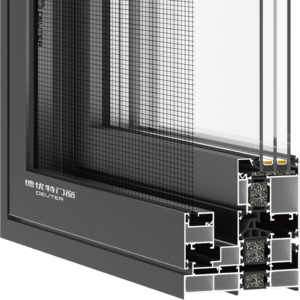
- Shift Toward Thermal Break Aluminum Profiles: High-end residential projects are increasingly abandoning uninsulated single-sheet doors in favor of thermal-break extruded aluminum frames fitted with low-E insulated glass units (IGUs) to prevent condensation and indoor heat loss.
- Private Labeling & Customized Retail Packaging: Major hardware distributors now require factory-direct barcode printing, customized installation manuals in multiple languages, and drop-ship packaging tailored for localized distribution centers.
Technical & Architectural Development Trends (2025–2030)
From an engineering perspective, the next generation of overhead door systems is defined by advances in material science, automated safety integration, and smart building connectivity:
| Technical Parameter |
Standard Residential Specification |
Premium Thermal & Wind-Rated Spec |
Commercial / Industrial High-Duty Spec |
| Panel Construction |
40mm Steel Sandwich (PU Core) |
50mm Thermal-Break Steel / Aluminum |
50mm - 80mm Structural Steel Panel |
| Insulation Rating |
R-12.5 to R-14.8 |
R-16.0 to R-18.4 |
R-18.0 + (Perimeter Double EPDM) |
| Wind Resistance |
ANSI/DASMA 108 Class 2 (90 mph) |
Hurricane Impact (+55/-60 PSF, 150+ mph) |
Industrial Wind Truss Reinforced (Grade 12) |
| Spring Durability |
10,000 - 15,000 Cycles |
25,000 - 50,000 Cycles |
100,000+ Cycles (Continuous Duty) |
| Glass Standard |
Single Tempered Clear |
Double/Triple Glazed Low-E Laminated |
Polycarbonate Shatterproof / Double Tempered |
Material Science Innovations: Polyurethane Foam & Surface Finishes
The core thermal efficiency of a sectional door depends on the chemistry of the expanding foam core. Modern manufacturing utilizes zero-ODP (Ozone Depletion Potential) hydrofluoroolefin (HFO) blowing agents to create micro-cellular polyurethane cores. This achieves superior dimensional stability across extreme temperature ranges, preventing panel bowing (thermal bridging) in sun-exposed dark-colored doors.
Furthermore, exterior steel skins now utilize hot-dip zinc-aluminum alloy coatings (such as Galvalume) paired with multi-layer fluorocarbon (PVDF) baked ceramic paint finishes. This coating system provides over 20 years of resistance against UV chalking, rust creep, and coastal salt-air degradation.