USA Standard
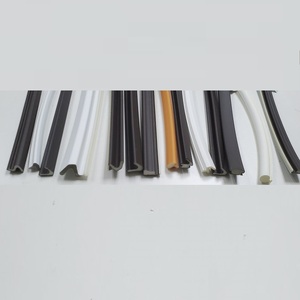
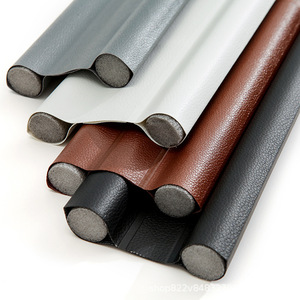
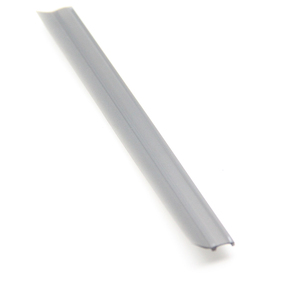
Shanghai Dofiberone Composites USA Standard PVC Door Sweep Weather Strip
- High-durability flexible PVC polymer
- USA Standard door sweep dimensioning
- Superior bottom-draft & moisture defense

Precision-extruded PVC, EPDM, PA66GF25, and high-density pile weather seals engineered to conform with EN 12365, ASTM E283, and international energy-efficiency standards.
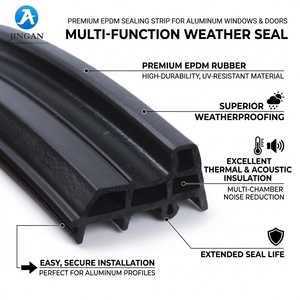
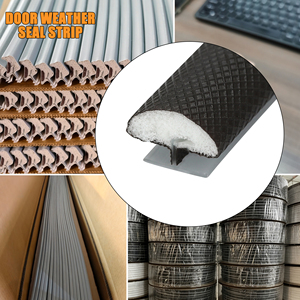
In modern building envelope design, structural fenestration performance is fundamentally governed by the dynamic sealing efficiency of perimeter weather stripping. As international energy efficiency mandates—such as the EU Energy Performance of Buildings Directive (EPBD) and ASHRAE Standard 90.1—tighten thermal envelope tolerances, global tier-1 buyers and door system original equipment manufacturers (OEMs) require weather seals certified under CE EN 12365 standard protocols.
This industrial guide analyzes the material science, dynamic fatigue properties, and manufacturing engineering required to select optimal weather stripping for architectural vinyl windows, thermal-break aluminum facades, commercial entrance doors, and heavy-duty industrial door systems.
Selecting the correct elastomeric or thermoplastic substrate determines long-term weatherability, UV ozone degradation resistance, U-factor thermal contribution, and acoustic transmission loss (Rw rating).
| Polymer / Elastomer Substrate | Tensile Strength (MPa) | Compression Set (22h @ 70°C) | Thermal Conductivity (W/m·K) | Primary B2B Architectural Application |
|---|---|---|---|---|
| EPDM Rubber (Sulfur / Peroxide Cured) | 10 - 18 MPa | < 25% (Exceptional) | 0.15 - 0.25 W/m·K | Curtain walls, aluminum window frames, exterior doors |
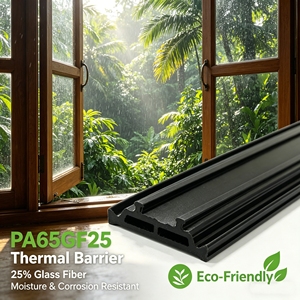
| PA66GF25 (Polyamide + 25% Glass Fiber) | 80 - 110 MPa | Non-Deformable Structural Strip | 0.30 W/m·K | Thermal break insulating profiles in aluminum facade systems |
| Rigid / Flexible Co-Extruded PVC | 8 - 15 MPa | 35% - 45% (Moderate) | 0.14 - 0.17 W/m·K | USA standard interior door sweeps, residential vinyl sashes |
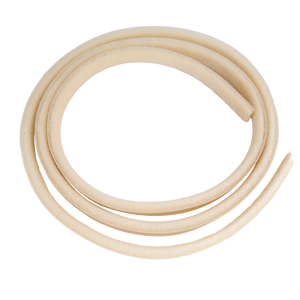
| Silicone-Treated Woven Polypropylene Pile | High Fiber Density | N/A (Frictionless Brush) | Low Air Infiltration | Wardrobe sliding doors, sliding window tracks, screen frames |
| Thermoplastic Elastomers (TPE / TPV) | 7 - 14 MPa | 28% - 35% (Good) | 0.12 - 0.16 W/m·K | Eco-friendly, 100% recyclable interior door perimeter gaskets |
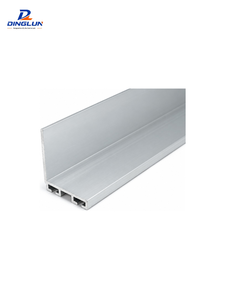
For commercial high-rise fenestration, solid structural metal frames create severe thermal bridges. Integrating PA66GF25 (Polyamide 66 reinforced with 25% glass fiber) hollow insulating strips decouples interior and exterior aluminum profiles.
By matching the linear thermal expansion coefficient of aluminum (2.3 × 10⁻⁵ /K), PA66GF25 prevents dynamic shear failure under extreme thermal shock, maintaining air and water tightness under Category 5 hurricane wind pressures (ASTM E330 testing).
The international market for architectural weather stripping is undergoing a structural transition driven by decarbonization policies, automated high-speed extrusion lines, and smart building integration. Global buyers must align procurement strategies with three critical industry shifts:
Transitioning from single-material rubber strips to dual-hardness co-extrusions featuring a rigid base for slot snapping and a soft micro-foamed bulb for zero-effort door closing.
Strict European REACH and RoHS regulations are replacing traditional plasticized PVC with recyclable bio-based TPV/TPE substrates, eliminating hazardous phthalates in indoor environments.
To eliminate off-site sizing rework, direct-from-factory suppliers offer custom die engineering for non-standard opening geometries, arch-top units, and modular unitized glass panels.
B2B buyers face volatile raw material resin costs and extended lead times when dealing with intermediary traders. Partnering directly with certified manufacturers providing in-house profile cutting, automated corner welding, quality testing, and batch-traceable raw EPDM/PA66 resins guarantees reliable 4-week global shipping schedules and strict compliance with project architectural specifications.
Building on over 50 years of specialized manufacturing heritage—originally established with rigid quality controls matching USA and European fenestration standards—our manufacturing facilities integrate end-to-end design, extrusion compounding, and structural testing.
Over 1,500 active extrusion dies covering standard USA vinyl door sweeps, European slot-inlaid EPDM gaskets, and PA66 thermal break profiles. Custom dies fabricated in under 12 business days.
Every dynamic batch undergoes climate chamber testing for permanent deflection set, ozone degradation chamber exposure, and water tightness verification under differential pressure.
Flexible minimum order quantities (MOQs), automated packaging reel winding, private label branding, and dedicated logistic solutions for window, door, and facade system fabricators.
Comprehensive technical answers to critical sourcing questions asked by architectural specification engineers, window system manufacturers, and international buyers.
EN 12365 categorizes weather seals based on six performance indices: Category of Use, Working Temperature Range (-25°C to +70°C or extended -40°C to +120°C), Deflection Recovery (Compression Set percentage), Recovery Rate after Long-Term Aging, Linear Compression Force required, and Dynamic Fatigue Life. CE marked weather stripping guarantees full compliance with European building construction safety and thermal containment codes.
PA66GF25 exhibits a thermal conductivity of approximately 0.3 W/m·K, compared to raw aluminum’s 160-200 W/m·K. Furthermore, adding 25% glass fiber reinforcement enhances the tensile and transverse shear strength of Polyamide 66 to match the mechanical expansion dynamics of aluminum profiles, preventing warpage or mechanical detachment under severe wind loads.
Yes. We cut, weld, and extrude to exact 1/8-inch or millimeter customer specifications. Our dual-durometer co-extrusion lines can combine rigid PVC/TPE retaining feet with soft foamed sealing bulbs, customized in architectural gun-grey, bronze, black, or custom RAL color matches.
High-grade vulcanized EPDM weather seals formulated with anti-ozonants maintain elasticity and weather tightness for 25 to 30 years under severe UV exposure. Flexible PVC sweeps designed for interior or protected entry doors deliver 8 to 12 years of reliable performance before requiring seal strip replacement.
Air infiltration directly mirrors sound transmission. High-compression multi-finger EPDM seals or dense, silicone-treated pile strips close perimeter micro-gaps, significantly reducing sound propagation and improving overall window Sound Transmission Class (STC) ratings by up to 6 to 10 dB.
Partner directly with an established CE-certified weather stripping manufacturer. Contact our engineering team today to review custom CAD drawings, request free product samples, or receive factory-direct B2B bulk pricing.
Send an Inquiry