
Explore our architectural door product line engineered with multi-chamber vinyl profiles, Low-E double/triple glazing packages, and continuous EPDM weatherstripping. Precision-cut and custom-built to exact project specifications.
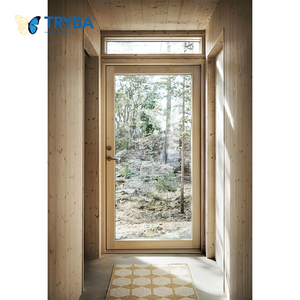
Engineered with a 6-chamber vinyl profile delivering an ultra-low U-Factor of 1.4 W/m²K. Exceptional soundproofing for luxury residential and commercial developments.
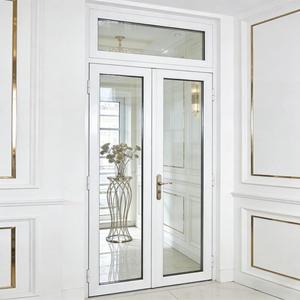
Versatile dual-configuration vinyl door system suitable for spacious interior partitions and patio access. Features reinforced hardware for heavy-duty commercial cycles.
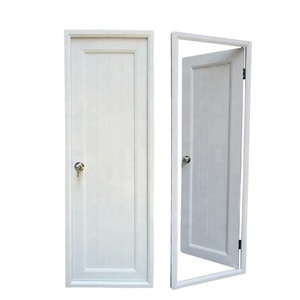
Moisture-proof UPVC door system integrated with frosted safety glass and continuous EPDM sealing gaskets. Perfect for high-humidity hospitality and residential projects.
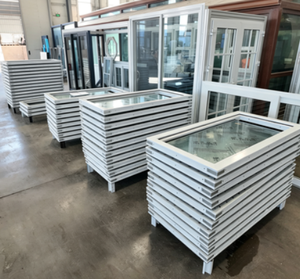
Tailor-made wholesale UPVC solutions built to precise 1/8-inch tolerances. Fully customizable frame profiles, locking hardware, and architectural finishes for contractors.
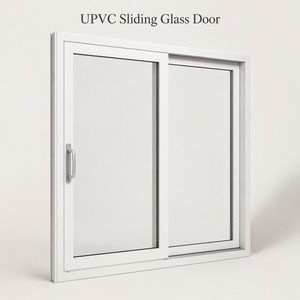
Elegant French-style sliding patio door featuring dual-pane Low-E glass filled with argon gas. Offers optimal solar heat control and wide opening sightlines.
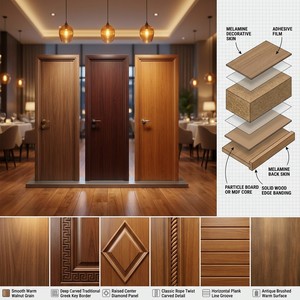
High-density solid core interior UPVC door with melamine wood-grain finish. Designed for commercial interior projects, multi-family units, and hotel renovations.
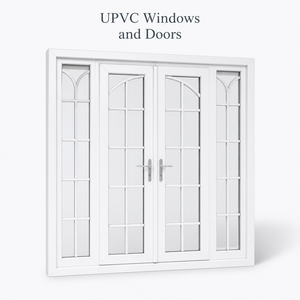
Storm-rated waterproof UPVC entry door with internal decorative grills and reinforced safety glass. Combines classic aesthetic appeal with modern vinyl durability.
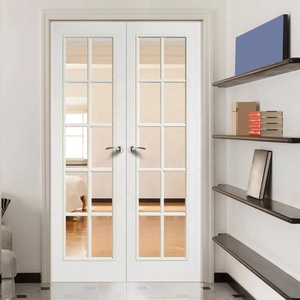
Heavy-duty exterior double casement swing door built for light commercial retrofits and high-traffic residential openings. Fully CE certified for international building codes.
Built upon a 50-year legacy of uncompromised craftsmanship, our manufacturing plant operates strictly under direct quality control—extruding, cutting, fusion-welding, and glazing under one roof.
Unlike assemblers who outsource profile cutting, every single UPVC unit is precision-engineered at our direct factory facility. We fusion-weld profile corners to ensure 100% structural integrity and zero water infiltration.
Our UPVC doors undergo rigorous laboratory testing to comply with standard EN 14351-1 for external pedestrian doorsets. This covers wind load resistance, watertightness, acoustic performance, and thermal transmittance.
We do not force projects into stock catalog dimensions. Every door is cut and constructed to exact field dimensions recorded by site engineers, avoiding expensive retrofitting or structural modifications during installation.
| Engineering Property | Standard UPVC System | CE Certified Multi-Chamber System | Test / Compliance Standard |
|---|---|---|---|
| Thermal Transmittance (U-Value) | 2.2 – 2.8 W/m²K | 1.1 – 1.4 W/m²K | EN ISO 10077-2 |
| Acoustic Attenuation (Rw) | 28 – 32 dB | 38 – 45 dB | EN ISO 140-3 / BS EN 717-1 |
| Wind Load Resistance | Class B2 (800 Pa) | Class C5 / B5 (2000 Pa) | EN 12210 |
| Watertightness | Class 5A (200 Pa) | Class 9A / E1050 (1050 Pa) | EN 12208 |
| Air Permeability | Class 2 | Class 4 (600 Pa) | EN 12207 |
| Profile Stabilization | Lead-based Stabilizers | 100% Eco Calcium-Zinc (Ca-Zn) | REACH Regulation Compliance |
As commercial building energy codes tighten globally, real estate developers, contractors, and institutional buyers are fundamentally shifting how architectural fenestration and door systems are specified.
International energy performance mandates—such as the European Union’s Energy Performance of Buildings Directive (EPBD) and North American Energy Star 7.0 guidelines—are pushing standard door U-factors below 1.2 W/m²K. Commercial procurement protocols now penalize thermal bridging heavily.
Our CE certified UPVC doors integrate 6-chamber insulated profiles with warm-edge spacer technology, reducing embodied thermal loss by up to 40% compared to non-thermally broken aluminum doors. Procurement leads are increasingly replacing traditional metal entry doors with eco-stabilized UPVC frames to satisfy strict LEED v4.1 and BREEAM building certifications.
Rapid urban consolidation has elevated acoustic insulation from an optional upgrade to a mandatory contractual requirement. Commercial buyers operating in metropolitan corridors actively specify door assemblies certified for sound transmission losses over 40 dB.
Through asymmetric double-glazing configurations (e.g., combining 6mm outer laminated safety glass with 4mm inner toughened glass separated by a 16mm argon cavity), our UPVC door systems achieve certified Rw ratings up to 45 dB. This acoustic dampening prevents low-frequency traffic rumble from penetrating indoor residential space.
Environmental Product Declarations (EPD) are becoming mandatory procurement attachments in commercial tenders. Traditional vinyl profiles containing heavy-metal lead stabilizers are being rapidly banned under REACH and EPA regulations.
Our extrusion lines utilize exclusively Calcium-Zinc (Ca-Zn) eco-stabilizers. This ensures zero hazardous off-gassing, enhanced resistance to UV degradation in high-solar zones, and 100% recyclability at the end of the product lifecycle. Procurement managers gain fully documented EPD profiles required for green building compliance.
Modern commercial procurement guidelines stipulate that exterior doors must seamlessly accommodate electronic access control, biometrics, and heavy-duty multi-point security locking systems without compromising frame weather-seals.
Our UPVC profiles feature internal heavy-gauge galvanized steel reinforcement channels (minimum 1.5mm to 2.0mm wall thickness). This robust internal metal skeleton allows secure anchoring of multi-point hook locks, anti-snap cylinders, and motorized smart locks that meet stringent RC2 / PAS 24 burglary resistance standards.
A white-paper deep dive into how material science, automated extrusion robotics, and precision glazing chemistry have transformed UPVC from a utility material into an architectural powerhouse.
Traditional manually inserted rubber seals deteriorate over time, leading to air drafts and water leakage. Advanced manufacturing utilizes co-extruded EPDM gaskets fused directly onto the vinyl profile during manufacturing, guaranteeing permanent elasticity and air tightness (Class 4 EN 12207).
Heat absorption was historically a vulnerability for dark UPVC frames. Modern manufacturing incorporates heat-reflective lamination foils powered by Total Solar Reflectance (TSR) technology. Dark anthracite gray or black foils reflect IR radiation, reducing frame surface temperatures by up to 15°C.
Computerized 4-point CNC welding equipment heats vinyl profile ends to exactly 245°C before pressing them together under controlled pneumatic pressure. This creates a homogeneous single-piece frame joint that exceeds the physical tensile strength of the profile wall itself.
Essential answers for architects, project engineers, import distributors, and general contractors specifying CE certified UPVC door systems.
Our UPVC door systems are certified under EN 14351-1:2006+A2:2016 (Windows and doors product standard). Testing reports issued by accredited third-party notified bodies verify performance for: Air Permeability (EN 12207 Class 4), Watertightness (EN 12208 Class 9A), Wind Load Resistance (EN 12210 Class C5), Thermal Transmittance (EN ISO 10077-2 down to 1.1 W/m²K), and Load-bearing capacity of safety devices.
While thermally broken aluminum offers ultra-slim sightlines, high-grade UPVC delivers superior thermal performance at a 20% to 35% lower initial capital cost. Furthermore, UPVC is naturally non-conductive, completely immune to coastal salt spray corrosion, and requires zero painting or anodizing maintenance over its 30+ year service life, resulting in a significantly lower Total Cost of Ownership (TCO).
Yes. Because we control cutting, profile bending, and welding in-house, we fabricate custom units to exact 1/8-inch field measurements. Arch-top doors, trapezoidal frames, sidelites, transoms, and French double swing assemblies are routine production line outputs rather than special-order exceptions.
Every structural profile chamber is fitted with a cold-rolled, hot-dip galvanized steel box channel with a minimum thickness of 1.5mm to 2.0mm. This steel skeleton ensures high torsional rigidity, prevents profile sagging or thermal expansion bowing under extreme ambient temperature deltas (-30°C to +70°C), and securely anchors heavy-duty door hinges and locks.
Standard fabrication turnaround for standard custom colors (White, Anthracite Gray, Golden Oak) is 15 to 25 business days from CAD drawing sign-off. Doors are wrapped in protective polyethylene film, fitted with corner guards, and packed into custom timber crates or steel A-frames optimized for 20GP/40HQ shipping container loading to prevent transit damage.
Our UPVC profile formulations incorporate high concentrations of Titanium Dioxide (TiO²) pigment and advanced UV stabilizers that absorb ultraviolet radiation. For colored laminated finishes, we utilize multi-layer exterior foils (such as Renolit or Continental Cool Colors) engineered to reflect infrared solar radiation, backed by a 10-year manufacturer colorfastness warranty.
Download our comprehensive technical architectural catalog, complete profile CAD cross-sections, thermal calculation white papers, and wholesale pricing schedules.